JHi, I’m Jason. The Chinese word for play is just one word, but English needs about five different ways to say it. Today we’ll sort them out, so your weekend stories sound natural.大家好,我是 Jason。中文的「玩」只有一個字,但英文大概要用五種不同的說法。今天我們把它們整理清楚,讓你聊週末的時候聽起來很自然。
MAnd I’m Mary. Our story happens in a Taipei café on a Saturday afternoon. Jack, a Taiwanese man, is at a language exchange with his foreign friend Megan. Their first topic is last weekend.我是 Mary。我們的故事發生在週六下午的台北咖啡廳。台灣人 Jack 正在跟外國朋友 Megan 做語言交換,他們聊的第一個話題就是上個週末。
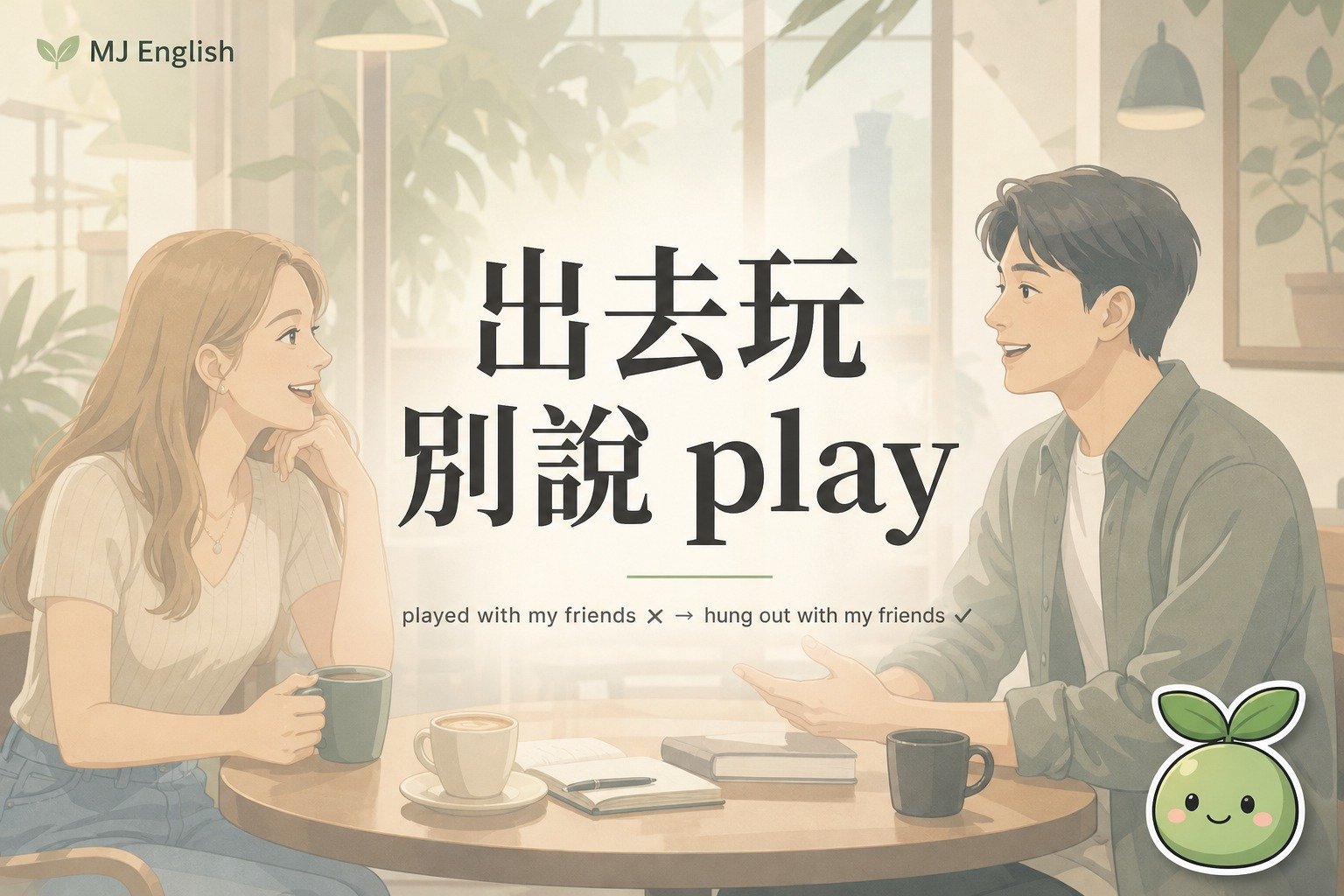
JMegan asks, “So Jack, what did you do last weekend?” Easy question. And Jack answers with the exact line we’re fixing today: “I played with my friends at the night market.”Megan 問:「那 Jack,你上週末做了什麼?」很簡單的問題。Jack 的回答,就是我們今天要修正的那句:「I played with my friends at the night market.」
MNow, “play with friends” isn’t ungrammatical. For kids, it’s perfectly normal. But for adults, it sounds childish. You can hear it in Megan’s reaction: “Played? Like games?” She pictures people playing cards at the night market.其實 play with friends 文法沒有錯,小朋友這樣說完全正常。但大人這樣說會顯得幼稚。從 Megan 的反應就聽得出來:「Played? Like games?」她可能以為大家在夜市玩牌。
JJack explains, “No, we just walked around and ate a lot.” Then he asks, “Is played wrong?” Fair question, because in Chinese, kids and adults use the same word. English splits them up.Jack 解釋:「沒有,我們只是到處逛、吃了很多東西。」然後他問:「Is played wrong?」這問題很合理,因為中文裡小孩和大人用的是同一個字,英文卻分得很細。
MMegan says, “You hung out with your friends. Played sounds like kids at a playground.” So here’s way number one: hang out. It means spend relaxed time together, with no special plan.Megan 說:「You hung out with your friends. Played sounds like kids at a playground.」所以第一種說法是 hang out,意思是輕鬆地待在一起,沒有特別的計畫。
JNotice the past tense: hung out. “I hung out with my friends last weekend.” Eating, walking, chatting, it all counts. And you can invite someone too: “Do you want to hang out this Saturday?”注意過去式是 hung out。「I hung out with my friends last weekend.」吃飯、散步、聊天都算。你也可以用來邀約:「Do you want to hang out this Saturday?」
MWay number two is go out. It’s more about leaving the house. “Let’s go out tonight.” Or, “We went out for dinner.” Simple, and you’ll use it all the time with friends.第二種說法是 go out,比較強調走出家門。「Let’s go out tonight.」或「We went out for dinner.」很簡單,而且跟朋友相處時你會一直用到。
JMegan also gives the big idea: “In English, kids play, adults hang out. But you can still play games or play basketball.” So play isn’t banned. It just has a smaller job than the Chinese word.Megan 也點出重點:「英文是小孩 play,大人 hang out。不過玩遊戲、打籃球還是可以用 play。」所以 play 沒有被禁用,只是它的範圍比中文的「玩」小。
MHere’s where play stays correct. Games, sports and instruments. “We played board games.” “I play basketball on Sundays.” For instruments, we usually add “the”: “She plays the guitar.” And, “The kids are playing outside.”play 還是對的情況有這些:遊戲、運動、樂器。「We played board games.」「I play basketball on Sundays.」樂器通常會加 the:「She plays the guitar.」還有「The kids are playing outside.」
JThen Jack says, “Got it. Next month I’m going to Japan to play.” The word is back! Same habit, different sentence. Don’t worry, almost everyone does this at first.接著 Jack 說:「懂了。下個月我要去日本玩。」那個字又出現了!同樣的習慣,換了一句話。別擔心,幾乎每個人一開始都會這樣。
MMegan laughs and says, “You mean you’re going to Japan for fun. Or just, I’m taking a trip to Japan.” That’s way number three: take a trip. Simple and natural.Megan 笑著說:「你是說去日本玩吧。可以說 for fun,或直接說 I’m taking a trip to Japan。」這就是第三種說法:take a trip,簡單又自然。
J“For fun” is a handy little tool. Put it at the end: “We went to Tainan for fun.” It tells people you’re not there for work. You can also say, “I’m going on vacation next week.”for fun 是個很好用的小工具,放在句尾:「We went to Tainan for fun.」意思是你不是去工作的。你也可以說:「I’m going on vacation next week.」
MSo for places, think trip, vacation, or for fun. Don’t think play. “Go to Japan to play” makes people picture a child with toys, not a traveler with a suitcase.所以講到去某個地方玩,就想到 trip、vacation 或 for fun,不要想 play。「Go to Japan to play」會讓人想到拿著玩具的小孩,而不是拖著行李箱的旅人。
JJack learns fast. He says, “Okay. I’m taking a trip to Japan. Want to hang out before I go?” Two new phrases in two sentences. That’s exactly how to practice.Jack 學得很快。他說:「好。I’m taking a trip to Japan. 我出發前要不要一起出去?」兩句話用了兩個新說法,這正是練習的好方法。
MThen Megan says, “Sure! Come over to my place on Friday.” That’s way number four. In Chinese, you might say “come to my home to play.” In English, we just say come over.然後 Megan 說:「好啊!星期五來我家玩。」這是第四種說法。中文可能會說「來我家玩」,英文直接說 come over 就好。
J“Come over” simply means come to where I am. Short invitation: “Come over!” Add “to my place” for details. And “my place” sounds more casual than “my home.”come over 就是「來我這裡」。簡短的邀請就說「Come over!」想補充地點就加 to my place。而且 my place 比 my home 更口語。
MYou can also say, “Do you want to come hang out at my place?” It mixes both ideas. A friendly invitation, no pressure, maybe some snacks on the table.你也可以說:「Do you want to come hang out at my place?」這句把兩個概念放在一起,是個輕鬆沒壓力的邀請,說不定桌上還有點心。
JWay number five comes afterwards, when you want to ask, “Was it good?” In English, you ask, “Did you have fun?” Just use have fun. Short and natural.第五種說法是玩完之後,想問「好玩嗎」的時候。英文要問:「Did you have fun?」就用 have fun,簡短又自然。
MAnd answering is easy. “We had a great time.” Or, “It was so much fun.” Notice fun, not funny. Funny means something makes you laugh. Fun means you enjoyed the whole experience.回答也很簡單。「We had a great time.」或「It was so much fun.」注意是 fun,不是 funny。funny 是好笑,fun 是整個過程都玩得開心。
JTry one together. Say a friend just came back from Japan. You ask, “Did you have fun?” They answer, “Yes! We had a great time.” Sounds natural, right?我們來試一次。假設朋友剛從日本回來,你問:「Did you have fun?」他回答:「Yes! We had a great time.」是不是很自然?
MLet’s put it together. Hang out or go out for friends. Take a trip or for fun for places. Come over for invitations. Have fun for feelings. And play for games, sports and instruments.我們來整理一下。跟朋友用 hang out 或 go out;去哪裡玩用 take a trip 或 for fun;邀請人來用 come over;問感受用 have fun;遊戲、運動、樂器才用 play。
JHere’s the night market fix. Instead of “I played with my friends at the night market,” say “I hung out with my friends at the night market.” One small change, a big difference.夜市那句這樣修正。不說「I played with my friends at the night market」,而說「I hung out with my friends at the night market.」改一個字,感覺差很多。
MDoes it matter? “Played” isn’t a disaster, and people will understand you. But “hung out” sounds like everyday English, and that’s the feeling we want in small talk with friends.有差嗎?說 played 不是災難,對方聽得懂。但 hung out 聽起來就是日常的英文,這正是跟朋友閒聊時我們想要的感覺。
JHere’s a quick way to remember. Is it a game, a sport, an instrument, or a kid playing? Then use play. Adults just spending time together? Then hang out. That’s the whole rule.有個簡單的記法。是遊戲、運動、樂器,或是小朋友在玩嗎?那就用 play。如果是大人單純相處、聊天,就用 hang out。規則就是這樣。
MOkay, we’re almost done. You now have five ways to say that one Chinese word. Let’s hear the whole conversation between Jack and Megan one more time.好,我們快結束了。現在你有五種方法來表達那個中文的「玩」。我們再來聽一次 Jack 和 Megan 的完整對話。
JThis time, listen for hang out, take a trip, come over, and for fun. See how many you catch. Here’s the full conversation, one more time.這次請特別聽 hang out、take a trip、come over 和 for fun,看看你抓到幾個。以下再聽一次完整對話。
🔁 [DIALOGUE REPLAY] 重播情境對話
MSo remember, English likes to be specific: hang out with friends, take a trip, come over, and have fun. Save play for games, sports, instruments and kids.所以記得,英文喜歡說得具體:跟朋友 hang out、take a trip、come over、have fun。play 留給遊戲、運動、樂器和小朋友。
JTell us in the comments: where did you hang out with friends last weekend? Write one sentence with hang out. Thanks for learning with MJ English today.請在留言告訴我們:你上週末跟朋友去哪裡玩?用 hang out 寫一句英文。今天謝謝你和 MJ English 一起學習。