「吃藥」說成 eat medicine?台灣人最常直譯錯的動詞一次修正

2026 07 03 en verb collocations 4 Daily English | 生活英語

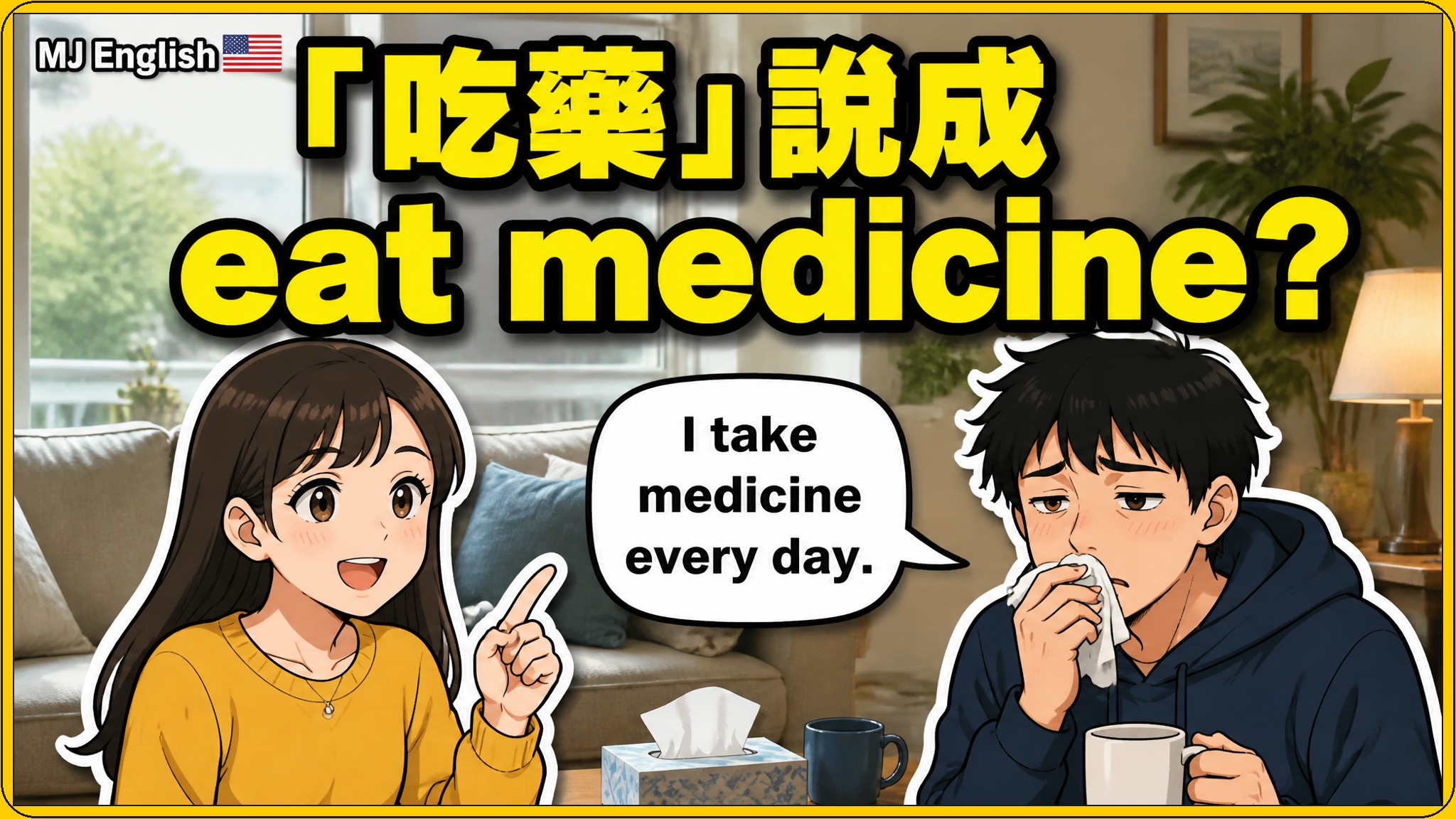
感冒不舒服,你想說「我吃了藥」,脫口而出 “I ate some medicine.”——老外愣了一下,因為藥在英文裡不是用「吃」的。

這些中式英文動詞的雷,其實是搭配(collocation)問題:藥要 take、手機是 be on——動詞跟名詞綁一起,別逐字翻。

🎧 邊聽邊學

完整 podcast 已上架,點下方收聽

Apple Podcasts

💡 先搞懂:英文動詞「跟著名詞走」,別逐字翻

中文一個「吃」可以吃飯、吃藥、吃醋;英文不行。eat 只用在食物,藥要用 take。同理「玩手機」不是 play,是 be on your phone。這種「動詞+名詞」的固定搭配叫 collocation,要一組一組記。想多練,英國文化協會 British Council LearnEnglish 有免費資源。

兩個萬用救星:take 和 get。很多中文要用不同動詞的情境,英文一個 take/get 就搞定(take medicine/a shower/the bus;get a haircut/some rest)。

台灣人最容易卡的雷:把「吃藥」說成 eat medicine、「玩手機」說成 play phone、「說謊」說成 say a lie——文法看似對,母語者一聽就知道是直譯。


情境對話 Dialogue

場景:Sarah 看到感冒的 Kevin 一臉沒精神,一邊關心、一邊糾正他的中式英文。


Sarah

Hey Kevin, you look exhausted. Rough weekend?

嘿 Kevin,你看起來累爆了(exhausted)。週末很慘喔?

Kevin

Yeah, I caught a cold. I’ve been eating medicine all weekend.

對啊,我感冒了(caught a cold)。整個週末都在「吃藥」。(Kevin 說錯了)

Sarah

You mean taking medicine! In English we take medicine, not eat it.

你是說 taking medicine(吃藥)啦!英文的藥是用 take,不是 eat。

Kevin

Oops. And I just played my phone in bed the whole time.

糟糕。然後我整天都窩在床上「玩手機」。(又說錯了)

Sarah

Ha — you were on your phone. We don’t play the phone. But resting is smart.

哈——是 on your phone(滑手機)。手機不能 play。不過休息是對的啦。

Kevin

My mom keeps telling me to see a doctor.

我媽一直叫我去看醫生(see a doctor)。

Sarah

“See a doctor” — that one’s perfect! Did you go?

“See a doctor”——這句就很對!那你去了嗎?

Kevin

Not yet. I haven’t even taken a shower today. I feel gross.

還沒。我今天連澡都還沒洗(taken a shower),覺得好噁。

Sarah

Go take a hot shower, take your medicine, and get some sleep.

去洗個熱水澡、吃個藥、然後好好睡一覺(get some sleep)。

Kevin

Good plan. I also really need to get a haircut soon.

好主意。我最近還很需要去剪個頭髮(get a haircut)。

Sarah

That can wait! Don’t tell me you’d go out looking like this.

那可以等啦!別跟我說你要這副樣子出門(don’t tell me)。

Kevin

Ha, I won’t. Thanks for checking on me, Sarah.

哈,不會啦。謝謝你來關心我(checking on me),Sarah。


下次這樣說 Next Time

吃藥、玩手機、說謊——這三個中文動詞最容易直接搬進英文。學會正確搭配,一開口就道地。

① 吃藥

❌ 中文腦會說

I eat medicine every day.

我每天吃藥。

✅ 該這樣說

I take medicine every day.

我每天吃藥。

為什麼:藥不是食物,英文不用 eat。固定搭配是 take medicine、take a pill(吃一顆藥)。

② 玩手機

❌ 中文腦會說

I played my phone all night.

我整晚玩手機。

✅ 該這樣說

I was on my phone all night.

我整晚都在滑手機。

為什麼:手機不能 play。滑手機、用手機就是 be on your phone 或 use your phone。play 留給遊戲、樂器、運動。

③ 說謊

❌ 中文腦會說

Don’t say a lie to me.

別對我說謊。

✅ 該這樣說

Don’t tell a lie.

別說謊。

為什麼:謊言、笑話、故事、實話都跟 tell 走:tell a lie/a joke/a story/the truth。say 後面接「說出來的那句話」。


重點單字 Vocabulary Boost

take medicine/ teɪk ˈmedɪsɪn / phr.

吃藥。藥用 take 不用 eat。吃一顆藥=take a pill;照三餐吃藥=take it three times a day。

You should take this medicine twice a day. (這個藥一天吃兩次。)

be on your phone/ ɑːn / phr.

玩手機、滑手機。手機不能 play;滑手機=be on your phone、用手機=use your phone。play 留給玩遊戲。

Get off your phone and go to sleep. (別再滑手機了,快去睡。)

see a doctor/ siː / phr.

看醫生。看醫生用 see,不是 look 或 watch。看牙醫=see a dentist。

You should see a doctor if it gets worse. (如果變嚴重就該去看醫生。)

take a shower/ ˈʃaʊər / phr.

洗澡(沖澡)。用 take 或 have,不是 wash。泡澡=take a bath。

I take a shower every morning before work. (我每天上班前洗澡。)

get a haircut/ ˈhɛrkʌt / phr.

剪頭髮(去給人剪)。get a haircut 或 get my hair cut,不是 cut my hair(那是自己動手剪)。

I need to get a haircut this weekend. (我這週末需要去剪頭髮。)

tell a lie / a joke/ tel / v.

說謊/說笑話。謊言、笑話、故事、實話都配 tell,不是 say。也可 tell someone something(跟某人說某事)。

Don’t tell a lie — just tell me the truth. (別說謊,跟我說實話就好。)

🎯 30 秒快速複習

大原則:別翻動詞,把動詞跟名詞一起記——遇到新名詞,順手記它的搭配動詞。

吃藥=take medicine(非 eat)
玩手機=be on your phone(非 play)
看醫生=see a doctor
洗澡=take a shower(非 wash)
剪頭髮=get a haircut(非 cut)
說謊=tell a lie(非 say)

重點句型 Sentence Patterns

1. 中文動詞別 1:1 直譯 → 英文「動詞跟名詞綁定」

中文一個「吃/玩/洗」對到很多情境,英文各有專屬動詞。把「動詞+名詞」當一組記,別逐字翻。

例:❌ eat medicine → ✅ take medicine(吃藥)
例:❌ play phone → ✅ be on your phone(玩手機)
例:❌ wash a shower → ✅ take a shower(洗澡)
背新名詞時,順便把它的動詞一起記——背 medicine 就配 take,一輩子不會說錯。

2. tell/say/talk/speak(「說」四兄弟)

中文都是「說」,英文分四個:tell 跟人說(說謊、說笑話);say 接說出的那句話;talk 聊天;speak 講某語言/正式開口。

例:tell me a story(跟我說個故事)
例:say “sorry”(說聲抱歉)
例:talk to a friend/speak English(跟朋友聊/說英文)
「跟某人說某事」永遠用 tell(tell me…);後面直接接引號那句話才用 say。

3. take/get 是萬用動詞

很多中文要用不同動詞的情境,英文一個 take 或 get 就搞定,超好用。

例:take the bus/a photo/a break(搭公車/拍照/休息一下)
例:get a haircut/some rest(剪頭髮/休息)
例:take medicine/a shower(吃藥/洗澡)
不確定動詞用哪個時,先試 take 或 get,命中率超高。

逐字稿 Transcript

J
Picture this: you’ve got a cold, a friend asks how you’re doing, and you say, “I’m okay, I ate some medicine.”想像一下:你感冒了,朋友問你還好嗎,你說「我還好,我 ate some medicine(吃了藥)」。Your friend pauses — because in English, you don’t eat medicine, you take it.朋友愣了一下——因為在英文裡,藥不是用 eat,是用 take。Tiny slip, but it’s a dead giveaway that you translated straight from Chinese.小小一個口誤,卻馬上洩漏你是從中文直接翻的。I’m Jason, this is MJ English, and today we’re fixing the everyday verbs Taiwanese speakers translate word-for-word, and the natural English versions that make you sound like a local.我是 Jason,這裡是 MJ English,今天我們來修正台灣人最常逐字直翻的日常動詞,換成聽起來像在地人的講法。
M
I’m Mary.我是 Mary。Here’s the key idea: English verbs are glued to their nouns.關鍵觀念是:英文動詞跟名詞是黏在一起的。We call it collocation — certain verbs just go with certain nouns, and you can’t drop in a direct translation.這叫 collocation(固定搭配)——某些動詞就是配某些名詞,不能硬塞直譯。In Chinese, a single verb can cover a lot of ground, but English splits it up.中文一個「吃」能用在超多地方,英文卻分得很細。You eat food, but you take medicine.食物用 eat,藥卻要用 take。In our chat, Kevin says he’s been “eating medicine all weekend,” and Sarah gently fixes it: we take medicine, not eat it.對話裡 Kevin 說他「eating medicine all weekend(整個週末都在吃藥)」,Sarah 溫柔地糾正:藥是 take,不是 eat。Same with pills — you take a pill.藥丸也一樣——take a pill。
J
The next one is my favorite, because everyone does it: the phone.下一個是我最愛的,因為每個人都會犯:手機。Kevin says he “played his phone in bed all day.”Kevin 說他「played his phone in bed all day(整天在床上玩手機)」。In English you don’t play your phone — you’re on your phone, or you use your phone.英文裡你不會 play 手機——你是 on your phone,或 use your phone。“Play” is for games, instruments, and sports: play a game, play the guitar, play basketball.play 是給遊戲、樂器、運動用的:play a game、play the guitar、play basketball。So next time, “I was on my phone all night,” or “I spend too much time on my phone.”所以下次說 “I was on my phone all night(我整晚都在滑手機)”,或 “I spend too much time on my phone(我花太多時間滑手機)”。Never “play the phone.”千萬別說 play the phone。
M
Now the good news — two verbs do a huge amount of the work: take and get.好消息來了——有兩個動詞包辦超多情境:take 和 get。Where Chinese uses all sorts of specific verbs, English often just reaches for take or get.中文用各種不同動詞的地方,英文常常一個 take 或 get 就解決。You take medicine, take a shower, take the bus, take a photo, take a break.take medicine(吃藥)、take a shower(洗澡)、take the bus(搭公車)、take a photo(拍照)、take a break(休息一下)。And you get a haircut, get some rest, get a coffee.還有 get a haircut(剪頭髮)、get some rest(休息)、get a coffee(買杯咖啡)。Kevin actually gets this right when he says he needs to “get a haircut” — perfect.Kevin 說他要 “get a haircut” 其實就講對了——完美。Not “cut my hair,” unless you’re doing it yourself with scissors.不是 cut my hair,除非你是自己拿剪刀剪。
J
One more messy area: the word for “say” in Chinese.還有一個容易混的地方:中文的「說」。It’s one word, but English splits it into four — tell, say, talk, speak.中文一個字,英文卻分成四個——tell、say、talk、speak。You tell someone something: tell me a story, tell a joke, and the classic trap, tell a lie — not “say a lie.”你 tell someone something(跟某人說某事):tell me a story(說個故事)、tell a joke(說笑話),還有那個經典陷阱,tell a lie(說謊)——不是 say a lie。You say the actual words: say sorry, say yes.你 say 說出來的字句:say sorry(說抱歉)、say yes(說好)。You talk to a friend, and you speak a language.你 talk to a friend(跟朋友聊)、speak a language(說某種語言)。Kevin’s mom “keeps telling him to see a doctor” — tell plus see a doctor, both spot on.Kevin 的媽媽「keeps telling him to see a doctor(一直叫他去看醫生)」——tell 加 see a doctor,兩個都超準。
🔁 [DIALOGUE REPLAY] 重播情境對話
M
So the rule of thumb is simple: don’t translate the verb — learn it with its noun.所以大原則很簡單:別翻動詞——把動詞跟名詞一起學。When you meet a new noun, grab its verb too: medicine goes with take, a haircut goes with get, a lie goes with tell.遇到新名詞,順手把它的動詞也記起來:medicine 配 take、haircut 配 get、lie 配 tell。Do that, and the word-for-word slips just disappear.這樣做,逐字直翻的口誤就會自動消失。Then tell us in the comments: which verb have you been translating straight from Chinese this whole time?然後留言告訴我們:哪個動詞是你一直從中文直接翻的?We’ve all got at least one.每個人至少都有一個。
J
That’s all for today — see you in the next episode of MJ English!今天就到這——我們下集 MJ English 見!
M
Bye for now, everyone!大家先掰啦!

延伸學習 Keep Going

同樣是台灣人最容易說錯的英文,一起補起來:


你也把哪個中文動詞直接翻成英文過?吃藥、玩手機、還是說謊?

留言用今天學到的動詞造一句,或分享你最好笑的直譯瞬間——我們會挑幾則回覆你。

追蹤 MJ英語 podcast,下次見。

標題和URL已復制