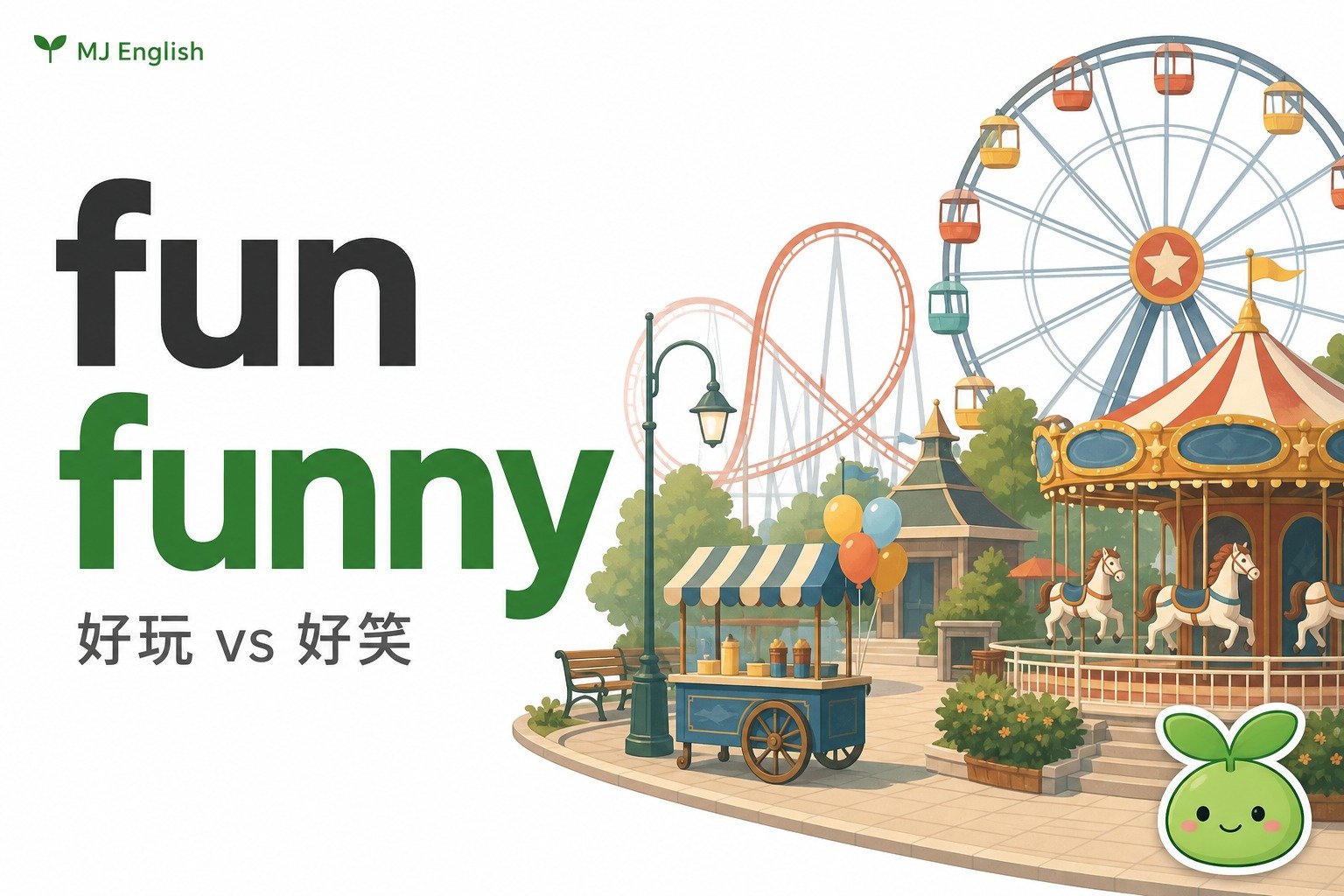
「超好玩」英文別說 so funny!fun 和 funny 差在哪一次搞懂

2026 08 26 en fun vs funny Daily English | 生活英語

玩得超開心回來,你脫口 “It was so funny!”——但對方以為你在說「超好笑」,不是「超好玩」。

「好玩」用 fun、「好笑」才用 funny——“It was so much fun!”“That’s so funny!” 差在這。

💡 先搞懂:fun 和 funny 不是同一個字

台灣人最常把「好玩」講成 funny,但 funny 是「好笑、讓你發笑」的意思。好玩、開心要用 fun(是形容詞也是名詞)。一個字,意思差很多。

台灣人最容易卡的雷:兩個最常踩的雷——① 想說「超好玩」講成 so funny,其實是 so much fun;② 誇人「很好笑、幽默」要用 You’re so funny,說「跟你相處很開心」才用 You’re so much fun——看你想講哪個。


情境對話 Dialogue

邊聽邊學

這一集是訂閱者限定,到 Apple 或 Spotify 收聽完整內容

場景:Amy 和 Jordan 是朋友,Amy 昨天去了遊樂園,今天跟 Jordan 分享,一路把 fun 說成 funny。


Jordan

So how was the theme park yesterday?

昨天那個遊樂園怎麼樣?

Amy

It was so funny! We rode everything twice.

超好笑的!我們每項都玩了兩次。(想說「超好玩」)

Jordan

You mean it was so much fun? Funny is more like a joke that makes you laugh.

你是說「超好玩」吧?funny 比較像讓你笑的笑話那種好笑。

Amy

Oh, right. Yeah, it was so much fun, then.

喔對。嗯,那就是「超好玩」囉。

Jordan

Exactly. Did anything actually funny happen?

沒錯。那有發生什麼真的很好笑的事嗎?

Amy

Actually yes — a mascot kept tripping over its own feet.

還真的有——有隻吉祥物一直自己絆到腳。

Jordan

Ha, now that’s funny. See the difference?

哈,那個就叫 funny。有感覺到差別了嗎?

Amy

Totally. A fun trip, with one funny mascot.

完全懂。一趟好玩的旅行,加一隻好笑的吉祥物。

Jordan

Perfect sentence — you’ve got it.

這句超完美——你會了。

Amy

Next time come with us. It’s always more fun together.

下次跟我們一起去啦,一起玩更好玩。

🎯 30 秒快速複習

「好玩」用 fun、「好笑」用 funny——搞混就記:so much fun(好玩)vs so funny(好笑)。

①好玩=fun / so much fun
②好笑=funny / hilarious
③玩得開心=have fun
④超好玩=so much fun
⑤取笑某人=make fun of
⑥好玩的旅行=a fun trip
⑦別說 so funny(想講好玩)→so much fun
⑧誇人=You’re so funny(好笑)/fun(好相處)

下次這樣說 Next Time

這幾個地方最容易把 fun 和 funny 用反,學會就到位。

① 說好玩

❌ 中文腦會說

The trip was so funny.

想說「這趟超好玩」

✅ 該這樣說

The trip was so much fun.

好玩用 fun,不是 funny

為什麼:funny 是「好笑」;講好玩、開心一律用 fun/so much fun。

② 活動好玩

❌ 中文腦會說

Karaoke is very funny!

想說「唱 KTV 很好玩」

✅ 該這樣說

Karaoke is so much fun!

好玩的活動用 (so much) fun

為什麼:活動好玩用 fun;用 funny 會變成「KTV 很好笑」,意思跑掉。

③ 誇人

❌ 中文腦會說

You are very fun.

想說「你很好笑、很幽默」

✅ 該這樣說

You’re so funny!

誇人幽默好笑用 funny

為什麼:誇人「幽默好笑」用 funny;You’re so much fun 不是錯,它是說「跟你相處很開心」,是另一種稱讚,別跟這裡搞混。


重點單字 Vocabulary Boost

fun/fʌn/ n./adj.

好玩、樂趣(開心的事)。

The party was so much fun.(那個派對超好玩。)

funny/ˈfʌni/ adj.

好笑、滑稽(讓你發笑)。

That joke was really funny.(那個笑話真好笑。)

have fun/hæv fʌn/

玩得開心。

Have fun at the concert!(演唱會玩得開心!)

so much fun/soʊ mʌtʃ fʌn/

超好玩。

The trip was so much fun.(那趟超好玩。)

hilarious/hɪˈlɛriəs/ adj.

超好笑、爆笑(比 funny 更強)。

His story was hilarious.(他的故事超爆笑。)

make fun of/meɪk fʌn ʌv/

取笑、拿…開玩笑。

Don’t make fun of him.(別取笑他。)

a fun trip/ə fʌn trɪp/

一趟好玩的旅行。

It was a fun trip.(那是趟好玩的旅行。)

boring/ˈbɔːrɪŋ/ adj.

無聊(fun 的反義)。

The movie was so boring.(那部電影超無聊。)


重點句型 Sentence Patterns

1. 講「好玩」 → fun / so much fun / a lot of fun

好玩、開心一律用 fun,不是 funny。

例:The trip was so much fun.(那趟超好玩。)
例:We had a lot of fun.(我們玩得很開心。)
例:It’s a fun place to hang out.(那是個好玩的聚會地方。)
「好玩」的英文是 fun;funny 是「好笑」,別搞混。

2. 講「好笑」 → funny / hilarious

讓你發笑的才用 funny/hilarious。

例:That’s so funny!(那超好笑!)
例:The movie was hilarious.(那部電影超爆笑。)
例:He’s a funny guy.(他是個好笑的人。)
funny=好笑;再更強烈就用 hilarious。

3. 玩得開心 → have fun / enjoy

祝人玩得開心最口語的說法是 have fun。

例:Have fun!(玩得開心!)
例:Did you have fun?(你玩得開心嗎?)
例:Have fun and stay safe.(玩得開心、注意安全。)
have fun=玩得開心,比 enjoy yourself 更口語。

4. 取笑/開玩笑 → make fun of / just kidding

拿某人開玩笑用 make fun of;「開玩笑的」用 just kidding。

例:Stop making fun of me.(別再取笑我了。)
例:I’m just kidding.(我開玩笑的啦。)
例:We were just messing around.(我們只是鬧著玩。)
make fun of 帶點取笑意味,語氣拿捏一下。

5. 誇人有趣 → You’re so funny / so much fun

誇人幽默好笑用 funny;說跟他相處開心用 fun。

例:You’re so funny!(你超好笑!)
例:You’re so much fun to be around.(跟你相處超開心。)
例:She’s the fun one in the group.(她是團體裡最會玩的。)
funny=幽默好笑、fun=相處起來好玩,看你要誇哪個。

逐字稿 Transcript

J
Okay, before we start, I have to confess something pretty embarrassing. Last year I told my American friend a movie was so funny, but I actually meant it was really fun to watch.開始之前我要先認錯,去年我跟美國朋友說一部電影 so funny,但我其實想講的是這部電影很好玩(fun)。
M
Wait, so what did she actually think you meant by that? Like, what was going through her head at that moment?等等,那她聽了到底以為你在講什麼?她當下心裡在想什麼啊?
J
She genuinely thought it was a comedy! She kept asking me what the funniest scene was, and honestly I had no answer at all.她真的以為那是喜劇片,還一直問我最好笑的橋段是哪段,我完全答不出來。
M
That’s such a classic mix-up, and honestly, I totally get why it happens so easily to Taiwanese English learners. I’m Mary, by the way.這超經典的搞混,老實說我完全懂為什麼台灣人學英文這麼容易搞錯,對了我是 Mary。
J
I’m Jason, still slightly traumatized by that whole conversation. And actually, this mix-up makes total sense once you think about Mandarin.我是 Jason,到現在對那整段對話還有點陰影。而且如果你想想中文,這個搞混其實完全合理。
M
Right, in Chinese, both ideas basically start with the exact same word — good fun and good laugh. They really feel like siblings.對啊,中文裡這兩個概念都是「好」開頭,好玩、好笑,感覺就像雙胞胎一樣。
J
So your brain just grabs whichever word comes out first, and funny slips out even when what you really mean is fun.所以腦袋隨便先抓一個字講,funny 就先脫口而出,即使你想講的其實是 fun。
M
Today’s episode is exactly about untangling that confusion once and for all. Fun means something is enjoyable, and funny means it makes you laugh.今天這集就是要把這個搞混一次拆開講清楚,fun 是「好玩、開心」,funny 是「好笑,會讓你笑出來」。
J
There’s actually a perfect example of this exact mix-up in today’s dialogue — Amy just got back from a big theme park trip.今天的情境對話裡就有一個超好的例子,Amy 剛從遊樂園玩回來。
M
Guess which word she reaches for first to describe the whole crazy day at the park. Spoiler alert, it’s the wrong one entirely.猜猜她第一個用哪個字形容在遊樂園瘋狂的一整天,先爆雷,她整個用錯字了。
J
Jordan actually catches it right away and gently corrects her, which is honestly a really natural and friendly way to handle it.Jordan 馬上就抓到了,還很自然地糾正她,老實說這個處理方式滿貼心的。
M
Totally relatable, honestly. Okay, let’s stop teasing everyone and just listen to exactly how Amy and Jordan work this whole thing out.真的超有共鳴,好啦別再吊胃口了,直接聽 Amy 跟 Jordan 怎麼把這整件事講清楚。
J
Here we go — pay close attention to which word Amy uses when she first describes the whole theme park trip.來囉,仔細聽 Amy 一開始描述整趟遊樂園之旅的時候用了哪個字。
🔁 [DIALOGUE REPLAY] 重播情境對話
M
Okay, did everyone catch it? Amy said, ‘It was so funny! We rode everything twice,’ but nothing there was actually making her laugh.有聽到嗎?Amy 說「It was so funny! We rode everything twice.」,但其實沒什麼事讓她真的笑出來啊。
J
Right, she just spent the whole day riding roller coasters and having a really great time. That’s a fun day, not a funny one.對,她整天在坐雲霄飛車玩得很開心,那是好玩的一天,不是好笑的一天。
M
And Jordan catches it perfectly. He says, ‘You mean it was so much fun? Funny is more like a joke that makes you laugh.’Jordan 抓得超準,他說:你是想講 so much fun 吧?funny 比較像會讓你笑出來的笑話。
J
That’s the fix right there. Theme parks, concerts, even a fun little weekend trip with friends — all of those are fun, never funny.這就是修正的重點。遊樂園、演唱會,連跟朋友的週末小旅行都算,這些都是 fun,絕對不是 funny。
M
Same goes for karaoke night with your friends after work. You’d say ‘karaoke is so much fun,’ and never ‘karaoke is very funny.’跟朋友下班後的卡拉OK之夜也一樣,要說「karaoke is so much fun」,不會說「karaoke is very funny」。
J
Speaking of laughing, something actually funny does happen a bit later in the story — a park mascot keeps tripping over its own feet.說到笑點,對話後面真的發生了一件好笑的事,遊樂園吉祥物一直被自己的腳絆倒。
M
Jordan says, ‘Now that’s funny,’ and honestly, that’s the perfect, hilarious use of the word right there in that exact moment.Jordan 說「Now that’s funny」,老實說那個瞬間,這才是「超好笑(hilarious)」最完美的用法。
J
One trip, two words — a fun trip overall, with one genuinely funny mascot moment tucked right inside it somewhere in the middle.同一趟旅行兩個字都用得到,整趟是好玩的旅行,裡面又藏了一個真的很好笑的吉祥物瞬間。
M
Let’s cover two more super useful everyday phrases quickly before we wrap this whole episode up for everyone listening today.我們最後再補兩個超實用的日常說法,然後幫大家把這集收尾。
J
First one: ‘have fun’ just means enjoy yourself, like when you say ‘Have fun at the party tonight, see you tomorrow morning!’第一個,have fun 就是「玩得開心」,像「Have fun at the party tonight, see you tomorrow morning!」。
M
And ‘make fun of’ means something totally different — it means to tease or mock someone, like ‘Don’t make fun of his accent, it’s rude.’make fun of 意思完全不同,是「取笑某人」,像「Don’t make fun of his accent, it’s rude.」,別取笑他的口音,這樣很沒禮貌。
J
Good one, that’s a really useful phrase. Now here’s where it gets trickiest of all — using these two words to compliment someone directly.這個好,超實用的一句。再來這裡最容易搞混,就是直接拿這兩個字誇獎人的時候。
M
‘You’re so funny’ means someone is genuinely hilarious — they crack jokes constantly and make you laugh the whole time you’re together.「You’re so funny」是說對方超好笑(hilarious),一直講笑話逗你笑。
J
But ‘you’re so much fun’ means something totally different — you just love hanging out and spending time with that person.但「you’re so much fun」意思完全不同,是說你很喜歡跟這個人相處、一起打發時間。
M
Different compliment, completely different feeling behind it. If a friend jokes all night long, tell them ‘you’re so funny.’兩種誇獎感覺完全不一樣,如果朋友整晚都在講笑話,就跟他說「you’re so funny」。
J
But if they just make every single hangout feel better, that’s exactly when you say ‘you’re so much fun.’但如果只要有他在,每次聚會都變得更開心,那就是要說「you’re so much fun」。
M
Amy actually nails this by the very end of the whole conversation. She says, ‘It’s always more fun together,’ which is a perfect line.Amy 到最後其實講對了,她說「It’s always more fun together.」,這句用得超完美。
J
Quick recap for everyone listening: fun means enjoyable, funny means it makes you laugh, and don’t forget have fun and make fun of too.快速複習一下,fun 是好玩開心,funny 是好笑,還有 have fun 跟 make fun of 也別忘了。
M
Have fun this week, don’t make fun of anyone, and choose your compliments wisely out there, everyone listening.這週祝你 have fun,別 make fun of 別人,誇獎時也記得選對字。
J
That’s it from MJ English for today — go have some real fun out there, and we’ll catch you next time around.這集 MJ English 就到這邊,大家去外面真的玩得開心點,我們下次再聊。

延伸學習 Keep Going

fun vs funny 搞懂了,這幾課把台灣人最常用反的字一起補齊。

你是不是也曾經玩得超開心、結果說成 “It was so funny”?留言告訴我們你最近覺得超好玩的事!

留言你下一個想搞懂的英文用字,我們下一集來拆解。

追蹤 MJ英語 podcast,下次見。

標題和URL已復制