JQuick question — when someone says “How are you?” in the morning, does “I’m fine, thank you, and you?” come flying out of your mouth automatically, almost like a reflex you can’t control at all, even before you’ve had your morning coffee?問個問題——早上有人問「How are you?」,你是不是會反射性脫口而出「I’m fine, thank you, and you?」,像個完全控制不住的反射動作?
MEvery single time, honestly. I’m Mary, and that exact sentence lived rent-free in my head for years before I finally realized native speakers almost never say the whole thing out loud.每次都會,老實說。我是 Mary,這句話在我腦裡住了好幾年,我才終於發現母語者幾乎不會把整句講出來。
JI’m Jason, and it’s the same story on my end — perfect grammar, zero natural rhythm. Said out loud, it sounds like reciting a page straight out of an old textbook, word for word, the kind of line a teacher would praise but a native speaker would never actually say.我是 Jason,我這邊也一樣——文法完全正確,但完全沒有自然的節奏。講出來就像逐字唸課本裡的一頁。
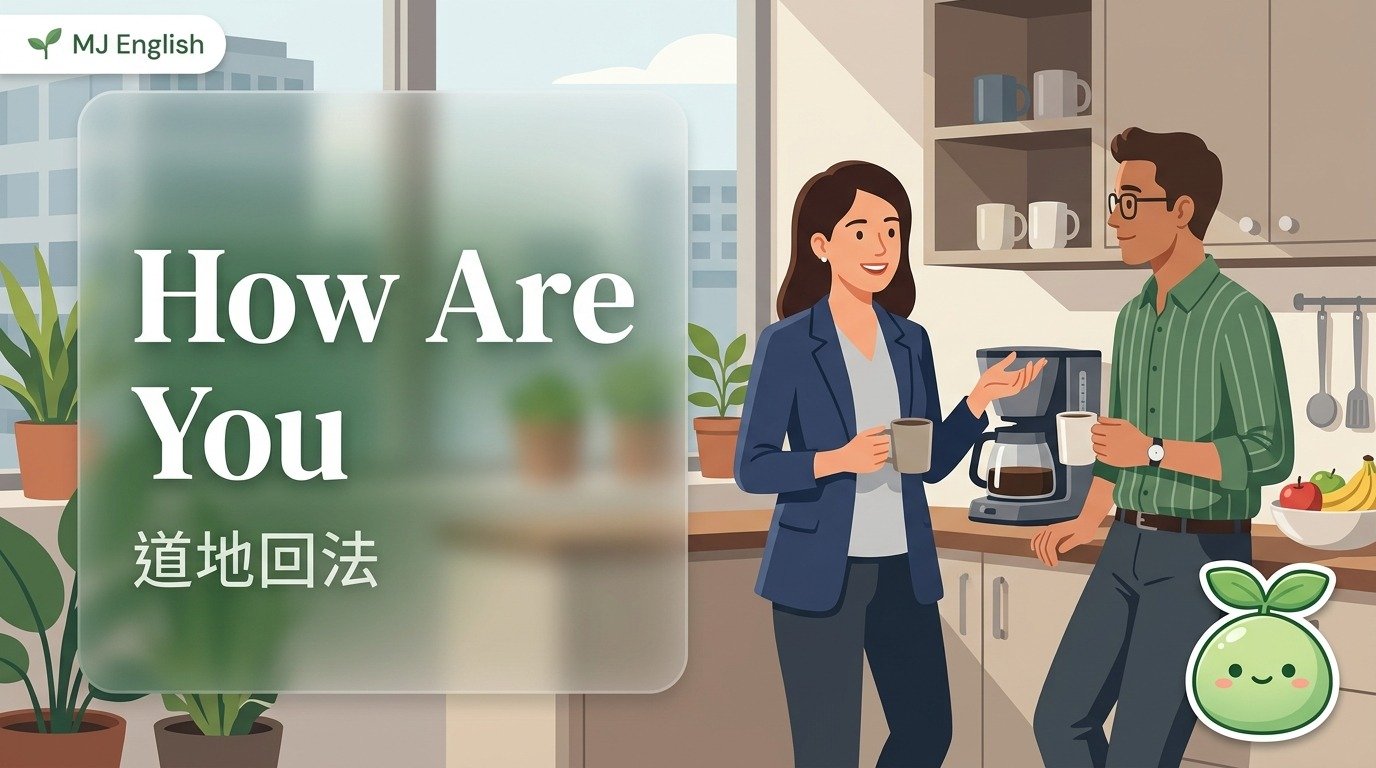
MRight, and today’s story nails that exact moment on a completely ordinary Monday morning — Tom, standing in the office kitchen, reflexively answering “I’m fine, thank you. And you?” the second his coworker Sara says good morning to him.對,今天的故事就抓到這個瞬間——Tom 站在辦公室裡,同事 Sara 一說早安,他馬上反射性回「I’m fine, thank you. And you?」。
JSara’s reply is priceless, too — she just laughs and says, “Ha, you don’t need the whole textbook line.” No lecture attached, just a quick, friendly nudge in exactly the right direction.Sara 的回應也很妙——她只是笑著說「哈,不用整句課本台詞啦」。沒有說教,只是一個輕鬆友善的小提醒。
MHer fix is short — “Pretty good, you?” It’s casual, it’s quick, and it still does exactly the same job the long version does, minus all that stiffness and formality, and it barely takes half a second to actually say out loud.她的修正版很短——「Pretty good, you?」隨性又快,功能跟長版完全一樣,只是少了那份生硬感。
JTom picks it up instantly, too — “Oh. Pretty good, you?” That’s basically the entire lesson packed into four words, delivered live, right there in real time.Tom 也馬上學會了——「喔。Pretty good, you?」這四個字幾乎就是整堂課的重點,當場現學現用。
MTwo words really carry that whole phrase — “pretty” and “good” — and the follow-up “you?” matters just as much, because it hands the conversation straight back to the other person.這句話真正靠的是兩個字——「pretty」和「good」——後面那個「you?」一樣重要,因為它把話題直接丟回給對方。
JSara keeps going with another common trap next — “Mondays are rough, but I’ll survive.” A lot of learners here would default straight to something like “so-so” instead, without thinking twice, since it feels like the obvious direct translation from Mandarin.Sara 接著又碰到另一個常見的雷——「Mondays are rough, but I’ll survive」。很多學習者這邊會直接想到「so-so」,想都不想。
M“So-so” feels completely natural if you’re translating straight from Mandarin, but in English it actually sounds stiff and a bit negative — “not bad” or “can’t complain” is what people really say.「so-so」從中文直翻過來感覺很自然,但英文裡其實聽起來很生硬又有點負面——大家真正會講的是「not bad」或「can’t complain」。
J“Not bad” is interesting, honestly, because grammatically it’s almost a double negative, yet it lands as a relaxed, genuinely positive answer once your ear gets used to hearing it a few times.「not bad」很有趣,文法上幾乎是雙重否定,但聽習慣之後,它其實是個輕鬆、真的偏正面的回答。
M“Can’t complain” works the same basic way — nothing’s wrong, life’s fine, no real drama going on. It’s the go-to line for someone who’s doing okay without gushing about it, the kind of answer that works with a stranger just as well as it does with an old friend.「can’t complain」原理一樣——沒什麼不好,日子過得去,沒什麼好抱怨的。適合狀態還好、但不想大驚小怪的人。
JThen Tom answers about his weekend with “It was fine, thank you” all over again, and Sara catches it immediately — that extra “thank you” really doesn’t belong there at all.接著 Tom 講起週末又說了一次「It was fine, thank you」,Sara 馬上抓到——那個多出來的「thank you」其實根本不需要。
MShe swaps it for “It was great, super chill,” and Tom actually notices the difference himself — “This already feels easier,” he says, and honestly, he’s completely right, because it feels less like translating in his head and more like just talking.她換成「It was great, super chill」,Tom 自己也察覺到差別——他說「這樣已經輕鬆多了」,老實說,他講得完全沒錯。
JThat single line right there is basically the whole point of tonight — dropping the textbook padding makes everything sound lighter, faster, and so much closer to a real conversation.那一句話基本上就是今晚的重點——拿掉課本式的贅字,整句話就變得輕盈、快速,更像真正的對話。
MSara then drops something even bigger, though — “Half the time, How are you isn’t even a real question. It’s just hi.” That one sentence changes pretty much everything.不過 Sara 接著丟出一句更關鍵的話——「有一半的時候,How are you 根本不是真的在問,它就只是 hi」。這句話幾乎改變了一切。
JTom’s reaction is so relatable, stopping mid-sentence and looking a little startled — “Wait, so I don’t actually have to answer it?” Honestly, not really, not in any serious way, unless someone’s specifically checking in on you.Tom 的反應超有共鳴——「等等,所以我其實不用真的回答它?」老實說,不太需要,除非對方是真的在關心你。
M“A quick Good, you? is plenty,” Sara tells him. “Nobody needs your full medical report.” Honestly, that one line alone deserves to be framed and hung on a wall somewhere.Sara 說「一句 Good, you? 就很夠。沒人要聽你的完整健康報告」。老實說,這句話值得裱框掛起來。
JIt’s worth knowing “How are you” isn’t the only greeting doing this exact job, either — “How’s it going?” and “What’s up?” both work in basically the same casual way, so there’s no need to freeze up just because someone switches the wording on you.值得知道的是,做這件事的招呼語不只 How are you 一種——「How’s it going?」和「What’s up?」功能基本上一樣隨性。
MIf you haven’t seen someone in a while, “How’ve you been?” fits a bit better — the same short answer still applies, just with a slightly different flavor of catching up.如果一陣子沒見到某人,「How’ve you been?」更合適——回法一樣簡短,只是多了一點久別重逢的味道。
JAnd on a day that genuinely isn’t great, you’re not stuck faking “fine” either — “Hanging in there” is an honest, still perfectly polite way to answer without oversharing, something every one of us needs on a genuinely bad day.在真的不太好的日子,也不用硬裝 fine——「Hanging in there」是誠實、又完全得體的回法,不用交代太多。
MIt doesn’t dump your problems on someone passing by in the hallway, but it doesn’t pretend everything’s perfect either — that balance is exactly what makes the phrase work so well.它不會把你的煩惱一股腦倒給走廊上擦身而過的人,但也不用假裝一切完美——這個平衡點正是它好用的原因。
JAll of these phrases share one habit, actually — they stay short, and they almost always toss the question right back at the end with a simple little “you?”這些回法其實都有一個共同習慣——都很短,而且結尾幾乎都會加一個小小的「you?」把問題丟回去。
MLet’s hear Sara and Tom’s whole exchange again from the very top, so every one of these swaps lands in context, back to back, exactly the way they’d really happen, start to finish, nothing skipped this time.我們再從頭聽一次 Sara 和 Tom 的完整對話,讓這些替換的用法一個接一個、在情境裡真正串起來。
🔁 [DIALOGUE REPLAY] 重播情境對話
JHearing it again, Tom’s very first line is honestly the only textbook one in the whole conversation — everything after that gets shorter and more natural, turn by turn.重聽一次會發現,Tom 的第一句其實是整段對話裡唯一的課本句——之後每一句都變得更短、更自然。
MTry this today — next time someone greets you, skip the full sentence completely and answer in four words or less, then ask them right back immediately.今天就試試看——下次有人跟你打招呼,完全跳過整句課本台詞,用四個字以內回答,然後馬上把問題丟回去。
JThanks so much for hanging out with us tonight — hope your next How are you comes out short, easy, and nowhere near a full medical report, whether it’s a Monday morning or a Friday afternoon. See you next time on MJ English!謝謝大家今天陪我們聊這集——希望你下次回 How are you 的時候,能又短又輕鬆,完全不會變成一份健康報告。我們下次見,MJ English!
MBye, everyone — go say Pretty good, you? to someone today and notice just how much more natural and relaxed it actually feels!掰掰,大家——今天就找個人說一句 Pretty good, you?,感受一下有多自然、多輕鬆!