MI’m Mary, and that exact scene — freezing up in front of unfamiliar food with zero vocabulary for it — happens to nearly every visitor who wanders into a Taiwanese night market for the first time.我是 Mary,這種「站在陌生食物前腦筋一片空白、一個字都擠不出來」的場面,幾乎每個第一次逛台灣夜市的外國朋友都會遇到。
JI’m Jason, and today we’re fixing exactly that moment — how to introduce Taiwanese street food in English so it actually sounds appetizing, instead of just mumbling “it’s… Taiwan food” and leaving it there.我是 Jason,這集就是要解決這個卡關時刻——怎麼用英文介紹台灣小吃(street food,路邊攤小吃),讓它聽起來真的很誘人,而不是只擠得出一句「就…台灣食物」就結束了。
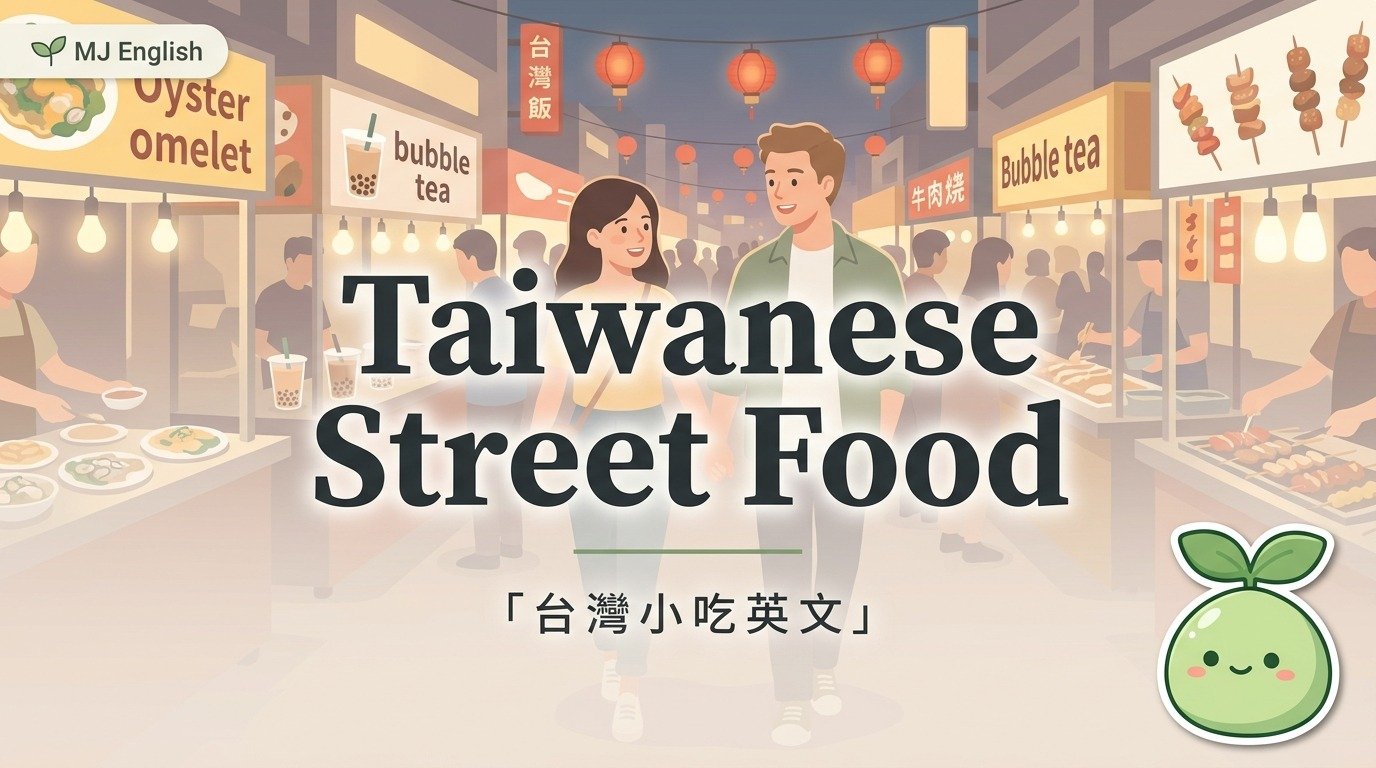
MTonight’s story follows Mia, a Taipei local, walking her friend Jake through his very first night market.今天的故事主角是 Mia,一個台北在地人,帶著朋友 Jake 逛他人生第一個夜市(a night market)。Quick vocabulary note — “street food” just means food sold from carts or stalls, while “a night market” is exactly this whole scene, dozens of stalls packed into one lively street.先補個單字——street food 就是路邊攤、小吃攤賣的食物,a night market 就是眼前這整個場景,一整條街擠滿了熱鬧的攤位。
JJake opens with, “It smells amazing — well, mostly. What is that intense smell over there?”Jake 開口就是:「聞起來超香——嗯,大部分啦。那邊那個超濃的味道是什麼?」That half-compliment, half-warning reaction is basically universal for first-time night market visitors.這種「一半稱讚、一半警戒」的反應,基本上每個第一次逛夜市的人都會有。
MHere’s the real lesson buried in that moment, though — introducing street food well was never about memorizing an English name for every single dish on the menu.不過這個瞬間藏著真正的重點——介紹小吃介紹得好,從來就不是靠背出菜單上每一道菜的英文名字。
JIt’s about one simple trick instead — comparison.真正的訣竅是一招而已——比擬(comparison)。You take something the listener has never seen, and anchor it to something familiar they already know and understand.拿聽的人完全沒看過的東西,去對照他已經熟悉、懂的東西。
MThe exact phrase is, “It’s kind of like ___, but ___.”具體句型是:「It’s kind of like ___, but ___」(有點像…,但是…)。Say a food is kind of like a burrito, but with rice, and the picture forms almost instantly in someone’s head.比如說某道菜有點像墨西哥捲,但裡面包飯,畫面幾乎立刻就浮現在對方腦中。
JSame trick works for almost anything unfamiliar — a Taiwanese pancake is kind of like a crepe, but savory.這招幾乎什麼都能用——蚵仔煎的餅皮部分有點像可麗餅,但是鹹的(savory,鹹香的)。Bubble tea is kind of like iced tea, but with chewy pearls at the bottom.珍珠奶茶有點像冰奶茶,但底下有會 Q(chewy)的珍珠。Or think of oyster omelet as kind of like a savory pancake, but with seafood folded right in.或者也可以說蚵仔煎有點像鹹口味的煎餅,但裡面包了海鮮。
MNow let’s circle back to that smell Jake noticed, because Mia’s answer to it might be the single most useful line in this whole episode: “Ha, that’s stinky tofu.”現在回頭講講 Jake 聞到的那個味道,因為 Mia 對這句的回答,可能是這集最好用的一句話:「哈,那是臭豆腐(stinky tofu)。」
JAnd stinky tofu, believe it or not, is the actual official English name — not some rough, awkward translation.而且臭豆腐這個詞,其實就是官方正式的英文講法——不是隨便翻譯出來的。Don’t reach for “smelly tofu” instead; that just sounds purely negative.別直接講「smelly tofu」,那聽起來就是很負面的意思而已。
MMia softens the whole thing beautifully, too — “Don’t let the smell scare you — it’s an acquired taste, but so good.”Mia 也順手幫它緩頰得很漂亮——「別被味道嚇跑——它是那種要習慣的味道(an acquired taste),但超好吃。」That single sentence carries a lot of persuasive weight.這一句話真的很有說服力。It’s basically the exact same idea as saying, “Don’t let the ___ put you off” — you could use that pattern for century eggs, or any fermented dish that looks intimidating at first.其實這跟「Don’t let the ___ put you off」(別讓…嚇跑你)這個句型是同一個概念,皮蛋、發酵類食物看起來嚇人時都可以這樣用。
JAn acquired taste basically means something you might not love right away, but grow to enjoy the more you try it.an acquired taste 意思就是一開始不一定馬上愛上,但吃久了就會漸漸喜歡的味道。Jake’s own reply proves it worked — “Stinky… tofu. Bold name.”Jake 自己的回答也證明這招有效——「臭…豆腐。這名字真敢取。」He never once says no.他完全沒有拒絕。
MNext stop, bubble tea — and this is exactly where Taiwanese English learners fall into their favorite trap, the word “Q.”接下來是珍珠奶茶——這裡正是台灣人學英文最容易踩的雷,那個字就是「Q」。
JRight, because “Q” genuinely doesn’t exist in English.沒錯,因為「Q」這個字英文根本沒有。It’s a word Taiwanese speakers use for that springy, bouncy texture, and a native speaker will just look at you blankly.這是台灣人用來形容那種有彈性、有嚼勁口感的說法,母語者聽了只會一臉茫然。
MSwap it for “chewy” instead.換成 chewy(Q、有嚼勁)就對了。Mia does exactly that — “Bubble tea — or boba. The little pearls are super chewy; that’s the fun part.”Mia 就是這樣講的——「珍珠奶茶(bubble tea),或叫 boba。裡面的珍珠超 Q;那正是好玩的地方。」
JAnd Jake’s reaction says it all — “Chewy tea sounds wild.”Jake 的反應也很到位——「會 Q 的茶聽起來太狂了。」Which, honestly, out of context, it kind of does sound a little strange.老實說,脫離上下文來看,這句話聽起來確實有點怪。
MNext dish over — braised pork rice, soy-braised pork spooned right over a warm bowl of rice.接下來這道——滷肉飯(braised pork rice),滷過的豬肉舀在熱騰騰的白飯上。Mia keeps that description refreshingly simple: “Simple, but it’s a must-try.”Mia 的描述保持得很簡單:「很簡單,但必吃(a must-try)。」
JNotice the pattern worth stealing there — just state what it’s made of, and how it’s served.這裡值得偷學的一招是——直接講它是什麼做的、怎麼上桌的。No fancy vocabulary needed at all, just plain, honest clarity.完全不用花俏的單字,講清楚就好。Same idea works for “It’s made of ___” too — it’s made of glutinous rice, it’s stir-fried with garlic, simple facts delivered with total confidence.同樣的邏輯也能用在「It’s made of ___」(它是…做的)——它是糯米做的、它是用蒜爆炒的,簡單交代事實,講得有自信就好。
M“A must-try,” by the way, works for way more than food — call a hike, a museum, or a movie “a must-try” too, and it always sounds genuine and warm.a must-try 這個詞其實不只能用在食物上——一段健行、一間博物館、一部電影都可以說是 a must-try,聽起來永遠都很真誠、很有推薦感。
JThen Jake asks the obvious next question — “Everything looks incredible. So where do we actually start eating?”接著 Jake 問了最直接的問題——「每樣看起來都超讚。所以我們到底要先從哪個開始吃?」Mia’s answer leans right back on texture words.Mia 的回答又靠回口感詞了。
M“Popcorn chicken first — crispy, savory, bite-sized.”「先吃鹽酥雞(popcorn chicken)——酥脆(crispy)、鹹香(savory)、一口一個(bite-sized)。」Three texture words stacked right in a row, and suddenly you can practically taste it just from hearing the sentence.三個口感詞一口氣接連講出來,光是聽到這句話就幾乎能嚐到味道了。
JThat’s the actual secret weapon here — crispy, savory, chewy, bite-sized, words like these paint a vivid picture instantly, way more than a flat, overused “delicious” ever could.這才是真正的武器——crispy、savory、chewy、bite-sized 這種詞,馬上就能畫出一幅畫面,比一句老掉牙的「delicious」有用太多了。
MAnd whenever you’re recommending something, skip “very delicious” entirely.而且每次要推薦東西的時候,「very delicious」這種說法直接跳過。Go with “you’ve got to try it” instead — it sounds like a genuine push from a friend, not a textbook line.改講「you’ve got to try it」(你一定要試試看)——聽起來就像朋友真心推坑,不是課本例句。And don’t underestimate a simple emotional nudge either — “Trust me, you’ll love it” works wonders right before someone tries something a little intimidating for the first time.也別小看情緒性的推一把——「Trust me, you’ll love it」(相信我,你會愛上)在對方要嘗試有點嚇人的食物之前特別好用。
JSo here’s the whole system, compressed into two moves — comparison to explain what something actually is, plus texture words to describe exactly how it tastes.所以整套系統濃縮成兩招——用比擬解釋這東西到底是什麼,再用口感詞形容它吃起來到底如何。
MKeep both of those tools in mind, and let’s listen to Mia and Jake’s full night market conversation again, right from the very top.把這兩招都記住,我們再把 Mia 和 Jake 這整段夜市對話重播一次,從頭聽一遍。
🔁 [DIALOGUE REPLAY] 重播情境對話
JNotice how naturally Mia leaned on comparison and texture throughout that whole exchange — she never once just translated a Chinese dish name word for word.重聽會發現 Mia 整段對話都很自然地用比擬和口感詞在講話——她完全沒有把中文菜名直接逐字翻成英文。
MHere’s your challenge this week — pick one food you genuinely love, and describe it to a friend using “It’s kind of like ___, but ___.”這週的挑戰——挑一樣你真心喜歡的食物,用「It’s kind of like ___, but ___」跟朋友介紹看看。
JThanks so much for wandering through the night market with us tonight — hope your next food conversation goes a whole lot smoother from here on out.謝謝大家今天陪我們一起逛這趟夜市——希望你下次聊到台灣小吃的時候可以順很多。See you next time on MJ English!我們下次見,MJ English!
MBye, everyone — go find some real street food this week, and try out that comparison trick for yourself!掰掰,大家——這週去找點真正的路邊小吃,自己試試看這招比擬法吧!