JHi, I’m Jason. Forgetting someone’s name isn’t the awkward part. Everybody does it. The awkward part is asking the wrong way, because one tiny question can make the other person feel forgotten.嗨,我是 Jason。忘記別人的名字不是最尷尬的,大家都會。尷尬的是問錯方式,因為一個小小的問題,就可能讓對方覺得自己被忘了。
MAnd I’m Mary. Today we have a small Monday morning story, and a few easy lines you can use right away. Even if you forget names like I do, you’ll know what to say.我是 Mary。今天有個週一早上的小故事,還有幾句馬上能用的簡單句子。就算你跟我一樣常忘記名字,也會知道該怎麼說。
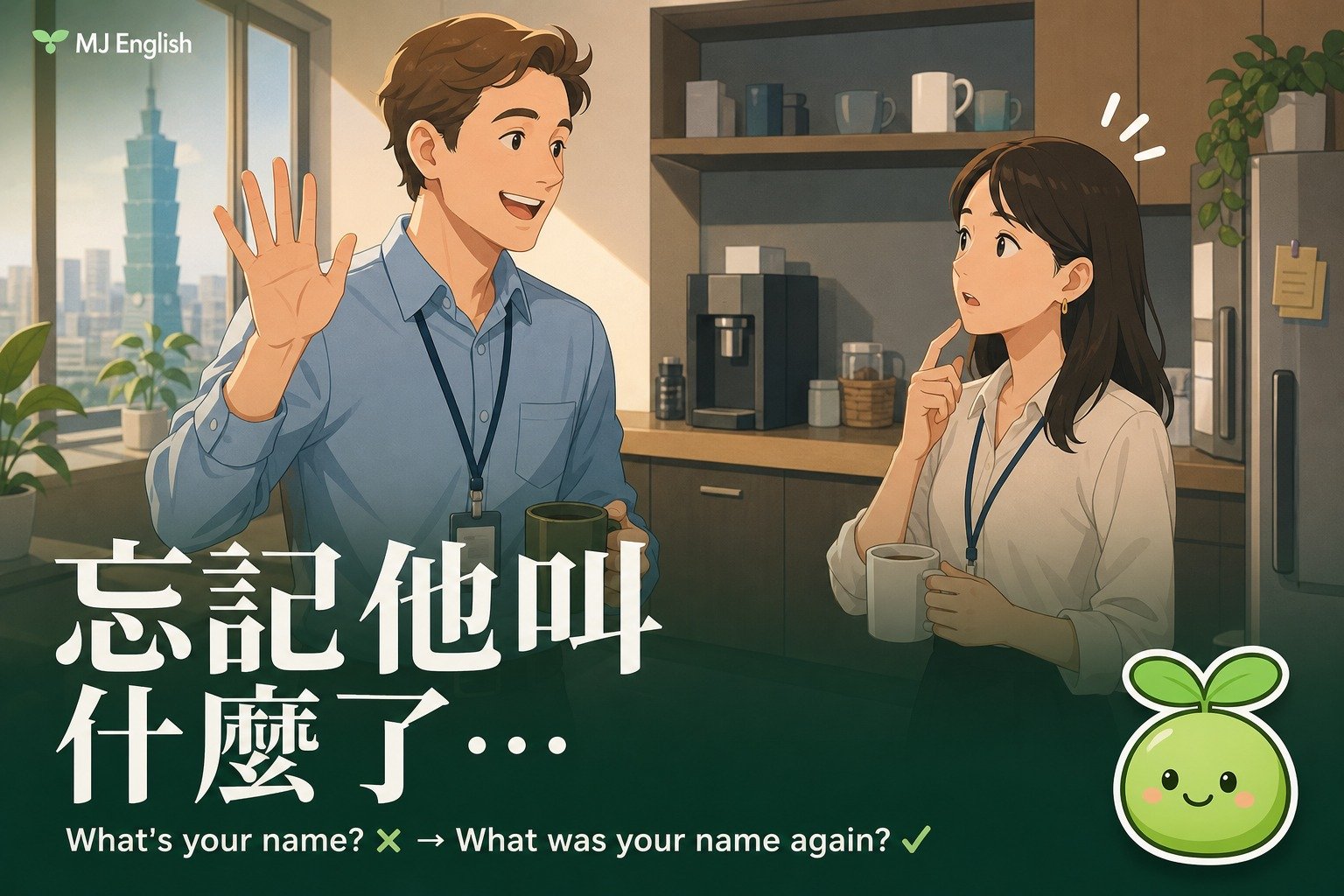
JOur story starts in an office pantry in Taipei, on a Monday morning. Iris is making tea. A foreign coworker walks in, smiles, and greets her like an old friend. His name is Ethan.故事發生在台北辦公室的茶水間,週一早上。Iris 正在泡茶。一位外國同事走進來,笑著跟她打招呼,像老朋友一樣。他叫 Ethan。
MLast week, Iris met Ethan at a team dinner. Now she’s standing there with her cup, smiling, and her brain is blank. She knows his face. She knows his voice. His name? Gone.上週 Iris 在部門聚餐認識了 Ethan。現在她拿著杯子站在那裡微笑,腦袋一片空白。她認得他的臉,也記得他的聲音。他的名字呢?不見了。
JEthan says, “Hey, Iris! Good to see you again. How was your weekend?” Notice that “Good to see you again.” It’s the perfect line for the second time you meet someone.Ethan 說:「嘿,Iris!又見面了。週末過得怎麼樣?」注意那句 Good to see you again,這是第二次見面時最完美的說法。
MAnd that’s our first small trap. Many learners say “Nice to meet you” the second time. But “Nice to meet you” is for the first time. After that, we say “see.” Nice to see you again.這是第一個小陷阱。很多人第二次見面還說 Nice to meet you。但 Nice to meet you 是第一次見面才說的,之後要用 see。Nice to see you again。
JGoodbyes work the same way. First time, “Nice meeting you.” After that, it’s usually “Good seeing you” or “Nice seeing you.” It’s a tiny change, but it quietly says, “I remember you.”道別也一樣。第一次說 Nice meeting you,之後通常說 Good seeing you 或 Nice seeing you。改變很小,卻默默在說:我記得你。
MBack to Iris. She can’t remember his name, so what does she do? She tells the truth. She says, “I’m so sorry. I’m terrible with names.” And honestly, that’s a great move.回到 Iris。她想不起他的名字,怎麼辦?她說實話。她說:「真的很抱歉,我超不會記名字。」老實說,這招很棒。
JIt’s honest and light. “I’m terrible with names” isn’t an excuse. It’s a friendly joke about yourself. Native speakers say it all the time, so it never sounds rude.它誠實又輕鬆。I’m terrible with names 不是藉口,而是一個拿自己開玩笑的友善說法。母語者天天在說,所以一點也不失禮。
MHere’s my moment. I once forgot my neighbor’s name after two years. Two years! I just smiled every morning. When I finally confessed, she laughed. She had forgotten mine too.說說我的糗事。我曾經跟鄰居住了兩年,卻忘了她的名字。兩年耶!我每天早上都只是微笑。後來我終於坦白,她笑了,原來她也忘了我的名字。
JThat’s the best ending. Another soft line is, “Your name just slipped my mind.” Slipped my mind means it slid out of your head for a moment. It’s gentle and polite.這結局最棒。另一句很溫和的說法是 Your name just slipped my mind。Slipped my mind 的意思是名字一時從腦中溜走了,很溫柔也很有禮貌。
MCompare that with “I forget your name.” It’s not wrong, but present tense can sound like you always forget, like a habit. “Slipped my mind” sounds like a small accident. Same problem, much kinder feeling.比較一下 I forget your name。這句沒有錯,但現在式可能聽起來像你老是記不住,變成習慣。Slipped my mind 則像一個小意外。同樣的問題,感覺卻溫柔多了。
JNow the big one. Iris admits she almost said, “What’s your name?” And Ethan says, “Next time, just say, what was your name again?” Look at that little word, was.現在是重頭戲。Iris 承認她差點說了 What’s your name?而 Ethan 說:「下次就說 what was your name again?」注意那個小字 was。
MWhy was? “What’s your name?” is what you ask a stranger. It sounds like you’ve never met. “What was your name again?” says, “You told me before. I just lost it.”為什麼用 was?What’s your name 是問陌生人的,聽起來像你們從沒見過。What was your name again 則是在說:你之前告訴過我,只是我弄丟了。
JSo the other person feels remembered, even while you ask. That’s the whole trick. Past tense, plus “again,” and a smile. Try saying it out loud a few times today.所以就算你在問,對方也覺得自己被記得。這就是整個訣竅:過去式加上 again,再配一個微笑。今天找時間大聲唸幾次看看。
MThere’s an easy backup too. “Remind me your name?” It’s short and casual, and it works well at a busy party or event when you need to ask quickly.還有個簡單的備案:Remind me your name?又短又隨性,在忙碌的聚會或活動中需要快速問的時候很好用。
JWhat if you’re too embarrassed to ask at all? Ethan has a clever trick. He says, “If you really don’t want to ask, introduce me to someone else. I’ll say my name.”如果你真的不好意思問呢?Ethan 有個聰明的招數。他說:「如果你真的不想問,就把我介紹給別人,我自己會報名字。」
MI love this one. You say to a friend, “Oh, have you two met?” Then both people introduce themselves, and you hear the name. Nobody knows you forgot. It’s a quiet little rescue.我超愛這招。你對朋友說 Oh, have you two met?然後兩個人自己報名字,你就聽到了。沒人知道你忘了,是個不動聲色的小解圍。
JI used it at a wedding once. I forgot a college friend’s name right as my cousin walked up. I smiled and said, “Have you two met?” My friend said his name. I almost cheered.我有一次在婚禮上用過。我剛好忘了大學朋友的名字,這時我表親走過來。我笑著說 Have you two met?朋友報出了名字,我差點歡呼。
MVery smooth. Now flip it around. What if someone forgets your name? Ethan stays relaxed. He says, “No worries. It’s Ethan. We met at the team dinner last week.”超順的。現在反過來,如果有人忘了你的名字呢?Ethan 很放鬆。他說:「沒關係,我是 Ethan。我們上週部門聚餐認識的。」
JSee the two parts? First, “No worries,” so the person relaxes. Then your name, plus where you met. That second part helps their memory, and it makes things easy for both of you.看到兩個部分了嗎?先說 No worries 讓對方放鬆,再說你的名字和在哪裡認識。後半句能幫對方回想,也讓雙方都輕鬆。
MYou can also add, “Happens to me all the time.” Ethan says something very close: “Honestly, I forget names all the time too.” One line like that, and the embarrassment just melts away.你也可以補一句 Happens to me all the time。Ethan 說得很接近:「老實說,我也常常忘記別人的名字。」這樣一句話,尷尬就化掉了。
JAnd in the story, it works. Iris says, “Right, Ethan! You ordered all the spicy food.” She uses a small detail to show she remembers him. That’s a lovely way to repair the moment.在故事裡也奏效了。Iris 說:「對,Ethan!你點了一堆辣的菜。」她用一個小細節表示她記得他。這是修補氣氛的好方法。
MAnd it’s a good habit. After you hear the name, use it once. Say it back. “Right, Ethan!” Hearing it and saying it helps it stick, and it makes the person feel important.這也是好習慣。聽到名字後,馬上用一次,說回去。Right, Ethan!聽到再說出口,更容易記住,也讓對方覺得自己很重要。
JLet’s gather it up. Admit it lightly: “I’m terrible with names,” or “Your name just slipped my mind.” Then ask, “What was your name again?” Not “What’s your name?”來整理一下。先輕鬆承認:I’m terrible with names,或 Your name just slipped my mind。再問 What was your name again?不要問 What’s your name?
MIf you can’t ask, say, “Have you two met?” When someone forgets you, say, “No worries, it’s” and your name. And next time you meet, say, “Nice to see you again.”問不出口,就說 Have you two met?別人忘了你,就說 No worries, it’s 加上你的名字。下次再見面,就說 Nice to see you again。
JThat’s a lot, but every piece is short, and you can use all of them this week. Mondays, parties, meetings, new neighbors. Names are everywhere, and so are these little rescues.內容不少,但每句都很短,這週就能全部用上。週一、聚會、會議、新鄰居。名字到處都是,這些小解圍也是。
MOkay, we’re almost done. Let’s hear the whole conversation one more time. As you listen, count how many of today’s lines you can catch. Ready?好,我們快結束了。來把整段對話再聽一次。聽的時候,數數看今天的句子你能抓到幾句。準備好了嗎?
JHere are Iris and Ethan in the pantry, one more time, from the top.現在回到茶水間,Iris 和 Ethan,從頭再來一次。
🔁 [DIALOGUE REPLAY] 重播情境對話
MSo remember, you don’t need a perfect memory. You just need a kind way to ask. Be honest, keep it light, and say, “What was your name again?”所以記得,你不需要完美的記憶力,只需要一個友善的問法。誠實、輕鬆,然後說 What was your name again?
JNow tell us in the comments: whose name have you forgotten, and how did you handle it? We’d love to hear it. Thanks for being here with MJ English.現在留言告訴我們:你忘記過誰的名字?當時怎麼處理的?我們很想聽聽。謝謝你收聽 MJ English。
MGood seeing you all!很高興見到大家!