JQuick question before we start — do you say “sorry” for literally everything? Calling a waiter over, squeezing past a total stranger, even when you clearly didn’t do a single thing wrong?先問個問題——你是不是什麼場合都說 sorry?叫服務生、跟陌生人借過,甚至根本沒做錯事的時候也是?
MI’m Mary, and honestly, that’s exactly today’s episode. It’s one of the most common habits Mandarin speakers carry straight into English, without even realizing it’s happening.我是 Mary,今天要聊的就是這個。這幾乎是每個講中文的人一開口說英文就會有的習慣,自己完全沒發現。
JI’m Jason. Here’s the thing — in Mandarin, there’s one all-purpose word we use in Mandarin for everything. Getting someone’s attention, apologizing, squeezing past someone, even asking them to repeat something.我是 Jason。重點是——中文有一個萬用詞什麼都能用:叫人、道歉、借過,甚至請對方再說一次都靠它。
MBut English actually splits that single word into several completely different phrases, depending on the situation. Mix them up, and native speakers genuinely get confused about what you mean.但英文把這一個詞拆成好幾種不同說法,要看情境。搞混的話,母語者真的會聽得一頭霧水。
JIn today’s dialogue, Anna translates that one word as “sorry” every single time, no matter the situation. And her friend Ben, very patiently, keeps correcting her, one moment at a time.今天的對話裡,Anna 什麼情境都把那個詞翻成 sorry。她朋友 Ben 就很有耐心地,一次一個慢慢糾正她。
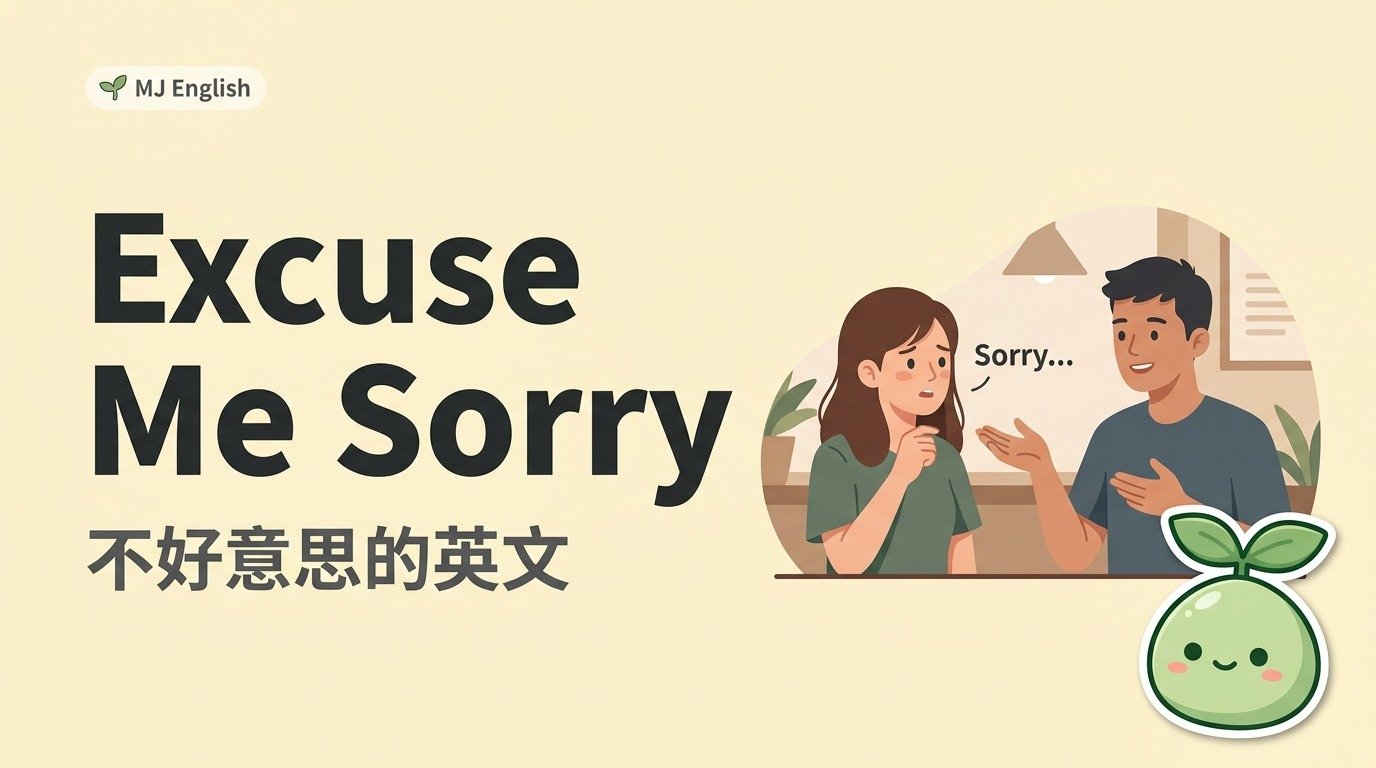
MIt starts right away, too. Anna wants to get past someone at a crowded spot, so she says, “Sorry, sorry — can I get past you?” Twice, just to be extra polite.一開場就出包。Anna 想在人擠人的地方借過,她說:「Sorry, sorry——我可以過去嗎?」還講兩次,怕不夠禮貌。
JAnd Ben jumps in immediately. For that exact situation, he says, you just say “excuse me.” “Sorry” is for when you actually did something wrong to somebody.Ben 馬上接話。他說那種情況直接說 excuse me(不好意思)就好,sorry 是你真的做錯事的時候才用。
MHonestly, that’s the single biggest trap in this whole topic. Calling a waiter, flagging down a stranger, tapping someone’s shoulder — all of that is “excuse me,” not “sorry.”老實說,這是整個主題裡最大的雷。叫服務生、借過、拍陌生人肩膀——這些通通是 excuse me,絕對不是 sorry。
JBecause to a native speaker’s ear, “sorry” quietly signals that you messed something up. Say “sorry” just to get someone’s attention, and they’ll actually wonder what you did wrong.因為對母語者來說,sorry 這個字暗示你搞砸了什麼。你只是想引起注意卻說 sorry,對方反而會納悶你到底做錯什麼。
MSo Anna tries again — “Oh. Excuse me, then.” But old habits die hard, because two seconds later, she slips right back into “sorry” while asking Ben where the restroom is.Anna 又試了一次:「喔,那 excuse me。」但習慣真的很難改,兩秒後她又不小心說回 sorry,問 Ben 廁所在哪。
JBen just laughs and repeats the same point one more time — to get someone’s attention, it’s “excuse me,” not “sorry.” Simple rule, surprisingly hard habit to break.Ben 笑了,又講了一次同樣的重點——要引起別人注意,永遠是 excuse me,不是 sorry。規則很簡單,習慣卻很難改。
MNow here’s where the conversation gets interesting. Anna asks, okay, but what about when I actually bump into someone by accident? That’s a real mistake, right?這時對話開始有意思了。Anna 問:那如果我真的不小心撞到人呢?那才算是真的做錯事吧?
JExactly, Ben says — that’s when “sorry” is perfect. “Sorry,” or the fuller “I’m sorry,” is for real apologies, when you genuinely did cause a problem for somebody else.Ben 說沒錯——那種時候 sorry 就很完美。sorry,或完整一點的 I’m sorry,是你真的造成困擾時的道歉。
MThere’s also a lighter, more casual version friends use with each other — “my bad.” Quick, relaxed, and perfect for tiny mistakes between people who already know each other well.朋友之間也有個更輕鬆的版本——my bad(我的錯)。簡短、放鬆,很適合熟朋友之間的小失誤。
JRight — if you accidentally grab someone’s cup at a café, saying “my bad, I took your cup by mistake” sounds completely natural, way more natural than a formal apology.對——如果你在咖啡廳不小心拿錯別人的杯子,說「my bad,我拿錯你的杯子了」聽起來自然多了,比正式道歉自然。
MNext, Anna says something we’ve probably all done before — “Sorry, what did you say? I didn’t catch that.” She simply didn’t hear Ben clearly the first time.接著 Anna 講了大家可能都做過的事——「Sorry,你說什麼?我沒聽清楚。」她單純是沒聽到 Ben 剛剛說的話。
JAnd for that exact moment, Ben explains, you wouldn’t just blurt out “what?” On its own, that can sound a little blunt, even a bit rude, even if you never meant it that way.Ben 解釋,那種情況不要直接冒出一句「what?」,單獨講出來會有點衝、甚至有點沒禮貌,就算你根本沒那個意思。
MInstead, native speakers usually say “sorry?” with a rising tone, almost like a question, or the slightly more formal “pardon?” Both stay polite while asking someone to repeat themselves.母語者通常會說「sorry?」尾音上揚,聽起來像個問句,或是稍微正式一點的「pardon?」兩種都很禮貌,是在請對方再說一次。
JThere’s also a more casual option worth knowing — “come again?” Super common between friends, especially somewhere loud, like a busy night market or a crowded restaurant.還有一個更口語的選項——「come again?」在朋友之間超常用,尤其在吵鬧的地方,像夜市或人多的餐廳。
MSo by this point, Anna suddenly has three separate tools instead of just one — “excuse me” for attention, “sorry” for real mistakes, and “sorry?” or “pardon?” for not hearing something.講到這裡,Anna 手上突然多了三種工具,不再只有一個——引起注意用 excuse me,真的做錯用 sorry,沒聽到就用 sorry? 或 pardon?。
JThere are two more small but genuinely useful pieces worth mentioning here. Before asking someone for a favor, native speakers often add a little buffer phrase first.這裡還有兩個小小但很實用的說法。要麻煩別人幫忙之前,母語者常常會先加一句緩衝的話。
MSomething like, “sorry to bother you, but do you have a minute?” That tiny buffer instantly makes the request sound more polite and noticeably less abrupt or demanding.像是「sorry to bother you,你現在方便嗎?」這句小小的緩衝,立刻讓整個請求聽起來更有禮貌、也不會太唐突。
JAnd when someone else apologizes to you, the natural reply usually isn’t a flat “it’s okay.” Try “no worries,” or “you’re fine,” instead — both sound far more natural and warm.當別人跟你道歉的時候,自然的回法通常不是平淡的「it’s okay」,試試看「no worries」或「you’re fine」,聽起來自然又溫暖多了。
MOne more small one, and it’s a nice one — when you’re letting someone go ahead of you, like at a doorway or in a line, you’d simply say, “after you.”還有一個小小但很貼心的說法——要讓別人先走,像在門口或排隊的時候,直接說一句「after you」(你先請)就好。
JBy the end of the dialogue, Anna’s a little embarrassed, admitting she says “sorry” for absolutely everything, all day long. Ben reassures her — honestly, so many people do exactly that.對話到最後,Anna 有點不好意思,她承認自己整天什麼都說 sorry。Ben 安慰她說,老實講,很多人都是這樣。
MAlright, let’s hear Anna and Ben’s entire conversation from the very beginning, so you can catch every single one of these little swaps happening in real, natural context.好,我們從頭完整聽一次 Anna 和 Ben 的對話,這樣你可以抓到每一個小地方是怎麼換說法的,聽真實情境。
🔁 [DIALOGUE REPLAY] 重播情境對話
JDid you notice how many times Ben corrected her without ever making it feel awkward or embarrassing? He just kept gently handing Anna the right word, one at a time, and moved right along.你有沒有發現 Ben 每次糾正她的時候,都完全沒有讓場面尷尬?他就是輕輕鬆鬆給她正確的說法,然後對話繼續往下走。
MRight, and he never once made her feel bad about getting it wrong in the first place. That kind of easy, judgment-free correction is honestly the best way to actually learn something.對,而且他完全沒有讓她因為講錯而感覺不好。這種輕鬆、不帶批判的糾正方式,老實說才是真正學會東西的方法。
JQuick recap for everyone listening — attention or squeezing past means “excuse me.” A real mistake means “sorry,” or the more casual “my bad” between friends who know each other well.快速複習一下——引起注意或借過就是 excuse me;真的做錯事就是 sorry,或朋友之間更輕鬆的 my bad。
MDidn’t catch something? Try “sorry?” with a rising tone, “pardon?”, or the casual “come again?” And remember the extras too — “sorry to bother you,” “after you,” and “no worries.”沒聽清楚呢?試試尾音上揚的「sorry?」、「pardon?」,或口語一點的「come again?」。也別忘了額外幾句:sorry to bother you、after you、no worries。
JThanks so much for hanging out with us today. Hope you catch yourself reaching for the right word next time. See you next time right here on MJ English!謝謝大家今天陪我們聊這集。希望你下次能自然而然用對正確的說法。我們下次見,就在 MJ English!
MBye, everyone! Go try “excuse me” the very next time you need someone’s attention, and watch how naturally the whole conversation flows from there.掰掰,大家!下次需要引起別人注意的時候,就去試試 excuse me,看看整個對話會有多自然。