JHi, I’m Jason. Imagine it’s Monday morning. Your throat hurts, your nose won’t stop, and a coworker asks, “What’s wrong?” What do you say in English? A lot of people say, “I’m cold.” But that doesn’t mean what you think it means.嗨,我是 Jason。想像一下,週一早上,你喉嚨痛、鼻水也流個不停,同事問你:「你怎麼了?」你會用英文怎麼說?很多人會說 “I’m cold.” 可是這句的意思,跟你想的不一樣。
MAnd I’m Mary. Right! “I’m cold” just means you feel cold. It doesn’t mean you’re sick. Today we’ll fix this one small mistake, and learn easy words for a cold. Let’s start in a Taipei office, Monday morning, right after the weather suddenly turned cool.我是 Mary。沒錯!”I’m cold” 只是說你覺得冷,並不是說你生病了。今天我們就來修正這個小錯誤,也學幾個講感冒的簡單說法。先來看台北辦公室的場景:週一早上,天氣才剛突然變涼。
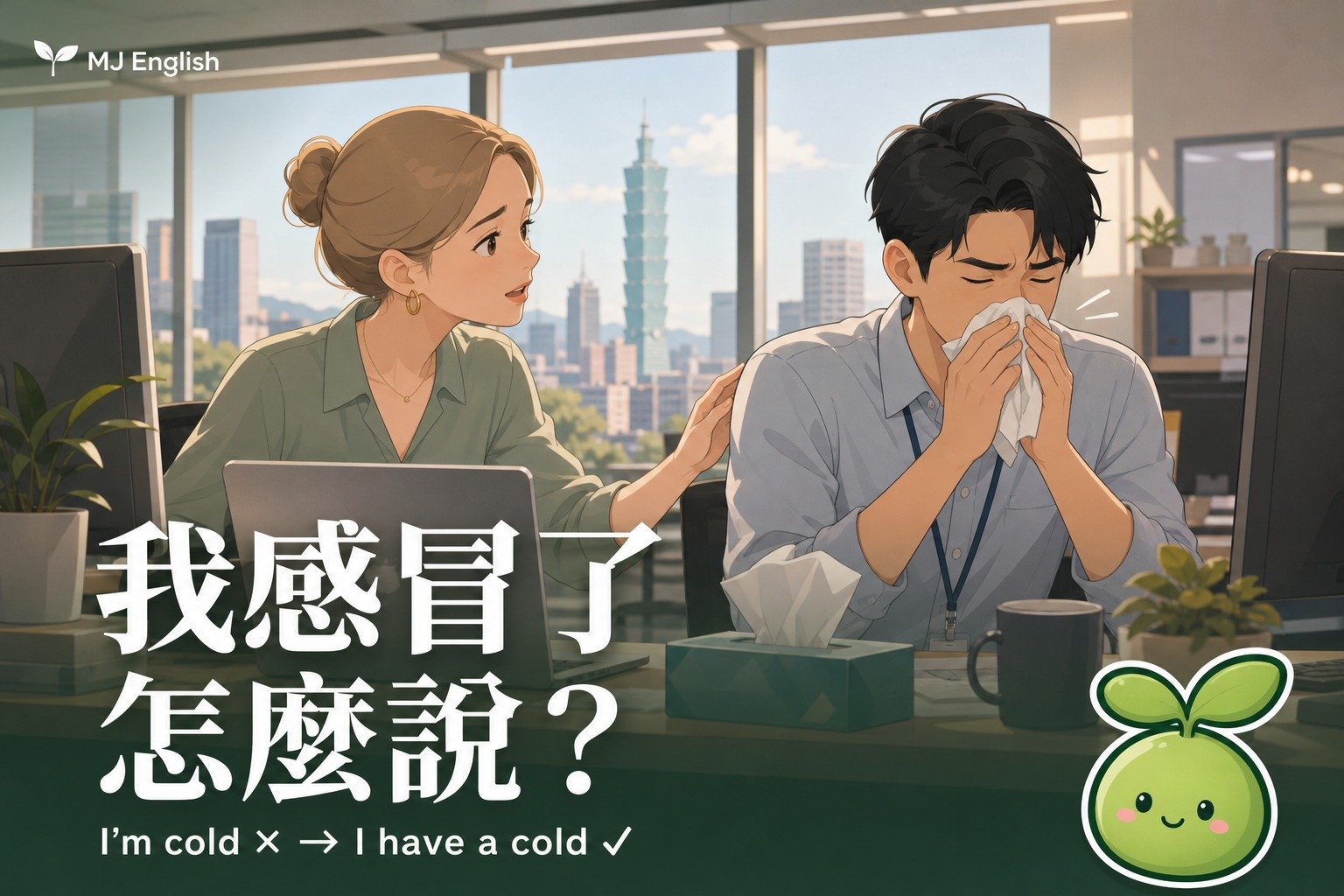
JOur two coworkers are Eric and Sophie. Sophie sits next to Eric, and he keeps sneezing. After his third sneeze, Sophie says, “Bless you! That’s your third sneeze this morning.”我們的兩位同事是 Eric 和 Sophie。Sophie 坐在 Eric 隔壁,而他一直打噴嚏。他打完第三個噴嚏後,Sophie 說:「Bless you!(對打噴嚏的人說的話)這是你今天早上第三個噴嚏了。」
M“Bless you” is what we say after someone sneezes. It’s short and kind. You can say it to a friend, a coworker, even a stranger on the train. Just say, “Bless you.” That’s all you need.有人打噴嚏時,我們會說 “Bless you”。它又短又親切。你可以對朋友、同事,甚至捷運上的陌生人說。只要說一句 “Bless you” 就夠了。
JThen Eric says, “Sorry. I’m cold today.” He wants to say he’s sick. He’s trying to say he caught a cold. But that’s not what Sophie hears.接著 Eric 說:「Sorry. I’m cold today.」他想說的是自己生病了,也就是他感冒了。可是 Sophie 聽到的不是這個意思。
MShe thinks he’s freezing! So Sophie says, “Oh, do you want my jacket? The AC is really strong in here.” AC means air conditioning. She’s being very nice, but she’s solving the wrong problem.她以為他冷得發抖!所以 Sophie 說:「喔,要不要把我的外套借你?這裡冷氣真的很強。」AC 就是冷氣。她人很好,只是她想解決的是另一個問題。
JHere’s why. The word “cold” has two jobs. First job: it describes temperature. “I’m cold” means my body feels cold. “It’s cold today” means the weather is cold.原因是這樣的。”cold” 這個字有兩種用法。第一種:描述溫度。”I’m cold” 是我覺得冷。”It’s cold today” 是今天天氣冷。
MSecond job: it’s a noun, and it’s the illness. “I have a cold.” See the little word “a”? That “a” turns “cold” into the sickness. In Chinese, these are two different words. In English, it’s one word doing both jobs, so it’s easy to mix them up.第二種:它是名詞,指的是感冒這個病。”I have a cold.” 有看到那個小小的 “a” 嗎?就是這個 “a” 把 cold 變成了生病。中文的「冷」和「感冒」是兩個不同的詞,英文卻是同一個字身兼兩職,所以很容易搞混。
JHere’s a simple trick. “I’m cold,” you need a jacket. “I have a cold,” you need rest. For the past, say “I caught a cold.” Like, “I caught a cold last week.”有個簡單的小撇步。”I’m cold”,你需要外套。”I have a cold”,你需要休息。講過去的事就說 “I caught a cold.” 例如:”I caught a cold last week.”(我上禮拜感冒了。)
MBack to our story. Eric fixes it. He says, “No, no. I mean I think I’m coming down with a cold. My throat’s been sore since last night.” Let’s look at the phrase “coming down with.”回到故事。Eric 改口了。他說:「不是不是。我是說我好像要感冒了。從昨晚開始喉嚨就痛痛的。」我們來看看 “coming down with” 這個說法。
J“Coming down with” means you’re starting to get sick, but you’re not fully sick yet. So you can say, “I think I’m coming down with a cold.” Or if you’re not sure, “I think I’m coming down with something.”“coming down with” 的意思是你開始要生病了,但還沒有完全病倒。所以你可以說:”I think I’m coming down with a cold.” 如果你不確定是什麼,就說 “I think I’m coming down with something.”
M“Something” is really useful when you feel a little off but you don’t know why. Another soft phrase is “under the weather.” “I’m feeling a little under the weather” means I don’t feel so great.當你覺得有點怪,又不知道為什麼時,”something” 非常好用。另一個委婉的說法是 “under the weather”。”I’m feeling a little under the weather” 的意思是我覺得不太舒服。
JNow, symptoms. Eric says his throat is sore. You can say, “I have a sore throat.” The pattern is mostly the same: I have a, then the problem. “I have a headache.” “I have a fever.”接下來是症狀。Eric 說他喉嚨痛。你可以說 “I have a sore throat.” 句型大多一樣:I have a,再接上症狀。”I have a headache.”(我頭痛。)”I have a fever.”(我發燒。)
MThen Eric says, “I’ve got a runny nose too.” Be careful! It’s “runny nose,” not “running nose.” Runny, with a Y. A running nose sounds like your nose is out jogging. Funny picture, but that’s not how we usually say it.然後 Eric 說:「我還一直流鼻水。」要小心喔!是 “runny nose”,不是 “running nose”。是 runny,有個 y。running nose 聽起來像你的鼻子跑去慢跑了。畫面很好笑,但母語者平常不這樣說。
JWhat about a blocked nose? You can say, “My nose is stuffy.” Or “I have a stuffy nose.” Both are fine. So that’s three easy ones for a Monday morning: sore throat, runny nose, stuffy nose.那鼻塞呢?你可以說 “My nose is stuffy.” 或 “I have a stuffy nose.” 兩種都可以。所以週一早上有三個簡單好用的說法:喉嚨痛、流鼻水、鼻塞。
MSophie asks, “Is it the weather? It went from hot to cool so fast this week.” And Eric says, “Yeah, it’s that time of year.” That last phrase is a nice one to know.Sophie 問:「是天氣的關係嗎?這禮拜一下子從熱變涼。」Eric 說:「對啊,每年這時候都這樣。」最後這句是很值得學的說法。
J“It’s that time of year” means this happens every year around now. The season changes, and people catch colds. You can also use it for busy holidays, or for allergies, or for super hot summer days.“It’s that time of year” 的意思是每年這個時候都會這樣。季節轉換,大家就感冒。你也可以用在忙碌的節日、過敏,或是超熱的夏天。
MNow Sophie gives some advice. She says, “You should go home and get some rest.” “You should” is a gentle way to suggest something. And “get some rest” means take time to relax and get better.接著 Sophie 給了建議。她說:「你應該回家好好休息。」”You should” 是溫和的建議語氣。而 “get some rest” 是花點時間放鬆,好讓身體恢復。
JBut Eric says, “I can’t. I have a meeting at two. I’ll wear a mask so I don’t give it to you.” That last sentence is very thoughtful. “I’ll wear a mask so I don’t give it to you.”可是 Eric 說:「沒辦法,我兩點有會。我會戴口罩,免得傳染給你。」最後那句非常體貼。”I’ll wear a mask so I don’t give it to you.”
M“Give it to you” means pass the cold to you. It’s a very good office phrase. Your coworkers will feel you care about them, and you don’t have to make a big deal about it.“give it to you” 是把感冒傳給你的意思。這是很棒的辦公室用語。同事會覺得你有在替他們著想,而且你不用小題大作。
JHere’s another good question you can ask a sick friend: “Did you take anything for it?” That means, did you take any medicine? And here’s one more trap. In English, we say “take medicine.” We don’t say “eat medicine.”還有一句可以問生病朋友的好問題:”Did you take anything for it?” 意思是你有吃藥嗎?而這裡還有一個地雷。英文要說 “take medicine”,不說 “eat medicine”。
MIn Chinese, we say we “eat” medicine. But in English, we always “take” it. Pills, syrup, anything. So say, “I took some medicine this morning.” Take, not eat. That one’s easy to fix.中文會說「吃」藥。但英文一律用 “take”。藥丸、藥水,都一樣。所以要說 “I took some medicine this morning.”(我今天早上吃了藥。)用 take,不用 eat。這個很容易改過來。
JNow let’s see how Sophie ends. She says, “Thanks. Drink lots of water, okay? And feel better soon.” Two caring lines. “Drink lots of water” is simple advice. “Feel better soon” wishes someone a quick recovery.來看看 Sophie 怎麼結尾。她說:「謝啦。多喝水喔,早點好起來。」兩句都很關心人。”Drink lots of water” 是簡單的建議。”Feel better soon” 是祝對方早日康復。
MOne more you’ll hear a lot is “Take care.” It’s a warm way to say goodbye to someone who isn’t feeling well. You can say “Take care” or “Take care of yourself.” Short, and kind.還有一句你會常聽到的是 “Take care.” 對身體不舒服的人說再見時,這句很溫暖。你可以說 “Take care” 或 “Take care of yourself.”(好好照顧自己。)簡短又貼心。
JLet’s put it together. Say you feel a little sick. Start with, “I think I’m coming down with something.” Then add the symptoms: “I have a sore throat and a runny nose.”我們把它們組合起來。假設你覺得有點不舒服。先說 “I think I’m coming down with something.” 再加上症狀:”I have a sore throat and a runny nose.”
MAnd if you’re already sick, say, “I have a cold.” Remember the little “a.” Without it, people might offer you a jacket. And when someone sneezes near you, just say, “Bless you.” Easy.如果你已經生病了,就說 “I have a cold.” 記得那個小小的 “a”。沒有它,別人可能會拿外套給你。而有人在你旁邊打噴嚏時,說一句 “Bless you” 就好。很簡單。
JOkay, we’re almost done. You now have all the pieces: cold versus a cold, coming down with, the symptoms, and the kind words to say to a sick friend.好,我們快講完了。你現在已經拿到所有的拼圖:cold 和 a cold 的差別、coming down with、各種症狀,還有對生病朋友說的關心話。
MLet’s hear the whole conversation one more time. This time, listen for the little word “a,” and for the caring words at the end.我們再把整段對話完整聽一遍。這次請注意那個小小的 “a”,還有最後那些關心的話。
🔁 [DIALOGUE REPLAY] 重播情境對話
JSo remember, “I’m cold” means you feel cold, and “I have a cold” means you’re sick. One little “a” changes everything.記住喔,”I’m cold” 是你覺得冷,”I have a cold” 是你感冒了。一個小小的 “a” 就差很多。
MNow tell us in the comments: what symptom do you get most when the weather changes? Try to write one sentence with “I have a.” We’ll check it for you. This is MJ English.現在請你在留言區告訴我們:天氣變化的時候,你最常出現什麼症狀?試著用 “I have a” 寫一句英文,我們會幫你看看。這裡是 MJ English。
JStay healthy, everyone.大家都要健康喔。