
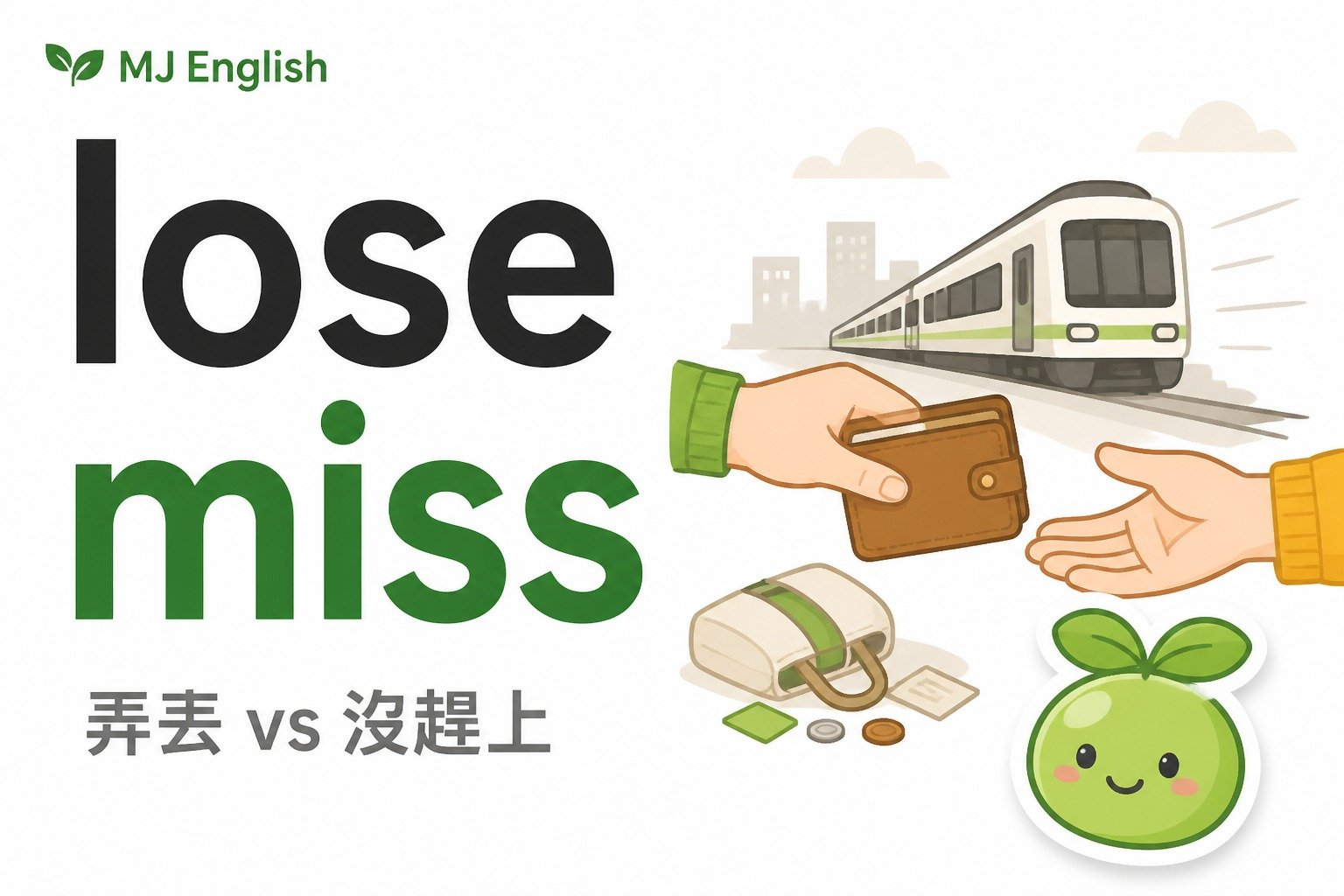
💡 先搞懂:一個「沒了」,英文分兩個字
中文的「沒了」把兩件事合在一起,英文卻分得很清楚:miss=你「沒抓到」的東西(沒趕上車、錯過電影、想念的人);lose=你「原本擁有、現在不見了」的東西(弄丟錢包、輸掉比賽)。像追 Netflix 影集沒跟上進度也是 miss(miss an episode),不是 lose。
台灣人最容易卡的雷:沒趕上公車不是 lose the bus,公車又不是你的、你沒東西可弄丟——是 miss the bus(你沒趕上)。
情境對話 Dialogue
場景:Amy 遲到趕來找 Leo,剛沒趕上火車、又好像把錢包弄丟了,整個早上兵荒馬亂。
Amy
Sorry I’m so late! I just missed the train by like ten seconds.
抱歉我遲到超久!我差十秒就趕上,結果還是沒趕上那班火車。
Leo
No worries. But you look stressed — is everything okay?
沒關係啦。不過你看起來很緊繃——還好嗎?
Amy
Not really. I think I lost my wallet somewhere on the way here.
不太好。我好像在來的路上把錢包弄丟了。
Leo
Oh no. Did you leave it on the train, or maybe drop it?
糟糕。是掉在火車上,還是不小心掉了?
Amy
No idea. And now I’ve missed the whole first half of the movie too.
完全不知道。而且我現在連電影上半場都錯過了。
Leo
Honestly, don’t stress about the movie. We can catch the next showing.
老實說,電影別放心上。我們可以趕下一場。
Amy
You’re the best. I’ve been losing everything lately — my keys, my umbrella…
你人最好了。我最近一直在弄丟東西——鑰匙、雨傘⋯
Leo
You’re just tired. Let’s retrace your steps and look for the wallet.
你只是太累了。我們循原路走回去找錢包吧。
Amy
Good idea. I’d hate to lose it for real — my whole life is in there.
好主意。我真的不想就這樣弄丟它——我全部家當都在裡面。
Leo
We’ll find it. And hey, at least you didn’t lose your phone.
會找到的。而且欸,至少你手機沒弄丟。
Amy
Don’t jinx it! Okay, let’s go before I miss anything else today.
別烏鴉嘴!好,趁我今天還沒錯過別的東西,快走吧。
Leo
Deal. Slow down and breathe — we’ve got plenty of time.
一言為定。慢慢來、深呼吸——我們時間還很多。
下次這樣說 Next Time
這三個場景最容易把 miss 和 lose 用反,記起來就到位。
① 沒趕上車
I lost the bus.
我沒趕上公車。(公車不是你的,弄丟不通)
I missed the bus.
我沒趕上公車。
為什麼:沒趕上交通工具、活動用 miss(你沒抓到);lose 是「原本擁有、現在弄丟」,公車不是你的東西。
② 弄丟東西
I miss my keys.
我把鑰匙弄丟了。(miss 是想念/沒趕上,不是弄丟)
I lost my keys.
我把鑰匙弄丟了。
為什麼:弄丟你擁有的物品(鑰匙、錢包、手機)用 lose;「I miss my keys」聽起來像你在想念鑰匙。
③ 想念某人
I lose you so much.
我好想你。(lose 是失去/弄丟,用在想念很怪)
I miss you so much.
我好想你。
為什麼:想念、感受某人不在身邊用 miss;「I lost you」是「我失去你了」,意思完全不同、很沉重。
重點單字 Vocabulary Boost
miss/mɪs/ 動詞
沒趕上/錯過(車、活動、機會)——你沒抓到、沒到場。也可指想念。
I missed the train by ten seconds.(我差十秒沒趕上火車。)
lose/luːz/ 動詞
弄丟/失去(你原本擁有的東西),也指輸掉比賽。過去式 lost。
I think I lost my wallet on the way here.(我好像在路上弄丟錢包了。)
miss you/mɪs ju/ 片語
想念某人、感受到某人不在身邊。miss + 人。
I really miss my family back home.(我好想念在老家的家人。)
lost/lɔːst/ 形容詞
迷路的、找不到方向的。be/get lost。也是 lose 的過去式。
Sorry I’m late, I got lost on the way.(抱歉遲到,我路上迷路了。)
catch/kætʃ/ 動詞
趕上(車、班次、場次)——miss 的相反,你有及時到。
We can catch the next showing.(我們可以趕下一場。)
drop/drɑːp/ 動詞
(不小心)掉了、遺落——常是 lose 的原因。
Did you drop it on the train?(你是掉在火車上了嗎?)
retrace your steps/ˌriːˈtreɪs jʊr stɛps/ 片語
循原路走回去(找掉的東西)。
Let’s retrace your steps and look for it.(我們循原路回去找吧。)
miss an episode/mɪs ən ˈɛp.ɪ.soʊd/ 片語
錯過一集(沒看到)。miss + 活動/節目都通。
I missed the last episode — no spoilers!(我錯過最後一集——別爆雷!)
lose a game/luːz ə ɡeɪm/ 片語
輸掉比賽。lose 也用在「輸」,不是 miss。
Our team lost the game last night.(我們隊昨晚輸了比賽。)
jinx/dʒɪŋks/ 動詞
烏鴉嘴、觸霉頭——講了反而招來壞事。
Don’t jinx it!(別烏鴉嘴!)
🎯 30 秒快速複習
miss = 你「沒抓到」的(車、機會、人);lose = 你「原本有、現在沒了/輸了」的(錢包、鑰匙、比賽)。
重點句型 Sentence Patterns
1. miss + 車/活動 → 沒趕上、錯過
沒趕上交通工具、或錯過活動/機會,用 miss(你沒抓到),不是 lose。
例:Don’t miss this chance.(別錯過這個機會。)
例:Sorry, I missed your call.(抱歉,我沒接到你的電話。)
2. lose + 物品 → 弄丟、失去
弄丟你擁有的東西(錢包、鑰匙、手機)用 lose;過去式 lost。
例:She lost her phone at the party.(她在派對上弄丟手機。)
例:Don’t lose your passport!(別弄丟護照!)
3. miss + 人 → 想念
想念某人、感受到某人不在身邊,用 miss,不是 lose。
例:I already miss my old coworkers.(我已經開始想念以前的同事了。)
例:Do you miss home?(你會想家嗎?)
4. be / get lost → 迷路
找不到方向、迷路,用 lost(形容詞),不是 lose the way 這種硬翻。
例:We got lost in the old town.(我們在老城區迷路了。)
例:Don’t get lost on the way.(路上別迷路了。)
5. catch ↔ miss → 趕上/沒趕上
catch 是 miss 的相反:及時趕上車、班次、場次。
例:We just caught the last train.(我們剛好趕上末班車。)
例:Let’s catch the next showing.(我們趕下一場吧。)
逐字稿 Transcript
延伸學習 Keep Going
同樣是台灣人最容易搞混、用反的英文,一起補起來。
你以前是不是也說過 “I lost the bus”?
留言用今天學的 miss/lose 造一句,看看你有沒有用對!
追蹤 MJ英語 podcast,下次見。