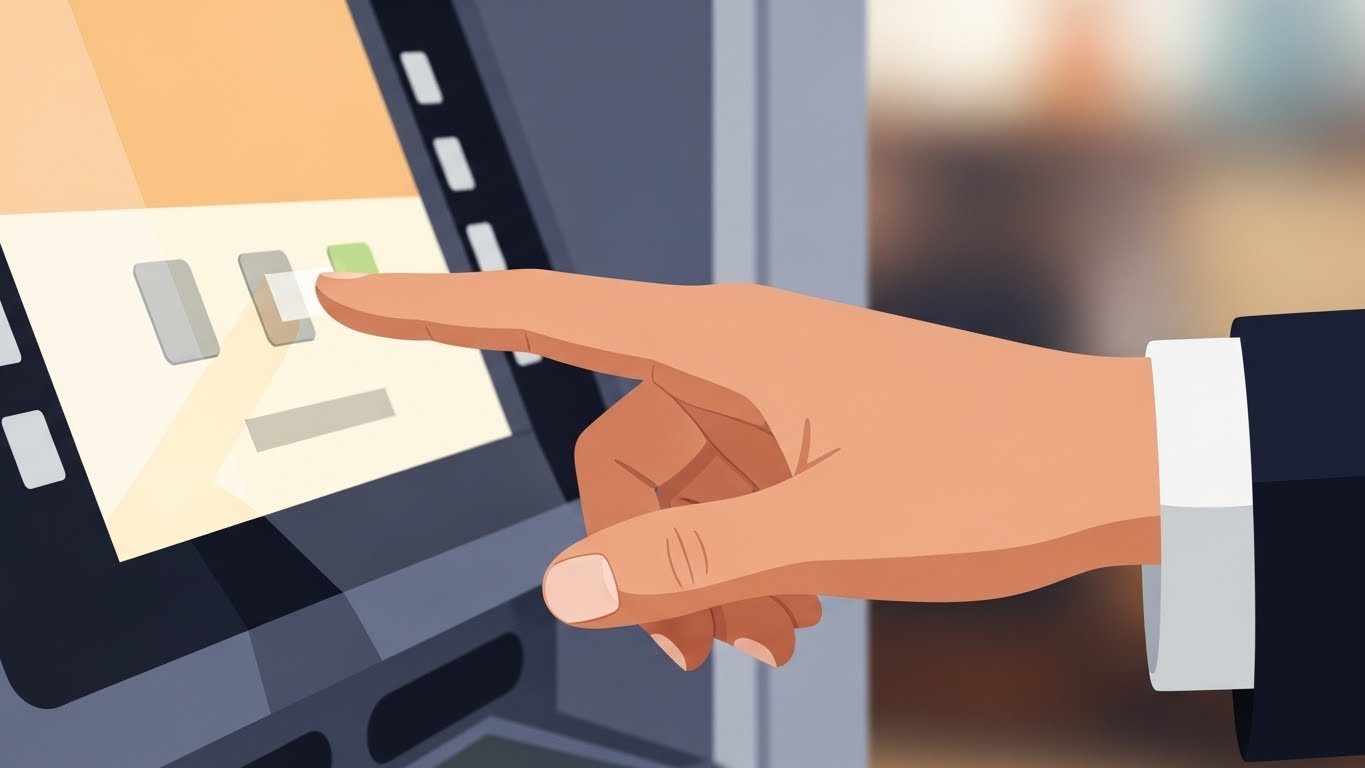
你有沒有過這種經驗?人在國外旅遊或交換時,站在 ATM 前突然不確定要按哪個按鈕。其實,銀行相關英文(banking English)超級實用,不管你是要 提款 withdraw、轉帳 transfer、查餘額 balance 或申請對帳單 statement,都離不開這些單字。
這篇文章用輕鬆方式帶你一次掌握,搭配生活化對話與表格整理,保證讓你在國外也能自信操作銀行服務!
🎧Apple Podcast|Spotify
💬 Dialogue — 日常對話
📍 情境設定:
Ryan 是台灣留學生,在美國唸研究所。某天他和韓國室友 Mina 一起走去學校附近的銀行。Ryan 想查 balance 和做 transfer,順便跟 Mina 確認他聽得懂銀行英文怎麼說。
Dialogue(英文)
Ryan: Hey Mina, I need to stop by the bank to check my balance.
Mina: Sure! Are you using the ATM or going to the counter?
Ryan: Just the ATM. I also need to withdraw some cash.
Mina: Don’t forget—there might be a fee if it’s not your bank.
Ryan: True. I also want to transfer some money to my landlord.
Mina: Oh, like your rent? Is it a demand deposit account?
Ryan: Yeah, it’s just my regular checking account.
Mina: Do you get any interest from it?
Ryan: Very little. But I check my statement every month to keep track.
Mina: Smart! I always forget to check mine.
Ryan: By the way, do you have a bankbook in Korea?
Mina: Yes! We still use them sometimes, but most people go digital now.
Ryan: Same here. Okay, help me make sure I press the right options.
Mina: No problem. Let’s get your money business done!
Dialogue(繁體中文)
瑞恩:嘿 Mina,我要順路去一下銀行查一下我的餘額。
米娜:好啊!你要用 ATM 還是去櫃檯?
瑞恩:就用 ATM 而已。我也順便要領一點現金。
米娜:別忘了,如果不是你自己的銀行,可能會被收手續費喔。
瑞恩:也是啦。我還要匯點錢給房東。
米娜:喔,房租嗎?是活期存款帳戶嗎?
瑞恩:對,就是一般的活期帳戶。
米娜:那個帳戶有生利息嗎?
瑞恩:幾乎沒有。不過我每個月都會看一下對帳單,追蹤一下狀況。
米娜:你很聰明欸!我常常都忘記看。
瑞恩:對了,你在韓國有存摺嗎?
米娜:有!我們有時候還是會用,但大部分人現在都改用數位化了。
瑞恩:我們這邊也是。好,等一下幫我確認一下我有沒有按對選項。
米娜:沒問題!來,把你的銀行大小事一次處理好吧!
📚 Vocabulary Boost 重點單字
| 單字 | 詞性 | 中文意思 | 英文例句 | 中文翻譯 |
|---|---|---|---|---|
| balance | n. | 餘額 | I checked my balance before paying rent. | 我在付房租前先查了餘額。 |
| ATM | n. | 自動提款機 | The ATM was out of cash this morning. | 早上那台 ATM 沒錢了。 |
| withdraw | v. | 提款 | I need to withdraw $100 today. | 我今天需要領 100 美元。 |
| fee | n. | 手續費 | This bank charges a fee for transfers. | 這家銀行轉帳會收手續費。 |
| transfer | v. | 轉帳 | I transfer money to my landlord every month. | 我每月轉帳給房東。 |
| demand deposit | n. | 活期存款 | A demand deposit account offers flexibility. | 活期帳戶提供較彈性的使用方式。 |
| interest | n. | 利息 | I don’t get much interest from my account. | 我的帳戶利息不高。 |
| statement | n. | 對帳單 | My monthly statement shows all transactions. | 我的每月對帳單列出所有交易。 |
| bankbook | n. | 銀行存摺 | Some countries still use a bankbook. | 有些國家仍會使用存摺。 |
| deposit | v. | 存款 | I plan to deposit my paycheck tomorrow. | 我明天打算把薪水存進去。 |
🔍 Sentence Patterns 常用句型
| 句型結構 | 中文意思 | 英文例句 | 中文翻譯 |
|---|---|---|---|
| I need to + 動詞 | 我需要⋯ | I need to withdraw some money. | 我需要領一些錢。 |
| Don’t forget + 名詞/動名詞 | 別忘記⋯ | Don’t forget the fee for using another ATM. | 別忘了使用他行 ATM 的手續費。 |
| I want to + 動詞 | 我想要⋯ | I want to transfer money today. | 我今天想轉帳。 |
| Are you using + 名詞? | 你要使用⋯嗎? | Are you using the ATM? | 你要用 ATM 嗎? |
| Do you get any + 名詞? | 你有⋯嗎? | Do you get any interest from your bank? | 你的帳戶有利息嗎? |
| It’s just my + 名詞 | 就只是我的⋯ | It’s just my demand deposit account. | 這只是我的活期帳戶。 |
| Help me + 動詞 | 幫我⋯ | Help me press the right options. | 幫我按正確的選項。 |
📖 Transcript 逐字稿
J: Welcome to MJ English.
J: 歡迎收聽 MJ English。
M: Today, we’re getting into English that is incredibly practical, the kind of stuff you really need when you’re traveling or studying abroad and, you know, have to manage your money. We’re focusing on essential banking vocabulary.
M: 今天我們要來學的英文是非常實用的那一種,就是你在旅行、留學,然後要管錢、理財的時候,真的會用到的表達。今天要特別聚焦在「銀行相關的必備英文」。
J: Exactly. And we’re going to share a conversation that’s set in a pretty real-world scenario. We have Ryan, a Taiwanese student in the US, and he’s heading to the bank with his Korean roommate, Mina. He just needs to handle a few basic transactions.
J: 沒錯。我們會用一段非常貼近真實情況的對話來說明。主角是 Ryan,一個在美國念書的台灣學生,他跟韓國室友 Mina 一起去銀行,他只是要處理幾個基本的銀行業務。
M: Yeah, so listen carefully to their conversation.
M: 沒錯,所以請仔細聽他們的對話。
Ryan 是台灣留學生,在美國唸研究所。
某天他和韓國室友 Mina 一起走去學校附近的銀行。
Ryan 想查 balance 和做 transfer,順便跟 Mina 確認他聽得懂銀行英文怎麼說。
Dialogue(英文)
Ryan: Hey Mina, I need to stop by the bank to check my balance.
Mina: Sure! Are you using the ATM or going to the counter?
Ryan: Just the ATM. I also need to withdraw some cash.
Mina: Don’t forget—there might be a fee if it’s not your bank.
Ryan: True. I also want to transfer some money to my landlord.
Mina: Oh, like your rent? Is it a demand deposit account?
Ryan: Yeah, it’s just my regular checking account.
Mina: Do you get any interest from it?
Ryan: Very little. But I check my statement every month to keep track.
Mina: Smart! I always forget to check mine.
Ryan: By the way, do you have a bankbook in Korea?
Mina: Yes! We still use them sometimes, but most people go digital now.
Ryan: Same here. Okay, help me make sure I press the right options.
Mina: No problem. Let’s get your money business done!
Dialogue(繁體中文翻譯)
瑞恩:嘿 Mina,我要順路去一下銀行查一下我的餘額。
米娜:好啊!你要用 ATM 還是去櫃檯?
瑞恩:就用 ATM 而已。我也順便要領一點現金。
米娜:別忘了,如果不是你自己的銀行,可能會被收手續費喔。
瑞恩:也是啦。我還要匯點錢給房東。
米娜:喔,房租嗎?是活期存款帳戶嗎?
瑞恩:對,就是一般的活期帳戶。
米娜:那個帳戶有生利息嗎?
瑞恩:幾乎沒有。不過我每個月都會看一下對帳單,追蹤一下狀況。
米娜:你很聰明欸!我常常都忘記看。
瑞恩:對了,你在韓國有存摺嗎?
米娜:有!我們有時候還是會用,但大部分人現在都改用數位化了。
瑞恩:我們這邊也是。好,等一下幫我確認一下我有沒有按對選項。
米娜:沒問題!來,把你的銀行大小事一次處理好吧!
J: That conversation was just packed with useful terms. Did you catch how many ways they talked about moving money around?
J: 那段對話塞滿了超多實用單字。你有注意到他們用多少種說法在講「錢怎麼進出帳戶」嗎?
M: Yeah, totally. Okay, so let’s focus on the essentials you really need to master. First up, the transaction basics.
M: 有,真的很多。好,那我們就來專心看幾個你一定要掌握的重點。第一個部分是「基本交易相關的字」。
J: Right. So the difference between withdraw and deposit. “Withdraw” is when you take money out.
J: 好,先是 withdraw 跟 deposit 的差別。
J: 「Withdraw」是指把錢「領出來」。
M: Like getting cash from the ATM.
M: 比方說,從提款機領現金就是一種 withdraw。
J: Exactly. And “deposit” is when you put money in. And of course, the first step for all of this is “checking your balance,” how much money you have.
J: 沒錯。而「deposit」就是把錢「存進去」。然後這一切的第一步,當然就是「checking your balance」,也就是先查一下你帳戶裡還有多少錢。
M: Okay, next up, let’s talk about costs and tracking. Mina mentioned the “fee.”
M: 好,接下來我們來看「費用跟紀錄」。Mina 在對話裡提到「fee」。
J: Ah yes, the fee. That, uh, that annoying little charge you get. And that’s usually for using an ATM that isn’t owned by your bank. And to keep track of all those fees and transactions, you check your “statement.”
J: 啊對,這個 fee,就是那種,呃,有點煩人的小小扣款。通常是你用「不是自己銀行」的提款機時,被收的手續費。然後要掌握這些費用和所有交易紀錄,你就要去看你的「statement(對帳單)」。
M: Your “monthly statement.” It’s basically the record of everything that happened in your account.
M: 也就是你的「monthly statement(月結單)」;它基本上就是這個月你帳戶所有進出紀錄的總整理。
M: Now, what about the account types? Mina used a kind of technical term, “demand deposit.”
M: 那再來是帳戶種類。Mina 用了一個比較專業的說法:「demand deposit」。
J: Yeah, that one can sound a little confusing. But it’s really just the official name for a standard “checking account.”
J: 對,這個聽起來有點難,但其實它只是一般「支票帳戶 checking account」的比較正式的名稱而已。
M: So a “checking account” and a “demand deposit” are basically the same thing?
M: 所以「checking account」跟「demand deposit」基本上是同一個東西?
J: Pretty much. And as Ryan mentioned, you get very little “interest” on it.
J: 大致上是這樣。然後就像 Ryan 提到的,這種帳戶幾乎沒有什麼「interest(利息)」。
M: You know, the money the bank pays you.
M: 就是那種「銀行付給你的利息」。
J: That’s because you can take the money out on demand, anytime.
J: 原因是這種帳戶的錢你隨時都可以領出來,用起來很自由。
M: That makes sense.
M: 這樣就說得通了。
J: And I thought the little mention of the “bankbook” was interesting. It’s a fun cultural insight. It is. It just shows how banking is shifting everywhere toward digital, but some places still have those,physical traditions.
J: 我覺得他們提到「bankbook(存摺)」那一小段也很有趣,算是一個文化小觀察。
J: 對啊,這其實反映出現在全世界的銀行服務都越來越數位化,但有些地方還是留著這種,「實體存摺」的傳統。
M: Okay, so let’s give you a few key sentence patterns you can use immediately.
M: 好,那我們來給你幾個可以立刻拿去用的「關鍵句型」。
J: For sure. The first one is for expressing a need. Ryan said it perfectly. “I need to” plus verb. Like, “I need to withdraw some money.” Super simple, super clear.
J: 好。第一個是用來表達「需要做什麼」。Ryan 說得很標準:「I need to + 動詞」,例如:「I need to withdraw some money.(我需要領一些錢。)」,超簡單、超清楚。
M: Love that. And for giving a reminder, Mina’s was great. “Don’t forget” plus noun as in, “Don’t forget the fee.” You could also say, “Don’t forget checking your statement.”
M: 我很喜歡這句。那如果你要「提醒別人」,Mina 用的句型也很好:「Don’t forget + 名詞」,像是「Don’t forget the fee.(別忘了手續費。)」,你也可以說「Don’t forget checking your statement.(別忘了看你的對帳單。)」。
J: Mm. Good point.
J: 嗯,這個提醒很好。
M: And finally, to confirm how you’re doing something, you can ask, “Are you using” plus noun. Like Mina asked, “Are you using the ATM?” These three patterns will get you through a lot of situations.
M: 最後,如果你想確認「對方是用什麼方式在做某件事」,可以用:「Are you using + 名詞」。像 Mina 問的:「Are you using the ATM?(你是用提款機嗎?)」。這三種句型在很多情況下都派得上用場。
J: Absolutely. Mastering this kind of banking English just means you can handle your finances anywhere without all the stress. Just focus on those key verbs like “withdraw” and “transfer” and you’ll be set.
J: 真的。掌握這些銀行相關英文,就代表你在任何國家處理金錢、帳戶時,不用那麼緊張。只要把像「withdraw」、「transfer」這種關鍵動詞弄熟,你就穩了。
M: Yeah. And remember, being informed is really your best defense against, you know, information overload or just hitting the right button at the ATM.
M: 沒錯。而且要記得,「搞清楚狀況」就是你對抗資訊爆炸,還有在提款機前不要按錯鍵的最佳防線。
J: Want the full transcript, key vocabulary, and useful sentence patterns? Just click the link below. Thanks for learning with us today. See you next time on MJ English.
J: 想拿到完整逐字稿、重點單字還有實用句型整理嗎?只要點下面的連結就可以。謝謝你今天跟我們一起學英文,我們下次在 MJ English 再見。