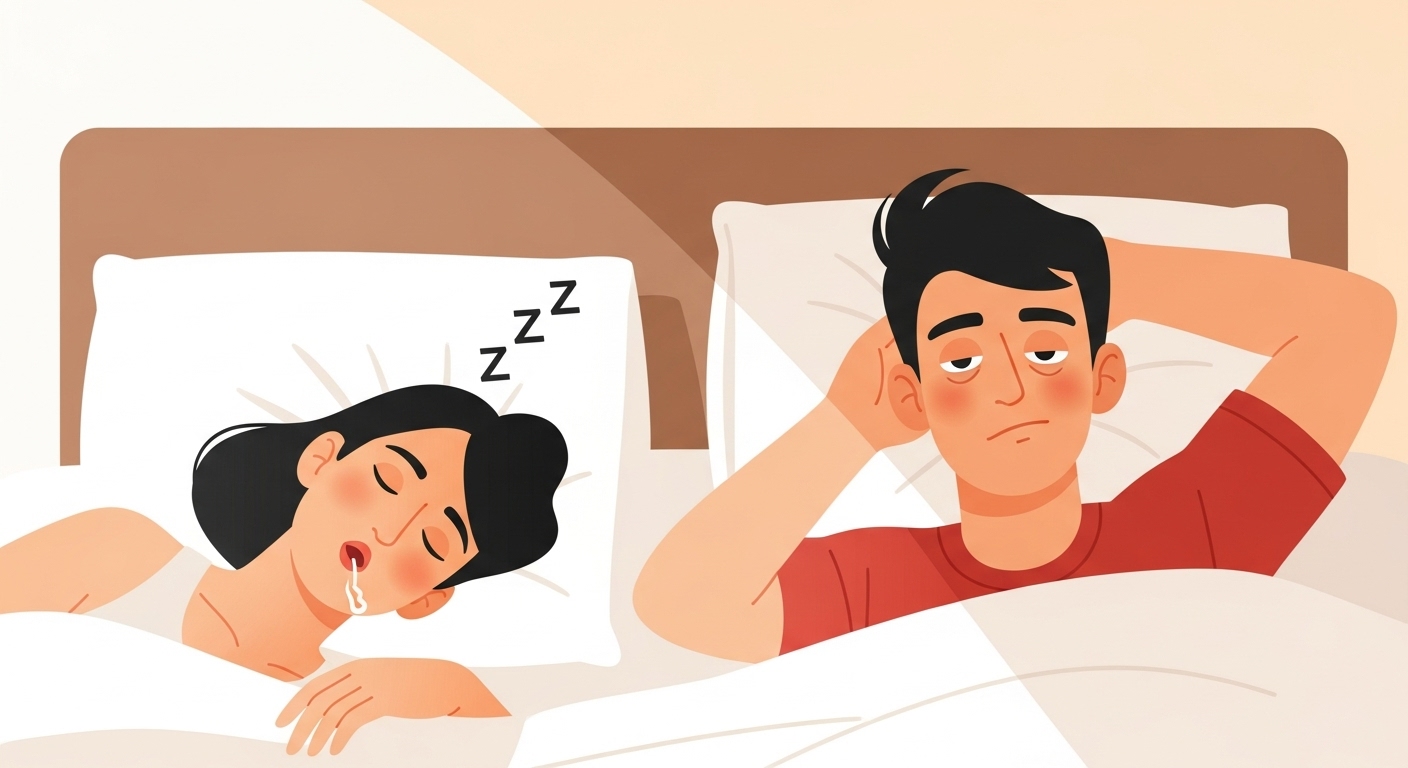
你有沒有試過跟朋友出國一起睡、結果整晚被打呼聲吵醒?😵💫
打呼(snoring)不只是健康問題,也是英文對話中常出現的生活話題!
不論是室友、另一半,還是旅伴,會不會打呼都可能變成隔天早上聊天的「尷尬主題」。
今天就讓我們用 snoring problem English 來學會如何自然地談「打呼」這件事吧!
🎧Apple Podcast | Spotify
💬 Dialogue 對話
情境設定:
在首爾的 Airbnb 合租房裡,台灣女生 Emma 和美國朋友 Jake 第一次同房過夜。隔天早上,Emma 有點尷尬地提起昨晚的打呼聲…
🗣 English Conversation
Emma: Morning, Jake. Did you sleep well?
Jake: Uh… not really. Someone was snoring all night.
Emma: Oh no! Was it me?
Jake: Haha, yeah, just a bit. It was kind of… rhythmic.
Emma: That’s so embarrassing! I didn’t know I snored.
Jake: Don’t worry, lots of people snore when they’re tired or have a cold.
Emma: Maybe I should see a doctor.
Jake: Yeah, or try a nasal strip. It helped my dad a lot.
Emma: Good idea! I don’t want to keep you up next time.
Jake: Thanks! But honestly, I’ve heard worse. Once my roommate sounded like a chainsaw!
Emma: Wow, poor you. I’ll bring you earplugs next time.
Jake: Deal! Let’s grab coffee and forget about it.
💬 中文翻譯
Emma: 早安,Jake。你昨晚睡得好嗎?
Jake: 呃…不太好。有人整晚在打呼。
Emma: 天啊!是我嗎?
Jake: 哈哈,對啦,有一點。不過還挺有「節奏感」的。
Emma: 好丟臉喔!我都不知道我會打呼。
Jake: 別擔心啦,很多人累了或感冒時都會打呼。
Emma: 那我是不是該去看醫生?
Jake: 也許可以試試鼻貼,我爸用這個很有效。
Emma: 好主意!我不想下次又吵到你。
Jake: 謝啦!但老實說,我聽過更誇張的。有次我室友的打呼聲像電鋸一樣!
Emma: 哇,那你也太慘了。我下次幫你帶耳塞好了。
Jake: 一言為定!走吧,去喝咖啡忘掉這件事。
📚 Vocabulary Boost 重點單字
| 單字 / 片語 | 詞性 | 中文意思 | 英文例句 | 中文翻譯 |
|---|---|---|---|---|
| snore | v. | 打呼 | My roommate always snores loudly. | 我的室友總是大聲打呼。 |
| rhythmic | adj. | 有節奏的 | The sound was strangely rhythmic. | 那聲音奇妙地有節奏感。 |
| embarrassing | adj. | 尷尬的 | That was so embarrassing! | 那真是太尷尬了! |
| nasal strip | n. | 鼻貼 | He wears a nasal strip before bed. | 他睡前都會貼鼻貼。 |
| chainsaw | n. | 電鋸 | He snores like a chainsaw! | 他的打呼聲像電鋸一樣! |
| earplug | n. | 耳塞 | I’ll bring earplugs next time. | 我下次會帶耳塞。 |
| keep someone up | phr. | 吵到某人睡不著 | Sorry I kept you up last night. | 抱歉昨晚吵到你沒睡好。 |
🔍 Sentence Patterns 重點句型
| 句型 | 中文意思 | 英文例句 | 中文翻譯 |
|---|---|---|---|
| Did you sleep well? | 你睡得好嗎? | Did you sleep well last night? | 昨晚睡得好嗎? |
| Someone was … all night. | 某人整晚都在… | Someone was snoring all night. | 有人整晚在打呼。 |
| I didn’t know I … | 我不知道我會… | I didn’t know I snored. | 我不知道我會打呼。 |
| Don’t worry, lots of people … | 別擔心,很多人都會… | Don’t worry, lots of people snore when they’re tired. | 別擔心,很多人累了都會打呼。 |
| Maybe I should … | 也許我應該… | Maybe I should see a doctor. | 也許我該去看醫生。 |
| It helped … a lot. | 對…很有幫助 | It helped my dad a lot. | 對我爸很有幫助。 |
| I don’t want to keep you up. | 我不想吵到你睡不著。 | I don’t want to keep you up next time. | 下次不想吵到你。 |
| I’ve heard worse. | 我聽過更誇張的。 | I’ve heard worse. | 我聽過更誇張的打呼聲。 |
| Let’s grab coffee and forget about it. | 去喝咖啡吧,把這事忘了。 | Let’s grab coffee and forget about it. | 我們去喝咖啡吧,把這事忘掉。 |
📖 Transcript 逐字稿
M: Welcome to MJ English.
M:歡迎收聽 MJ English。
J: Hello, everyone.
J:大家好~
M: So today, we’re skipping the grammar rules and looking at something… well, really practical.
M:今天我們要跳過文法規則,來聊一個……非常實用的主題。
J: Yeah, something you might actually run into: that slightly awkward chat about snoring.
J:對,就是你真的有可能遇到的情境──那種有點尷尬「打呼」的對話。
M: It happens all the time, right? Sharing a room, traveling…
M:沒錯。這種事很常發生吧?像一起住、一起旅行的時候。
J: So, we’ve got this conversation between Emma, who’s Taiwanese, and Jake, an American guy. They’re in Seoul, sharing an Airbnb.
J:這次的對話是發生在台灣女生 Emma 和美國男生 Jake 之間。他們在首爾合租一間 Airbnb。
M: And they nail talking about something kind of embarrassing pretty smoothly. Let’s listen to how they handle it.
M:他們成功地用很自然的方式處理了這個有點尷尬的話題。一起來聽聽看他們怎麼說吧。
在首爾的 Airbnb 合租房裡,台灣女生 Emma 和美國朋友 Jake 第一次同房過夜。隔天早上,Emma 有點尷尬地提起昨晚的打呼聲…
🗣 English Conversation
Emma: Morning, Jake. Did you sleep well?
Jake: Uh… not really. Someone was snoring all night.
Emma: Oh no! Was it me?
Jake: Haha, yeah, just a bit. It was kind of… rhythmic.
Emma: That’s so embarrassing! I didn’t know I snored.
Jake: Don’t worry, lots of people snore when they’re tired or have a cold.
Emma: Maybe I should see a doctor.
Jake: Yeah, or try a nasal strip. It helped my dad a lot.
Emma: Good idea! I don’t want to keep you up next time.
Jake: Thanks! But honestly, I’ve heard worse. Once my roommate sounded like a chainsaw!
Emma: Wow, poor you. I’ll bring you earplugs next time.
Jake: Deal! Let’s grab coffee and forget about it.
💬 中文翻譯
Emma: 早安,Jake。你昨晚睡得好嗎?
Jake: 呃…不太好。有人整晚在打呼。
Emma: 天啊!是我嗎?
Jake: 哈哈,對啦,有一點。不過還挺有「節奏感」的。
Emma: 好丟臉喔!我都不知道我會打呼。
Jake: 別擔心啦,很多人累了或感冒時都會打呼。
Emma: 那我是不是該去看醫生?
Jake: 也許可以試試鼻貼,我爸用這個很有效。
Emma: 好主意!我不想下次又吵到你。
Jake: 謝啦!但老實說,我聽過更誇張的。有次我室友的打呼聲像電鋸一樣!
Emma: 哇,那你也太慘了。我下次幫你帶耳塞好了。
Jake: 一言為定!走吧,去喝咖啡忘掉這件事。
M: Okay, so there’s a lot to unpack there, even in that short exchange.
M:好,雖然對話不長,但裡面其實藏了不少重點。
J: Definitely. Let’s jump into some keywords first.
J:沒錯,我們先從幾個關鍵字開始講起吧。
M: The main one, obviously, is “snore.”
M:最明顯的單字當然是「snore(打呼)」。
J: Right, the verb. Like in, “Someone was snoring all night.”
J:對,是個動詞。像「Someone was snoring all night.(有人整晚都在打呼)」這樣用。
M: Or you could say, “My roommate always snores loudly.” Pretty basic, but essential here.
M:或者說「My roommate always snores loudly.(我的室友打呼聲超大)」——很基本,但在這裡很重要。
J: And then Jake uses that word, “rhythmic.”
J:接著 Jake 用了「rhythmic(有節奏的)」這個字。
M: That one stood out. Kind of a funny way to describe snoring.
M:這個詞很有趣,用來形容打呼其實有點搞笑。
J: It is, isn’t it? It makes it sound less… aggressive. Almost musical, which is definitely not what you usually think. It’s a way to soften the complaint.
J:對吧?這樣說會讓打呼聽起來沒那麼「具攻擊性」,甚至有點像音樂。這其實是一種「柔化抱怨」的表達方式。
J: And Emma immediately says, “That’s so embarrassing.”
J:然後 Emma 馬上回說:「That’s so embarrassing.(好丟臉喔)」
M: Crucial word, “embarrassing.” You need this one for any awkward moment, not just snoring.
M:「Embarrassing(尷尬的)」這個字超重要,不只打呼,任何尷尬場面都能用。
J: For sure.And then later, Jake mentions his old roommate sounded like a “chainsaw.”
J:真的。然後 Jake 接著提到他以前的室友打呼聲像「電鋸(chainsaw)」。
M: Yes, the “chainsaw” comparison. Total exaggeration, right? But it makes Emma’s snoring seem minor in comparison.
M:啊對,「像電鋸一樣」這種比喻超誇張,但相較之下,反而讓 Emma 的打呼顯得沒那麼嚴重。
J: And it brings up another useful noun. Emma offers to bring “earplugs.” A practical solution.
J:這也帶出了另一個實用名詞——Emma 說她下次會帶「earplugs(耳塞)」,一個很實際的解決方法。
M: Oh, and one more phrase: “keep someone up.”
M:然後還有一句很實用的片語:「keep someone up」。
J: Emma says, “I don’t want to keep you up next time,” meaning, prevent you from sleeping.
J:Emma 說「I don’t want to keep you up next time.(我不想下次讓你睡不著)」意思就是「讓人睡不著」。
J: Okay, so those are some useful words. What about the way they structured the conversation? The sentence patterns.
J:好,這些是重點單字,那他們對話的句型結構呢?
M: Well, it starts really politely, doesn’t it? With Emma’s question.
M:開頭其實很有禮貌對吧?從 Emma 問的一句話開始。
J: “Did you sleep well?”
J:「Did you sleep well?(昨晚睡得好嗎?)」
M: Yeah, that’s like the standard, polite opener in the morning. It gives Jake an “in.”
M:對,這是早上很常見又有禮貌的開場白,也給了 Jake 一個可以開話題的機會。
J: It does. And he takes it, but gently. He doesn’t say, “You were snoring.” He says, “Someone was snoring all night.”
J:沒錯。而且他很巧妙地接話,沒有直接說「你在打呼」,而是說「Someone was snoring all night.(有人整晚都在打呼)」
M: That “Someone was [doing something]…” pattern. It points out the problem without directly accusing anyone, initially at least. It leaves space.
M:這個「Someone was ~ing」的句型,就是指出問題但不直接指責誰,給對方留一點餘地。
J: And then Emma, realizing it might be her, uses that pattern: “I didn’t know I…”
J:(接著 Emma 意識到可能是自己,就用了「I didn’t know I…(我不知道我~)」這個句型。
M: As in, “I didn’t know I snored.”
M:像「I didn’t know I snored.(我不知道我會打呼)」這樣。
J: Which is great for expressing surprise or, maybe, you know, genuine ignorance about something you do.
J:這個句型很適合用來表達驚訝,或者是真的不知道自己做了某件事。
M: It shows she wasn’t aware, which helps smooth things over. And then they move to solutions. Jake’s suggestion…
M:這樣顯得她並非故意,也能讓氣氛緩和下來。然後他們就轉到解決方案了,Jake 的建議是——
J: Nasal strips.
J:鼻貼。
M: Right. He says, “Try a nasal strip. It helped my dad a lot.”
M:對,他說:「Try a nasal strip. It helped my dad a lot.(試試鼻貼,我爸用了很有效。)」
J: So that pattern, “It helped someone a lot,” is a really useful way to recommend something without being too pushy. You’re basing it on someone else’s experience.
J:這個句型「It helped someone a lot」是個很實用的推薦方式,語氣不會太強硬,因為是以別人的經驗為例。
M: It adds a bit of distance, makes the suggestion feel less like an order and more like, “well, just sharing something that worked for someone else.”
M:這樣講會拉開一點距離,聽起來像是在分享經驗,而不是在下命令。
J: Makes sense.
J:很合理。
M: So you’ve got the polite question, the indirect complaint, admitting you didn’t know, and suggesting solutions based on experience.
M:所以整體流程是:先用有禮貌的開場、接著間接地提問題、承認自己不知道、最後根據經驗提出建議。
J: These phrases and patterns really help you manage potentially awkward moments without causing offense. Very practical English. Want the full transcript, key vocabulary, and useful sentence patterns? Just click the link below.
J:這些句型能幫你在尷尬場合中不冒犯別人地化解氣氛,超實用的英文。想看完整逐字稿、單字與句型表的話,就點下面的連結吧。
M: Give these a try next time you need to talk about something a little sensitive. You might be surprised how smoothly it goes.
M: 下次要談一些比較敏感的話題時試試看,你可能會發現氣氛意外地順利。
M: That’s all for this time.
M:今天的節目就到這裡。
J: See you next time.
J:下次見囉!