💡 先搞懂:排隊是「在隊伍裡」:be in line
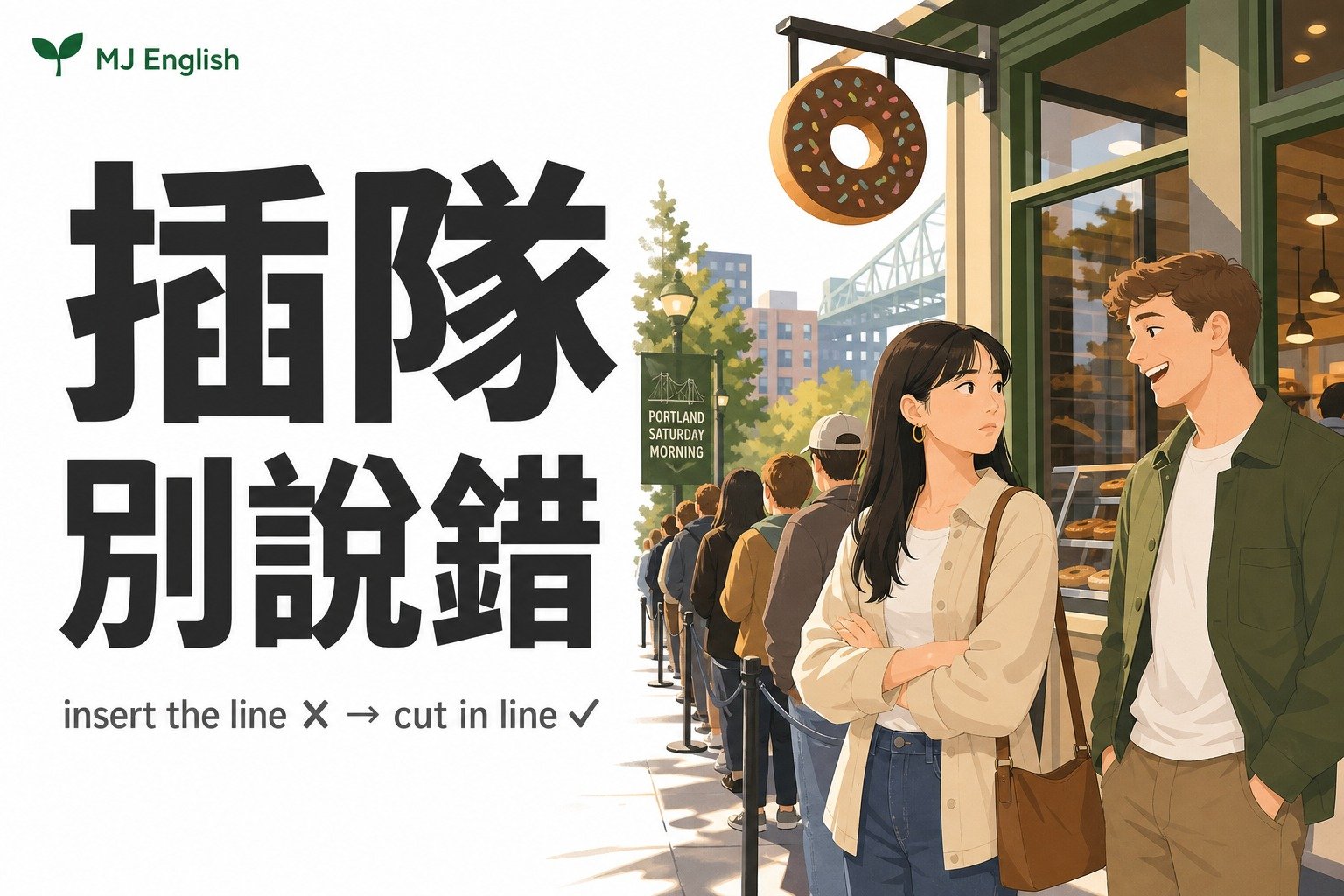
中文說「在排隊」,很多人會直翻成 Are you line up?,但 line up 是「排成一排」的動詞片語,Are you 後面不能直接接原形動詞,意思也不是「在隊伍裡」。問人家是不是在排隊,最自然就是 Are you in line?。「插隊」別用 insert,英文說 cut in line 或 cut in front of someone。最後,「隊伍最後面」不是隊伍的尾巴 tail,而是 the end of the line(也常說 the back of the line)。
台灣人最容易卡的雷:① Are you line up? → Are you in line?;② He inserted the line! → He cut in line!;③ The tail of the line is over there. → The line starts back there.
情境對話 Dialogue
場景:週六早上,在波特蘭念書的台灣女生 Amy,跑去排一家超紅的甜甜圈店。隊伍歪歪扭扭,她不確定旁邊的 Kevin 是不是在排隊。
Amy
Excuse me, are you line up?
不好意思,你在排隊嗎?(要說 Are you in line?)
Kevin
Am I in line? Yeah, I’m in line. It’s really long today, huh?
我有沒有在排隊?有啊,我在排。今天隊伍超長的,對吧?
Amy
Super long. Okay, then I’ll get in line behind you.
超長。好,那我排你後面。
Kevin
Sure. Trust me, the maple donut is worth the wait.
好啊。相信我,楓糖甜甜圈值得等。
Amy
Wait, did you see that? That man just inserted the line!
等等,你有看到嗎?那個男的剛剛插隊!(要說 cut in line)
Kevin
He cut in line? Wow, yeah. He just cut right in front of us.
他插隊?哇,真的耶。他直接插到我們前面。
Amy
That’s so rude. Should I say something?
也太沒禮貌了。我要不要說點什麼?
Kevin
Sure, just be nice about it. What would you say?
可以啊,口氣好一點就好。你會怎麼說?
Amy
Um, “Excuse me, the tail of the line is over there.”
嗯,「不好意思,隊伍的尾巴在那邊。」(要說 the end of the line)
Kevin
You’re close! We say the end of the line. Or just, “Excuse me, the line starts back there.”
很接近了!我們會說 the end of the line。或直接說:「不好意思,隊伍從後面那邊開始喔。」
Amy
Excuse me, sir? The line starts back there. Oh, he said sorry and went to the back!
先生,不好意思?隊伍從後面那邊開始喔。喔,他說抱歉,去後面排了!
Kevin
Nice! Polite and clear. And now we’re one spot closer to those donuts.
讚!有禮貌又清楚。而且我們離甜甜圈又近了一格。
🎯 30 秒快速複習
在排隊=be in line/插隊=cut in line/隊伍最後面=the end of the line
下次這樣說 Next Time
問人有沒有在排隊、說有人插隊、請人去排後面,台灣人排隊最常卡住的三句。
① 你在排隊嗎
Are you line up?
line up 是動詞片語,直接接在 Are you 後面文法不通
Are you in line?
你在排隊嗎?
為什麼:「在隊伍裡」英文是 be in line;line up 是「排成一排」的動作,不能直接接在 Are you 後面。
② 插隊
He inserted the line!
insert 是「插入、放進去」
He cut in line!
他插隊!
為什麼:insert 是把東西放進去(insert a card),插隊要用 cut:cut in line、cut in front of someone。
③ 隊伍最後面
The tail of the line is over there.
直翻「隊尾」
The line starts back there.
隊伍從後面那邊開始喔。
為什麼:隊伍最後面是 the end of the line 或 the back of the line;請人去排後面,說 The line starts back there. 最客氣。
重點單字 Vocabulary Boost
in line/ɪn laɪn/ phr.
在排隊、在隊伍裡。
Are you in line?(你在排隊嗎?)
get in line/ɡɛt ɪn laɪn/ phr.
去排隊、加入隊伍。
Let’s get in line before it gets longer.(趁隊伍還沒更長,我們先去排。)
worth the wait/wɝθ ðə weɪt/ phr.
值得等。
The donuts were totally worth the wait.(那家甜甜圈完全值得等。)
cut in line/kʌt ɪn laɪn/ phr.
插隊。
Someone just cut in line.(剛剛有人插隊。)
cut in front of/kʌt ɪn frʌnt ʌv/ phr.
插到(某人)前面。
He cut in front of me at the register.(他在收銀台插到我前面。)
rude/rud/ adj.
沒禮貌的。
Cutting in line is so rude.(插隊很沒禮貌。)
the end of the line/ði ɛnd ʌv ðə laɪn/ phr.
隊伍最後面。
The end of the line is around the corner.(隊伍最後面在轉角那邊。)
spot/spɑt/ n.
(隊伍中的)位置。
Can you save my spot? I’ll be right back.(可以幫我顧一下位置嗎?我馬上回來。)
重點句型 Sentence Patterns
1. 你在排隊嗎 → Are you in line?
「在排隊」是一種狀態,用 be in line。
例:”Is this the line?”(「這是排隊的隊伍嗎?」)
例:”Is this the line for the restroom?”(「這是排廁所的隊伍嗎?」)
2. 我排你後面 → get in line behind you
加入隊伍用 get in line,後面加 behind 某人。
例:”Are you last in line?”(「你是排最後一個嗎?」)
例:”Can you save my spot? I’ll be right back.”(「可以幫我顧一下位置嗎?我馬上回來。」)
3. 插隊 → cut in line
插隊的「插」英文用 cut,不用 insert。
例:”She cut in front of me.”(「她插到我前面。」)
例:”No cutting, please.”(「請不要插隊。」)
4. 請人去排後面 → The line starts back there.
想提醒插隊的人,不用直接說「你插隊」,指出隊伍從哪裡開始就好。
例:”The end of the line is over there.”(「隊伍最後面在那邊。」)
例:”Sorry, I think I was here first.”(「不好意思,我好像先到的。」)
5. 口氣好一點 → be nice about it
要提醒別人時,先說 Excuse me,語氣放輕,對方通常就會配合。
例:”Excuse me, sir?”(「先生,不好意思?」)
例:”Polite and clear.”(「有禮貌又清楚。」)
逐字稿 Transcript
延伸學習 Keep Going
在國外遇到小狀況、想客氣開口,這幾集一起看。
用英文留言:你遇過最誇張的插隊是什麼情況?例如 Someone cut in line at the airport.,我們幫你看寫得對不對!
留言你在國外最常卡住的生活英文,我們排進之後的節目。
追蹤 MJ英語 podcast,下次見。