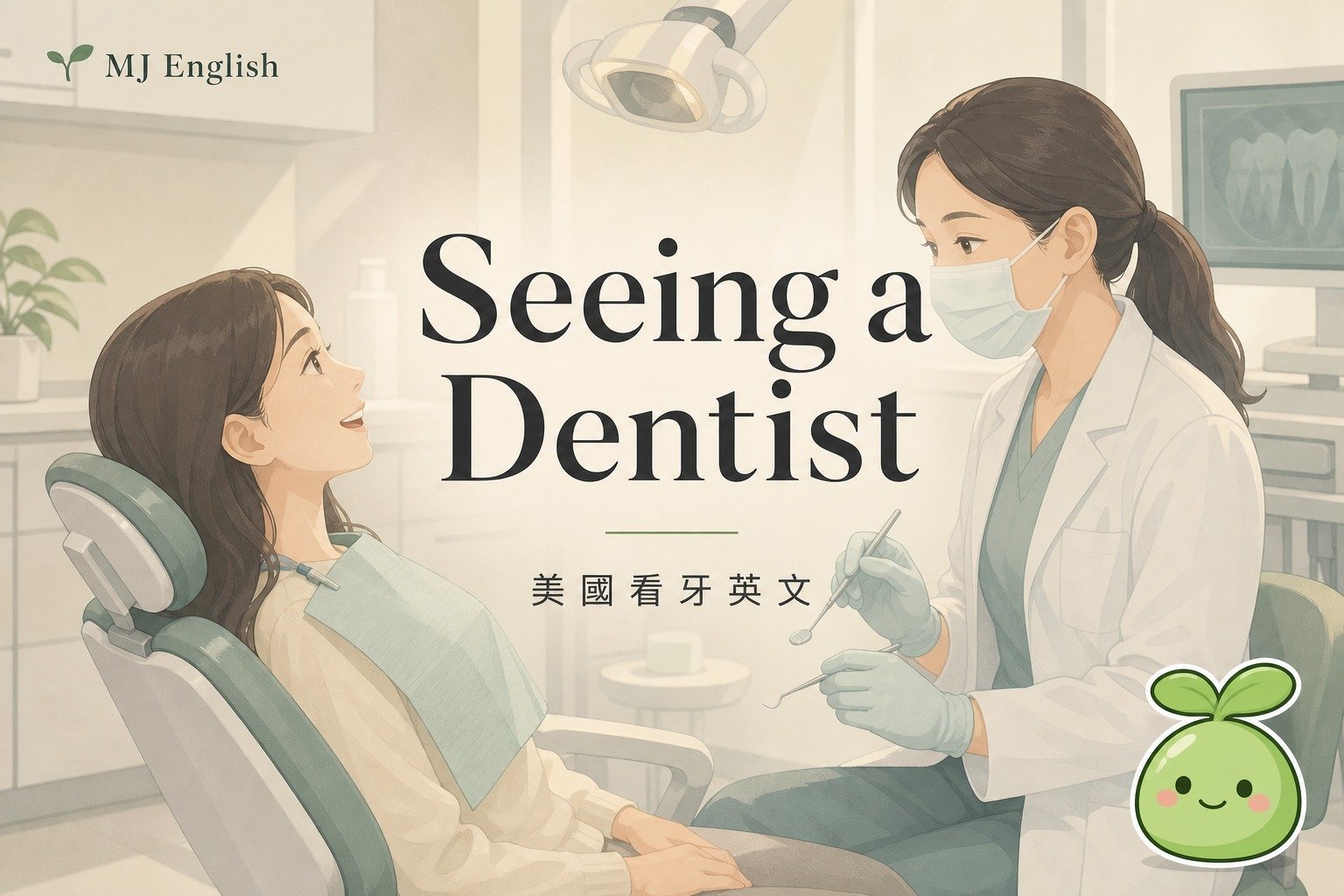
JPicture this: you’re leaned back in that big vinyl chair, a bright light shining right down at you, and the dentist walks over snapping on a pair of gloves. Before you can even say hi, you hear those four words — open wide for me.想像一下,你整個人躺在那張大椅子上,頭頂一盞超亮的燈直直照下來,牙醫走過來一邊戴手套,你連打招呼都還沒開口,就聽到那句話——張大嘴。
MThat moment right there is exactly why so many people dread going to the dentist in the US — not the drill, but not understanding what the dentist is actually asking you to do or telling you about your teeth.很多人在美國怕看牙醫,其實怕的不是鑽牙的聲音,是聽不懂牙醫到底在叫你做什麼、又在跟你講牙齒什麼狀況。
JI’m Jason, and today we’re sitting in on a really normal dentist visit, the kind almost everyone here in the US goes through — a routine checkup and cleaning that turns into a small surprise.我是 Jason,今天要帶大家去看一場超日常的牙醫回診,在美國幾乎每個人都會遇到,一次原本只是例行檢查加洗牙(checkup and cleaning)的回診,結果來了個小意外。
MAnd I’m Mary. Our patient today is Emma. She just booked a routine checkup and cleaning, but her dentist, Dr. Lee, ends up finding something Emma wasn’t expecting to hear about.我是 Mary。今天的主角是 Emma,她本來只是預約例行檢查(checkup)加洗牙(cleaning),結果她的牙醫 Dr. Lee 發現了一件她完全沒料到的事。
JRight before that, Emma actually describes a symptom, and this is a phrase worth stealing: she says, ‘One tooth’s been a little sensitive lately.’ Not broken, not painful — just sensitive.在那之前,Emma 先描述了症狀,這句真的很值得學起來,她說「這顆牙最近有點敏感(sensitive)」,不是說牙齒壞掉、也不是說很痛,就是敏感。
MThat word ‘sensitive’ is huge at the dentist. Dr. Lee follows up naturally too, asking, ‘Does it hurt when I press here, or when you drink something cold?’ Two totally different kinds of pain.「敏感」這個字在牙醫診所超常用。Dr. Lee 接著很自然地追問:「我壓這裡會痛嗎?還是喝冰的會痛?」這是兩種完全不一樣的痛。
JAnd Emma nails her answer: ‘Cold drinks, mostly. It’s a quick, sharp feeling.’ That’s such a useful pattern — cold drinks, mostly, plus describing exactly how the pain feels, quick and sharp.Emma 回答得很到位:「主要是喝冰的,一種快速又刺痛的感覺。」這個講法很實用,先講什麼情況會痛,再形容那種痛的感覺。
MNow here come the instructions dentists give constantly, and honestly, half the anxiety is just not knowing what they mean. First one: ‘open wide.’ Simple, but it’s literally the first thing you’ll hear.接下來就是牙醫最常下的指令,老實說一半的緊張感就是因為聽不懂這些話。第一句是「張大嘴(open wide)」,超簡單,但基本上一坐上椅子就會聽到。
JSecond one is ‘bite down.’ The dentist wants you to close your teeth together so they can check your bite. You’ll hear that phrase in almost every single dental visit.第二句是「咬合(bite down)」,牙醫是要你把牙齒咬緊,方便他檢查咬合狀況。這句幾乎每次看牙都會聽到。
MAnd then comes the moment Emma’s been bracing for. Dr. Lee looks and says, ‘I see a small cavity on the side here.’ That word, cavity, just means a small hole from tooth decay.然後就是 Emma 最緊張的那一刻,Dr. Lee 看完說:「這邊側面有一顆小蛀牙(cavity)。」蛀牙就是牙齒被蛀出一個小洞。
JEmma’s reaction is exactly what you want to copy, by the way — calm, not panicked. She asks, ‘Oh no, is it serious? Do I need a filling?’ Two clean, direct questions.Emma 的反應真的值得學,她沒有慌,很冷靜地問:「喔不,會很嚴重嗎?我需要補牙嗎?」兩句直接又清楚的問題。
MA filling is just what it sounds like — the dentist fills that small hole so it doesn’t get bigger. And Dr. Lee reassures her right away: ‘It’s tiny, nothing to worry about.’補牙(filling)顧名思義,就是把那個小洞補起來,不讓它變大。Dr. Lee 馬上安撫她:「很小顆,不用擔心。」
JHere’s a word that trips people up: ‘numb.’ Dr. Lee says, ‘We’ll numb it first, so you won’t feel a thing.’ That means they’ll use a local anesthetic before the filling.有個字很多人會卡住,就是「打麻醉(numb)」。Dr. Lee 說:「我們會先打麻醉,你完全不會有感覺。」意思就是補牙前會先局部麻醉。
MEmma asks something totally practical next — ‘How long does it take?’ Dr. Lee says about twenty minutes. That question alone is worth memorizing for literally any doctor’s appointment.Emma 接著問了一句超實用的:「大概要多久?」Dr. Lee 說大概二十分鐘。這句真的隨便看什麼科都可以拿出來問。
JOne more useful phrase before we listen — a ‘cleaning.’ Today’s visit was mainly a cleaning, the regular polish and checkup, and the cavity was just something they found along the way.聽完整段對話前再學一個字,「洗牙(cleaning)」。今天這次回診主要就是洗牙,例行的清潔跟檢查,蛀牙只是順便發現的。
MAnd don’t forget insurance. A simple line like ‘Do you take my insurance?’ can save you an awkward, expensive surprise at the front desk before any treatment even starts.還有別忘了保險(insurance),一句簡單的「你們有收我的保險嗎?」可以在治療開始前,先避開結帳時尷尬又貴的驚喜。
JOkay, let’s actually hear that whole conversation play out between Emma and Dr. Lee, so you can hear all these phrases used naturally, back to back.好,我們直接來聽 Emma 跟 Dr. Lee 完整的對話,把剛剛這些用法連在一起,聽聽看它們自然出現的樣子。
🔁 [DIALOGUE REPLAY] 重播情境對話
MHearing it again, what stands out to me is how calm Emma stays the whole time. She never panics, she just asks clear questions one at a time.再聽一次,我最有感的是 Emma 從頭到尾都很冷靜,她沒有慌,就是一次問一個清楚的問題。
JRight, so let’s do a fast recap of the toolkit. To describe a symptom: ‘This tooth is sensitive,’ or ‘it hurts when I drink something cold.’ Simple, specific, easy to say.對,那我們快速複習一下這集的工具箱。描述症狀可以說:「這顆牙很敏感」,或是「喝冰的會痛」,簡單又具體,很好開口。
MFor instructions, listen for ‘open wide’ and ‘bite down’ — those are just directions, not anything scary. And if you’re unsure, you can always ask, ‘Does this hurt?’聽指令的部分,注意「張大嘴」跟「咬合」這兩句,單純是動作指示,不用緊張。不確定的話,也可以主動問:「這樣會痛嗎?」
JFor the diagnosis part, know your three words: a cavity, a filling, and numb. If you hear ‘cavity,’ don’t freak out — just ask your two go-to questions.診斷的部分記三個字就好:蛀牙、補牙、打麻醉。聽到「蛀牙」不用嚇到,直接拿出你的兩句必問問題就好。
MThose questions again: ‘Is it serious?’ and ‘Do I need a filling?’ They sound simple, but they’re exactly what a native speaker would actually say in that chair.再講一次那兩句:「會很嚴重嗎?」跟「我需要補牙嗎?」聽起來很簡單,但這就是母語人士坐在那張椅子上真的會說的話。
JAnd if the dentist is scheduling a next step, ‘How long does it take?’ is your best friend. It works for fillings, cleanings, basically any procedure they mention.如果牙醫在安排下一步,「大概要多久?」就是你的好朋友,補牙、洗牙,幾乎任何療程都能拿來問。
MDon’t skip the insurance line either — ‘Do you take my insurance?’ Ask it at check-in, before anyone touches your teeth, and you’ll avoid a lot of confusion later.保險那句也別漏掉——「你們有收我的保險嗎?」報到的時候就先問,在任何人碰你牙齒之前問清楚,後面才不會一堆麻煩。
JIn the US, dental costs can vary a lot, so that one question isn’t just polite, it’s genuinely money-saving.在美國看牙的費用差很多,所以那句話不只是禮貌,是真的能幫你省到錢。
MHonestly, the dentist’s office is one of those places where just knowing five or six phrases changes the whole experience from stressful to totally manageable.老實說,看牙醫這種場合,光是會講五、六句關鍵句,整個體驗就能從緊張變成完全可以應付。
JSo next time you’re leaned back under that bright light, you’ll actually understand what’s happening instead of just nodding along and hoping for the best.所以下次你再躺在那盞亮燈下面,就能真的聽懂發生什麼事,而不是一直點頭裝懂、心裡祈禱一切順利。
MAnd that’s the real goal here — not sounding perfect, just understanding enough to ask the right questions and feel a little less nervous in that chair.這才是我們真正想要的效果,不是講得多完美,而是聽得夠懂,能問對問題,坐在那張椅子上也比較不緊張。
JAlright, that’s our trip to the dentist with Emma today. Small cavity, big vocabulary win — hope a few of these phrases stick with you.好,今天跟 Emma 的看牙之旅就到這裡。小小一顆蛀牙,換來一堆實用單字,希望這幾句能留在你腦子裡。
MSame here. Try using just one of these phrases next time you’re at any kind of appointment, and see how much smoother it feels.我也是這樣想。下次不管看什麼診,試著用上其中一句就好,你會發現整個過程順暢很多。
JTake care of those teeth, and we’ll catch you in the next episode.牙齒要顧好,我們下一集見。
MThanks so much for listening — this has been MJ English, see you soon.謝謝收聽,這裡是 MJ English,我們很快再見。