J“I won him.” Say that out loud to a native English speaker, and you’ll watch a small, confused flicker cross their face — something about it feels off, and most of the time they can’t even explain exactly why it bothers them.「I won him.」講給英文母語者聽,他們臉上會閃過一絲困惑——哪裡怪怪的,但通常連自己都說不清楚為什麼渾身不對勁。
MI’m Mary, and that flicker comes from one overworked verb — “win” — being stretched to cover a job it was never actually built for, all because Mandarin uses just a single word where English insists on splitting things cleanly in two.我是 Mary,那股違和感來自一個被操過頭的動詞——win(贏)——被硬拗去做它原本沒設計要做的事,因為中文用一個字打天下,英文卻堅持要拆成兩個字才夠用。
JI’m Jason, and today we’re untangling exactly that gap — win versus beat, two verbs English keeps stubbornly separate no matter how much Mandarin logic wants to merge them back together.我是 Jason,今天就要把這個落差解開——win 對上 beat(打敗),這是英文說什麼都要分開用的兩個動詞,不管中文邏輯多想把它們揉回一起。
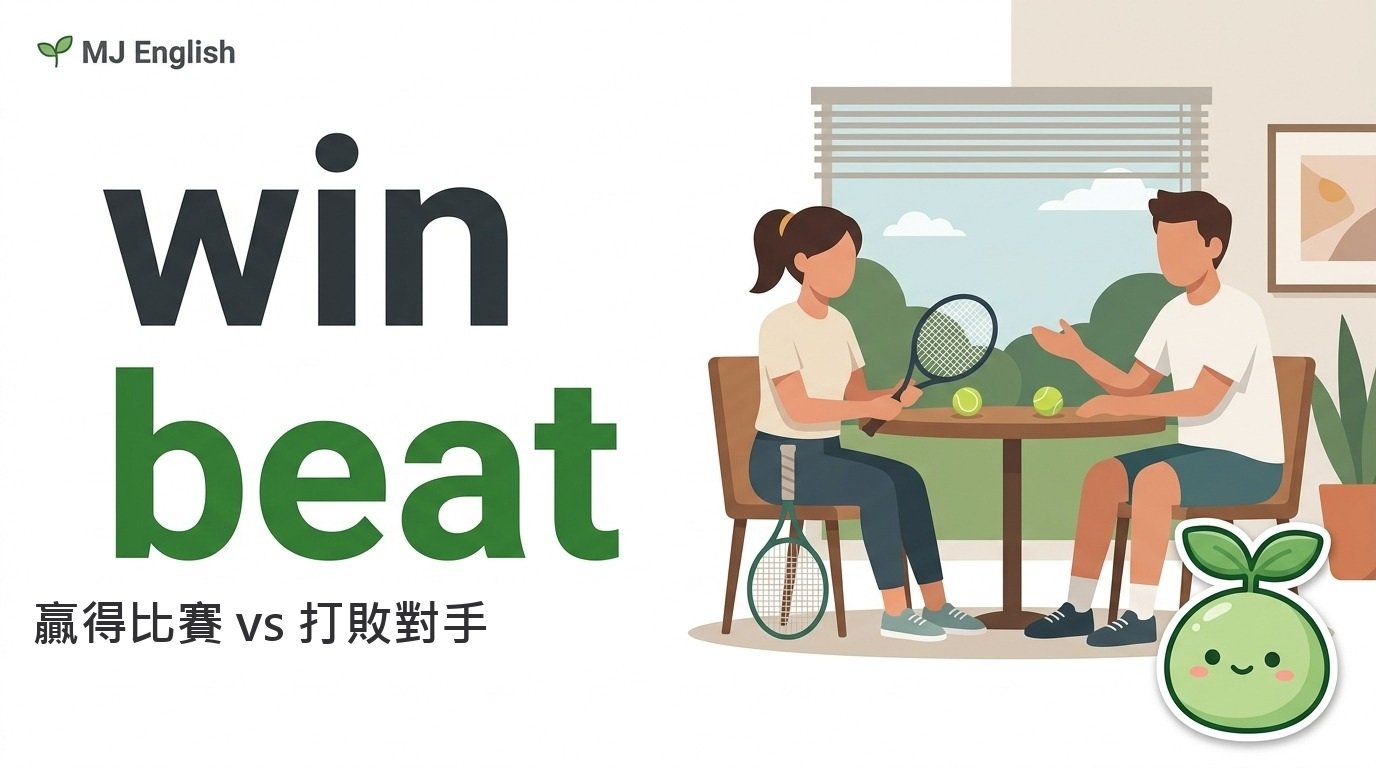
MLet’s start with Nina. She played tennis against her older sister this past weekend, and afterward, buzzing with excitement, she told her friend Eric something that sounded almost completely right — just not quite.先從 Nina 說起。她這週末跟姐姐打網球,賽後整個人超興奮地跟朋友 Eric 分享,講了一句聽起來幾乎全對、卻差那麼一點的話。
JShe said, “I finally won my sister at tennis this weekend!”她說:「I finally won my sister at tennis this weekend!」That’s completely natural logic if you’re thinking in Mandarin, but in English, the verb “win” simply refuses to take a person as its direct object, no matter how badly you want it to.這在中文邏輯裡完全合理,但英文裡的 win 就是死都不肯直接接一個人當受詞,不管你多想這樣用。
MEric caught it right away, though, gently. He told her, “You beat her, you mean. You win a match, but you beat a person” — laying out the whole distinction in one calm breath.不過 Eric 馬上就聽出來了,語氣還很溫和。他跟她說:「你是說你打敗她吧。比賽用 win,人要用 beat。」一口氣就把整個差別講清楚了。
JThat line is basically the entire rule packed into a single sentence, if you think about it.這句話仔細想想,根本就把整條規則濃縮進去了。Win takes the thing you walk away holding afterward — a match, a game, a prize. Beat takes the actual person you managed to defeat along the way.win 後面接的是你事後捧回家的東西——比賽、局數、獎品;beat 後面接的則是你真正打敗的那個人。
MWait — so “a match” and “a person” genuinely need two completely different verbs, even though Mandarin treats both kinds of winning as basically the exact same idea?等一下——所以「比賽」跟「人」真的要配兩個完全不同的動詞,即使中文把這兩種「贏」當成同一件事?
JExactly, and that’s the whole trap right there. One single word covers both jobs in Mandarin, so learners naturally assume English must work the same way — but it just flatly doesn’t.沒錯,這就是整個陷阱所在。中文一個字把兩種工作都包了,學習者自然以為英文也一樣——但事實根本不是這樣。
MOr, alternatively, you could say “win against him” instead — that phrasing works perfectly too, since it’s the word “against” that finally gives “win” a legal way to reach a person.或者你也可以說 win against him——這樣講一樣通,因為就是 against 這個字,才讓 win 終於有辦法「合法」接到一個人。
JNina slipped again just a moment later, saying “I won her twice, actually,” still stubbornly trying to plug a person straight into the verb “won” one more time.Nina 沒多久又講錯了,她說:「其實我贏了她兩次。」還是很頑固地想把「人」硬塞進 won 後面。
MEric corrected that one too, patiently — “Beat her twice.” His rule stayed refreshingly simple: whoever you actually defeat always pairs with “beat,” with absolutely no exceptions allowed.Eric 又耐心糾正了一次——「要說 beat her twice。」他的原則簡單到不行:被你打敗的人,永遠配 beat,完全沒有例外。
JBut then Nina got one completely right without even noticing it herself — “The last set was so close, but I won it,” she said, almost by accident.但接下來 Nina 有一句其實講對了、自己完全沒發現——她幾乎是不小心說出:「最後一盤超接近,但我贏下來了。」
MThat one’s actually correct, because “it” refers back to the set — a thing, not a person standing on the other side of the net.這句其實是對的,因為那個 it 指的是「這一盤」——是個東西,不是站在球網另一邊的人。Win a set, a game, a point — basically anything at all that you can physically walk away holding in your hands.贏一盤、一局、一分,基本上任何你能實際捧在手上帶走的東西,都用 win。
JSo the quick mental test really comes down to one simple question — can you hold this thing in your hands, or is it a person standing across the net from you right now?所以快速判斷的方法其實只有一個問題——這東西你捧得起來嗎,還是它現在正站在球網對面,是個活生生的人?
MThat’s a perfect way to put it, honestly.老實說,這樣講超到位。Trophy, medal, match, point — anything remotely holdable takes “win.” A person, or a whole team standing opposite you, takes “beat” instead, every single time.獎盃、獎牌、比賽、分數——任何稱得上捧得起來的東西都配 win;站在你對面的人、或整支隊伍,每次都配 beat。
JThis is actually pretty timely too, with the US Open just around the corner — every match recap you’ll see online this season follows exactly this same pattern.這其實蠻應景的,美網(US Open)就快開打了——接下來這一季你在網路上看到的每篇賽事戰報,都完全照著這個規則寫。
MRight, you’ll see headlines like “so-and-so beat the defending champion” constantly, but you’ll never once see “won the defending champion” anywhere.對啊,你會一直看到「某某人 beat 了衛冕冠軍」這種標題,但絕對不會看到「won 了衛冕冠軍」這種寫法。Beat plus person, every single time, no matter which sport you’re actually watching.beat 加人,每次都這樣,不管你在看哪種運動都一樣。
JNina hit one more snag a little later, though — this time it was grammar, not word choice. She said her cousin “beated” her just last month, without even realizing it.Nina 過一會兒又踩到另一個雷——這次是文法,不是用字。她說她表哥上個月「beated」她,自己完全沒察覺不對勁。
MEric jumped on that one fast — “Careful, it’s just ‘beat.’ Beat, beat, beaten — there’s no ‘-ed’ hiding anywhere in that word at all.”Eric 馬上抓出來——「小心,過去式還是 beat。beat、beat、beaten,這個字裡完全沒有 -ed 藏在任何地方。」
JThat honestly trips up a lot of learners, since nearly every other regular verb in English just tacks a plain “-ed” straight onto the end for its past tense.老實說這真的很多人會中招,因為英文裡幾乎所有規則動詞的過去式,都是直接在字尾加個 -ed 就搞定。
MBeat simply refuses to follow the crowd like that. Present tense and past tense look completely identical — only the rest of the sentence actually tells you which one you’re dealing with.beat 就是死都不跟大家一樣。現在式跟過去式長得一模一樣,只能靠句子其他部分才能判斷到底是哪個時態。
JNina summed it up best herself, honestly — “So I beat her, she beat me — same word every single time?” And yes, that’s exactly, precisely it.老實說 Nina 自己講得最傳神——「所以我 beat 她、她 beat 我——每次都同一個字?」對,就是這樣,一點都沒錯。
MOne more piece before we replay the whole dialogue — what actually happens when you’re on the losing side of things instead of the winning one?重播整段對話前再補一個重點——如果你是輸的那一方,到底該怎麼說?
JEric covered that one too — “When you lose, you ‘lose to’ someone.” Never “lose someone,” which would sound uncomfortably like you’d misplaced an actual person somewhere.Eric 也講到這個——「輸的時候,是 lose to 某人。」絕對不是 lose someone,那聽起來會很像你把一個人搞丟在什麼地方了。
MSo Nina walks away with a tidy little summary in the end — she beat her sister, but she lost to her cousin. Two completely different structures, one clean and simple underlying logic.所以 Nina 最後可以整齊收尾——她 beat 了姐姐,卻 lost to 表哥。兩種完全不同的結構,背後其實是同一套單純邏輯。
JAnd honestly, parts of that match were “a close game” right down to the wire — which is probably exactly why Nina’s already talking about wanting “a rematch” against her cousin soon.而且說真的,那場比賽有些段落根本是「a close game」,勢均力敵到最後一刻——這大概也是為什麼 Nina 已經在說想找表哥辦一場「a rematch」了。
🔁 [DIALOGUE REPLAY] 重播情境對話
MListen to that whole exchange again, and try counting how many times “beat” attaches to an actual person, versus how many times “win” attaches to a thing instead.重播一次整段對話,數數看 beat 接了幾次真人、win 又接了幾次東西。
JIt’s honestly the whole lesson in miniature — ask yourself first, is this a thing I’m holding, or a person I’m standing across from right now?這幾乎就是整堂課的縮影——先問自己,這是我要捧著的東西,還是現在站在我對面的一個人?
MOne challenge for this week — catch yourself the next time “won” almost slips out in front of a person, and swap in “beat” instead before it leaves your mouth.這週給你一個挑戰——下次 won 差點脫口而出、後面又是接人的時候,話還沒出口就馬上換成 beat。
JThanks so much for hanging out with us today — hope win and beat feel a whole lot less tangled now than they did a few minutes ago.謝謝大家今天陪我們聊這集——希望 win 跟 beat 現在感覺比幾分鐘前沒那麼糾結了。See you next time on MJ English!我們下次見,MJ English!
MBye, everyone — go beat someone at something fun this week!掰掰,大家——這週去找點好玩的事,beat 誰一場吧!