搬進美國宿舍不會哈拉?8月開學季新生英文求生指南

2026 08 06 en back to school 2 Daily English | 生活英語

8、9月開學季一到,行李都收好了,心裡卻還是七上八下——搬進宿舍那天要跟一個素未謀面的室友打招呼,主修、新生訓練、餐廳在哪,全部都要用英文現場應付,腦袋瞬間一片空白。

開學第一週最實用的,其實就是 move-in day 那幾句破冰英文——學會問主修、問路、問餐飲方案,比死背文法規則更救急。

🎧

Podcast 製作中

完整 podcast 版本準備上架。先訂閱節目,新集數第一時間通知。

訂閱 Apple Podcasts 訂閱 Spotify

💡 先搞懂:美國大學新生的第一週在忙什麼

美國大學開學不是「開學典禮」一天就結束,而是先有 move-in day(搬進宿舍、正式入住),接著幾天是 orientation(新生訓練),正式上課通常在這之後才開始。這段時間幾乎都在跟陌生同學閒聊、認路、辦手續。

台灣人最容易卡的雷:「主修」不是 subject 也不是 class,要說 major;問年級也不能用 grade(那是國高中的講法),大學生要說 year。


情境對話 Dialogue

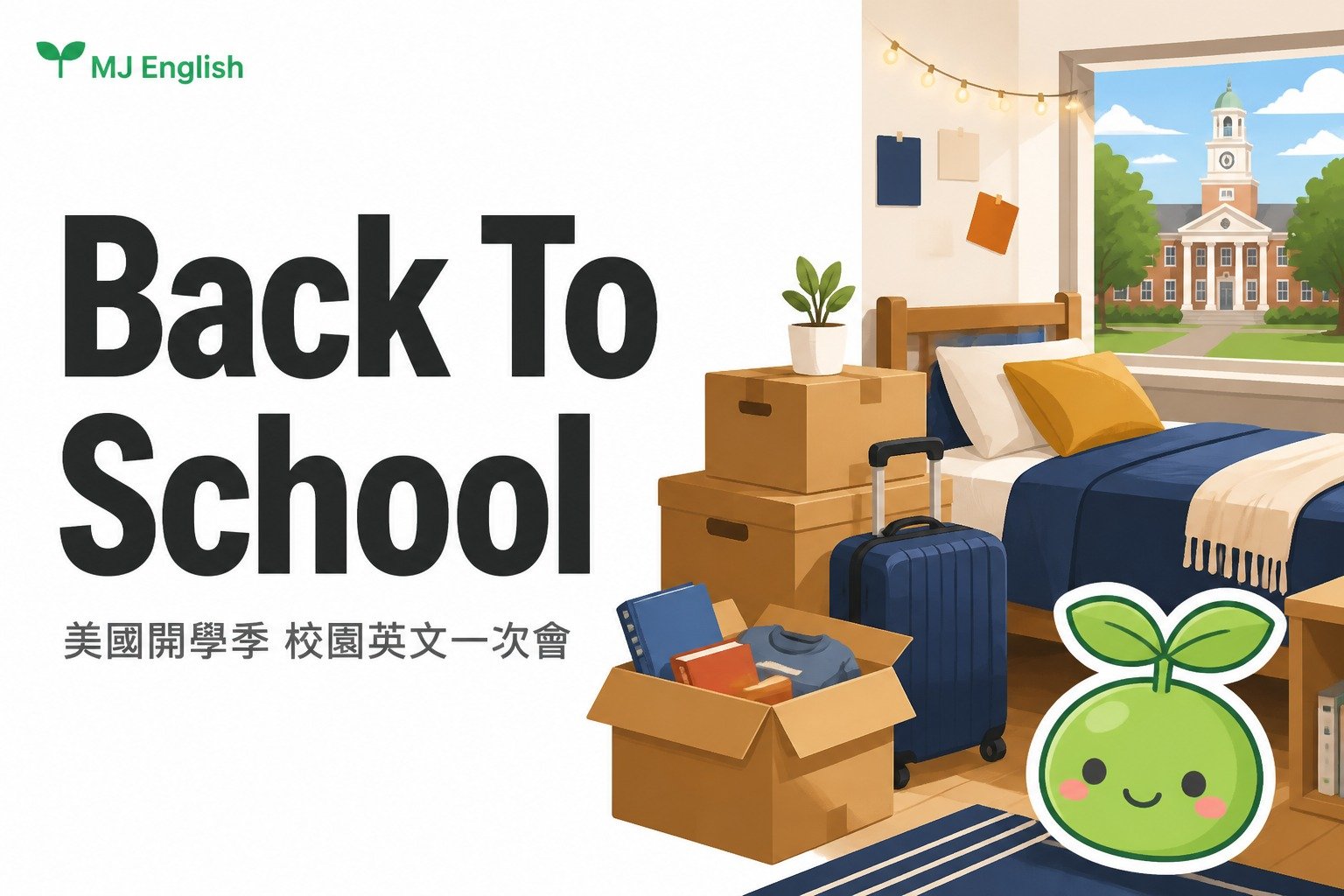
場景:Amy 剛從台灣飛抵美國,在 move-in day 搬進宿舍,跟新室友 Emma 第一次面對面認識彼此。


Emma

Hi! You must be my new roommate — I’m Emma.

嗨!你一定就是我的新室友吧——我是Emma。

Amy

Hi Emma! I’m Amy. Nice to finally meet you.

嗨Emma!我是Amy,終於見到你本人了,太好了。

Emma

Same! Is this your first time in the U.S.?

我也是!這是你第一次來美國嗎?

Amy

Yeah, I just flew in from Taiwan yesterday. Still a little jet-lagged.

對啊,我昨天才從台灣飛過來,還在時差中。

Emma

I bet. Are you a freshman too?

我猜也是。你也是大一新生(freshman,大一新生)嗎?

Amy

Yeah, this is my first year. Are you?

對,我是大一。你呢?

Emma

Me too! So what’s your major?

我也是大一!那你主修(major,主修)什麼?

Amy

I’m majoring in graphic design. What about you?

我主修平面設計。你呢?

Emma

Psychology. Hey, do you know where the dining hall is?

心理系。對了,你知道學生餐廳(dining hall,學生餐廳)在哪嗎?

Amy

I think it’s right behind this building. I still need to sign up for a meal plan.

我記得就在這棟後面。我還要去辦餐飲方案(meal plan,餐飲方案)耶。

Emma

Same here. We should go to orientation together tomorrow — it starts at nine.

我也是。我們明天要不要一起去新生訓練(orientation,新生訓練),九點開始。

Amy

Sounds great. I still need to buy a few things for the room too.

好啊。我房間裡還缺一些東西要買。

Emma

No worries, there’s a store right on campus. I heard our RA is really friendly, by the way.

沒問題,校內就有店了。對了,聽說我們的宿舍輔導員(RA,宿舍輔導員)人很好。

Amy

Oh good, I haven’t met her yet. Let’s unpack first and figure it out.

太好了,我還沒見過她。我們先把行李整理完再說吧。

Emma

Deal. Welcome to campus, Amy!

說定了。歡迎來到校園,Amy!

Amy

Thanks, Emma. I’m really glad you’re my roommate.

謝謝Emma,能跟你當室友真的太好了。


下次這樣說 Next Time

開學第一週最常卡住的三個地方,先學會就到位。

① 自我介紹

❌ 中文腦會說

My name is Amy. I come from Taiwan. I am a student.

我的名字是Amy。我來自台灣。我是一個學生。

✅ 該這樣說

Hi, I’m Amy — I just flew in from Taiwan.

嗨,我是Amy,剛從台灣飛過來。

為什麼:美式自我介紹很口語隨性,不用像作文一樣一句一句報家門,一句話帶過名字加一個小資訊就夠自然。

② 問對方年級

❌ 中文腦會說

What grade are you in?

你是幾年級?

✅ 該這樣說

What year are you?

你幾年級?

為什麼:grade 是國高中在用的年級講法,大學生要用 year(freshman/sophomore/junior/senior),講錯馬上會被聽出是還沒搞懂系統的新生。

③ 問設施在哪

❌ 中文腦會說

Where is located the dining hall?

學生餐廳它是位於哪裡?

✅ 該這樣說

Where’s the dining hall?

學生餐廳在哪?

為什麼:中文式英文常把「…在哪裡」逐字翻成 located,其實 Where’s the + 地點最簡短道地,越簡單越像母語者。


重點單字 Vocabulary Boost

dorm/ dɔːrm / n.

宿舍——dormitory 的口語縮寫,學生實際住的地方,大家平常都直接說 dorm。

Amy just moved into her dorm last weekend.(Amy上週末剛搬進宿舍。)

roommate/ ˈruːmˌmeɪt / n.

室友——跟你共用一間房間的人,開學季認識新朋友的第一個關卡。

Emma is Amy’s new roommate this year.(Emma是Amy這學年的新室友。)

move-in day/ ˈmuːv ɪn deɪ / n. phrase

入住日——搬進宿舍、正式住進去的那一天,通常在開學前幾天,全家一起搬行李。

Everyone’s parents show up on move-in day.(入住日那天大家爸媽都會出現。)

major/ ˈmeɪdʒər / n. / v.

主修——當名詞是科系本身,當動詞用 major in 表示「主修某科系」。

Amy is majoring in design, so her major is graphic design.(Amy主修設計,她的主修是平面設計。)

freshman/ ˈfrɛʃmən / n.

大一新生——大學裡的一年級生,跟國高中用的 grade 系統不同,大學要說 freshman/sophomore/junior/senior。

Most freshmen move into the dorms in August.(大部分大一新生八月就搬進宿舍。)

syllabus/ ˈsɪləbəs / n.

課程大綱——教授開學第一天發的整學期課程說明,成績算法、期限都寫在裡面。

Read the syllabus carefully before the first class.(第一堂課前把課程大綱仔細讀過。)

meal plan/ miːl plæn / n. phrase

餐飲方案——先儲值、之後在學生餐廳直接扣款的方案,很多學校會要求大一新生一定要辦。

You need to sign up for a meal plan before school starts.(開學前要先辦好餐飲方案。)

orientation/ ˌɔːriənˈteɪʃən / n.

新生訓練——開學前幾天,學校帶新生走一遍校園、規則跟各種手續的活動。

Orientation covers everything from safety rules to campus maps.(新生訓練會教安全規則到校園地圖的所有事。)

dining hall/ ˈdaɪnɪŋ hɔːl / n. phrase

學生餐廳——校內的自助餐廳,大部分學生每天在那邊用meal plan扣款吃飯。

The dining hall is right next to the library.(學生餐廳就在圖書館旁邊。)

RA/ ˌɑːr ˈeɪ / n.

宿舍輔導員(resident assistant 的縮寫)——住在你那層樓、負責照顧新生跟處理狀況的學長姐。

If you lock yourself out, just call your RA.(要是把自己鎖在門外,打給你的RA就對了。)

🎯 30 秒快速複習

開學第一週的英文,重點不是文法,是敢開口問——套上面這幾句,破冰其實很簡單。

dorm=宿舍
roommate=室友
move-in day=入住日
major → What’s your major?
freshman → 大學用 year,不是 grade
syllabus=課程大綱
meal plan=餐飲方案
orientation=新生訓練

重點句型 Sentence Patterns

1. What’s your major? → 你主修什麼?

開學季破冰最安全的一句,幾乎人人都會被問到、也都答得出來,是最好用的開場白。

例:”What’s your major?”(你主修什麼?)
例:”Hey, what’s your major, by the way?”(欸,對了,你主修什麼啊?)
例:”So what’s your major again?”(那你主修再說一次是什麼?)
跟台灣人第一次見面愛問「你哪個系」是同一個功能,直接用這句當開場白最自然。

2. I’m majoring in ~ → 我主修~

回答主修最自然的講法,也可以換成 My major is ~,兩種都很道地。

例:”I’m majoring in graphic design.”(我主修平面設計。)
例:”She’s majoring in business, not psychology.”(她主修商學,不是心理系。)
例:”I haven’t picked a major yet.”(我還沒決定主修。)
還沒決定主修也完全沒關係,很多美國大一生也一樣,直接誠實回答就好。

3. Are you a freshman? / What year are you? → 你是大一新生嗎?/你幾年級?

兩種問法都常見,年級回答用 freshman、sophomore、junior、senior,依序對應大一到大四。

例:”Are you a freshman too?”(你也是大一新生嗎?)
例:”What year are you?” “I’m a sophomore.”(你幾年級?我大二。)
例:”Most of us in this dorm are freshmen.”(這棟宿舍大部分都是大一生。)
大學絕對不要用 grade 問年級,那是國高中的講法,講出來馬上被聽出是還沒摸熟系統。

4. Where’s the ~? → ~在哪裡?

問校園設施在哪最簡短的說法,套用在任何地點都通,不用加 located。

例:”Where’s the dining hall?”(學生餐廳在哪?)
例:”Where’s the campus store?”(校內商店在哪?)
例:”Where’s the nearest bus stop?”(最近的公車站在哪?)
開學前幾天在校園裡迷路超正常,直接找人問這句就好,不用不好意思。

5. Do you know when ~ starts? → 你知道~幾點開始嗎?

問活動時間超好用的句型,orientation、meeting、店家開門都能直接套用。

例:”Do you know when orientation starts?”(你知道新生訓練幾點開始嗎?)
例:”Do you know when the campus store opens?”(你知道校內商店幾點開嗎?)
例:”Do you know when the meeting starts?”(你知道會議幾點開始嗎?)
句型固定不變,只要換掉中間的名詞,就能問任何活動或店家的時間。

逐字稿 Transcript

J
Move-in day in the U.S. is chaos — boxes stacked in the hallway, parents crying in the parking lot, and somewhere in that mess, you’re about to meet a total stranger who’s now your roommate for the year.美國的入住日(move-in day,入住日)根本一團亂——走廊堆滿紙箱,爸媽在停車場哭得唏哩嘩啦,然後你就在這片混亂中,準備認識一個完全陌生、但接下來整年都要同住的室友。
M
I’m Mary, and today’s episode is all about surviving that first week — the words and questions that get you through move-in day, orientation, and every awkward hallway hello in between.我是Mary,這集要教的就是撐過開學第一週要用的英文——從入住日、新生訓練(orientation,新生訓練),到走廊上每一次尷尬的打招呼都用得到。
J
And I’m Jason.我是Jason。If you’re a Taiwanese student flying out to a U.S. campus this fall — freshman year, transfer, exchange, whatever it is — this one’s for you.如果你今年秋天要飛去美國校園唸書——不管是大一新生(freshman,大一新生)、轉學還是交換,這集都是為你準備的。
M
Let’s start with the building itself.先從住的地方講起。In English, you don’t say “apartment building” for student housing — you say dorm, short for dormitory.英文不會用「apartment building」來指學生宿舍,而是說dorm,是dormitory(宿舍)的簡稱。That’s where you’ll actually be living.那就是你實際會住的地方。
J
Right, and the day you first show up with all your stuff is move-in day — when you unpack, meet your roommate, and figure out which drawer is yours.對,你帶著行李第一次到宿舍報到的那天就叫move-in day(入住日)——整理行李、認識室友(roommate,室友),還要搞清楚哪個抽屜是你的。
M
Your roommate — the person sharing your room.Roommate(室友)就是跟你共用房間的人。And that very first conversation is basically a five-minute job interview where nobody prepared any questions, so it always feels a little stiff at first.而那第一次對話,根本就像一場沒人準備問題的五分鐘面試,一開始總是有點尷尬生硬。
J
Ha, exactly.哈,真的。So the easiest opener in the world is “What’s your major?”所以世界上最好用的開場白就是「What’s your major?」(你主修什麼?)。Your major is just the subject you’re studying — like biology, or business.Major(主修)就是你在學校讀的科系,像生物或商學之類的。
M
And to answer, you say “I’m majoring in—” plus the subject.回答的時候就說「I’m majoring in—」加上科系名稱。So Amy in our dialogue says, “I’m majoring in graphic design.”像我們對話裡的Amy就說「I’m majoring in graphic design」(我主修平面設計)。
J
You can also flip it around and just say the noun — “My major is psychology.”也可以反過來直接講名詞——「My major is psychology」(我的主修是心理系)。Both versions sound completely natural, so use whichever one comes out first, and don’t worry about picking the “wrong” one.兩種講法聽起來都很自然,哪句先脫口而出就用哪句,不用糾結哪個才是「正確答案」。
M
Once you’ve covered majors, the next natural question is “Are you a freshman too?”聊完主修之後,接下來自然會問「Are you a freshman too?」(你也是大一新生嗎?)。A freshman is a first-year student — everyone assumes you’re new anyway.Freshman(大一新生)就是大一新生,反正大家一開始都預設你是新來的。
J
There’s also a shortcut version — “What year are you?” — and you answer with freshman, sophomore, junior, or senior, no need to repeat the whole question back.還有一個更簡短的問法——「What year are you?」(你幾年級?),回答直接說freshman、sophomore(大二)、junior(大三)或senior(大四)就好,不用把整句重複一遍。
M
It sounds like such a small question, but it opens up a whole conversation.這種問題聽起來很小,卻能打開整段對話。That’s really American campus culture — quick, friendly small talk with total strangers.這就是美國校園文化——跟完全陌生人也能輕鬆閒聊幾句。
J
Honestly, the biggest culture shock for a lot of Taiwanese students isn’t the language — it’s how much small talk Americans expect from total strangers, even ones they’ll never see again.說真的,很多台灣學生最大的文化衝擊不是英文本身,而是美國人對「跟陌生人閒聊」的期待有多高,就算這輩子可能再也不會遇到。
M
Right, back home you might not chat with a stranger in an elevator.對啊,在台灣你可能不會跟電梯裡的陌生人聊天。Here, silence in a dorm hallway can actually feel a little rude.但在這邊,宿舍走廊上完全不出聲,反而顯得有點沒禮貌。
J
Once you’re settled in, you’ll need to find your way around campus too.等你安頓下來之後,也會需要在校園裡找路。For that, “Where’s the—” is your best friend, and it works for basically any building or office you’re trying to track down.這時候「Where’s the—」(…在哪裡?)就是你的好朋友,不管要找哪棟建築或哪個辦公室都套得上。
M
Like, “Where’s the dining hall?”像是「Where’s the dining hall?」(學生餐廳在哪?)。That’s the campus cafeteria — the main place students go to eat their meals every day.Dining hall(學生餐廳)就是校內的自助餐廳,大部分學生每天都在那裡吃飯。
J
And before you can actually eat there, most schools want you to sign up for a meal plan — basically prepaid credit you use in the dining hall.而在你能去吃飯之前,大部分學校都要你先辦meal plan(餐飲方案)——基本上就是先儲值、之後在學生餐廳直接扣款的意思。
M
Some schools even require a meal plan for freshmen automatically.有些學校甚至規定大一新生一定要辦meal plan。So check that before move-in — you don’t want to show up on day one with zero meals loaded and a locked-up cafeteria card.所以入住前記得先確認清楚,別讓自己搬進去第一天餐卡裡完全沒額度、什麼都吃不了。
J
One more practical bit — before move-in, everyone stresses about what to actually buy.還有一個實際的重點——入住前大家都在煩惱到底要買什麼。A mini fridge, bedding, maybe a fan — that’s the classic dorm shopping list.小冰箱、寢具、電風扇這幾樣,算是宿舍採購的經典清單。
M
And if you’re not sure what you need, just ask your roommate — “Hey, did you already buy a fridge?” is a totally normal icebreaker before you even arrive.如果不確定要買什麼,直接問室友就好——像「Hey, did you already buy a fridge?」(欸,你買冰箱了嗎?)這種問法,在還沒見面前就先問也完全正常。
J
A lot of schools set up a roommate group chat before you even land, so you already sort of know each other’s names by move-in day.很多學校會在你出發前就先開一個室友群組,所以入住那天之前,你們大概就已經先知道彼此的名字了。
M
Which honestly takes some of the pressure off that first face-to-face hello — you’re not walking in as complete strangers anymore.這樣一來,第一次真人見面打招呼的壓力就小很多了,畢竟不是完全陌生人了。
J
Then there’s orientation — a few days right before classes start, where the school walks every new student through campus, rules, and basically everything you need to know.接下來是orientation(新生訓練)——開學前幾天,學校會帶所有新生走一遍校園、規則,還有各種你需要知道的事。
M
Handy question for that one — “Do you know when orientation starts?”這時候很好用的一句是「Do you know when orientation starts?」(你知道新生訓練幾點開始嗎?)。It’s a super flexible pattern, and you’ll probably use it a dozen times that first week.這個句型很萬用,第一週大概會用上十幾次。
J
Exactly, just swap the word.對,換個字就好。“Do you know when the campus store opens?”「Do you know when the campus store opens?」(你知道校內商店幾點開嗎?)。Same structure, completely different situation — it works for pretty much anything.句型一樣,情境完全不同,幾乎什麼場合都能套。
M
One more must-know term — the RA, short for resident assistant.再一個一定要知道的詞——RA,是resident assistant(宿舍輔導員)的縮寫。That’s the upperclassman who actually lives on your floor and basically runs it.就是實際住在你那層樓、負責照看大家的學長姐。
J
So if something breaks in your room, or you’re just completely lost, your RA is usually the very first person you go find, before you even think about calling the front office.所以房間裡東西壞了,或是你整個人一頭霧水不知道怎麼辦,第一個要找的通常就是RA,比想到要打給宿舍辦公室還快。
M
Oh, and once classes officially start, every professor hands out a syllabus on day one.對了,等課正式開始,每個教授開學第一天都會發syllabus(課程大綱)。That’s the full course outline for the entire semester.那就是整學期的完整課程說明。
J
Grades, deadlines, the reading list — it’s all right there in the syllabus, so read it carefully.成績算法、繳交期限、閱讀清單,全部都寫在syllabus裡面,一定要仔細讀。Seriously, don’t just skim it and toss it aside.真的不要隨便翻翻就丟一邊。
M
So between “What’s your major,” “Are you a freshman,” “Where’s the—,” and “Do you know when it starts,” you’ve basically got your first week covered.把「What’s your major」「Are you a freshman」「Where’s the—」跟「Do you know when it starts」這幾句串起來,開學第一週基本上就搞定了。That’s a lot of new vocabulary for one week of school, but most of it is really just small talk.一週要塞這麼多新單字說真的不少,但講到底,大部分其實就是閒聊而已。
J
Totally agree.完全同意。Introduce yourself, ask about someone’s major, ask where things are — honestly, that covers about ninety percent of your entire first week on campus.自我介紹、問對方主修、問東西在哪——老實說,這幾招大概就涵蓋了開學第一週九成的情況。
🔁 [DIALOGUE REPLAY] 重播情境對話
M
Listening back to Amy and Emma, neither of them sounded nervous — they just kept asking short, direct questions and letting the conversation build itself naturally.重聽一次Amy跟Emma的對話會發現,她們兩個聽起來都不緊張,就只是一直問簡單直接的問題,對話自然而然就聊開了。
J
So here’s your homework before you land: practice saying “What’s your major?” out loud until it feels automatic.所以回去的功課是:把「What’s your major?」練到能脫口而出。That one question will carry your entire first week.光這一句,就能撐起你開學第一週大半的對話。
M
Good luck with move-in day, everyone.祝大家入住順利。Bye for now!先這樣囉,掰!
J
See you next time on MJ English!我們下次在MJ English再見!

延伸學習 Keep Going

同樣是「剛落地、要跟陌生人開口」的情境,一起把英文補齊。

你第一次搬進宿舍,是怎麼跟室友破冰的?

留言分享你的開學季糗事或神救援句子,讓更多準備出發的人少走一點冤枉路。

追蹤 MJ英語 podcast,下次見。

標題和URL已復制