JDing dong. Then a tiny voice shouting, “Trick or treat!” and the plastic rustle of a candy bag. I’m Jason, and that sound means October is here, even in Taipei.叮咚。接著一個小小的聲音大喊 “Trick or treat!”(不給糖就搗蛋!),還有塑膠糖果袋沙沙作響。我是 Jason,這個聲音就代表十月到了,連台北也一樣。
MI love that sound. I’m Mary. But here’s the scary part. Your foreign coworker leans over and asks, “So, what are you going as?” And your brain goes totally blank. You just freeze.我超愛這個聲音。我是 Mary。不過可怕的來了。外國同事靠過來問:”So, what are you going as?”(所以你要扮成什麼?)然後你腦袋一片空白,整個僵住。
JGood news. Halloween English is just a few fixed phrases. This year, October thirty-first is a Saturday. So parties in Tianmu, in Xinyi, and at your office are all coming. Let’s get you ready.好消息是,萬聖節英文就是幾個固定說法。今年十月三十一日剛好是週六,天母、信義區、公司裡的派對都會來。我們幫你準備好。
MPhrase one is asking. “What are you going as?” Go as means you show up as that character. You can also say “What’s your costume?” or “Are you dressing up?” All easy, all normal.第一個是問人。”What are you going as?”(你要扮成什麼?)go as 就是以那個角色的樣子出席。也可以說 “What’s your costume?”(你的裝扮是什麼?)或 “Are you dressing up?”(你會變裝嗎?)都很簡單,也都很自然。
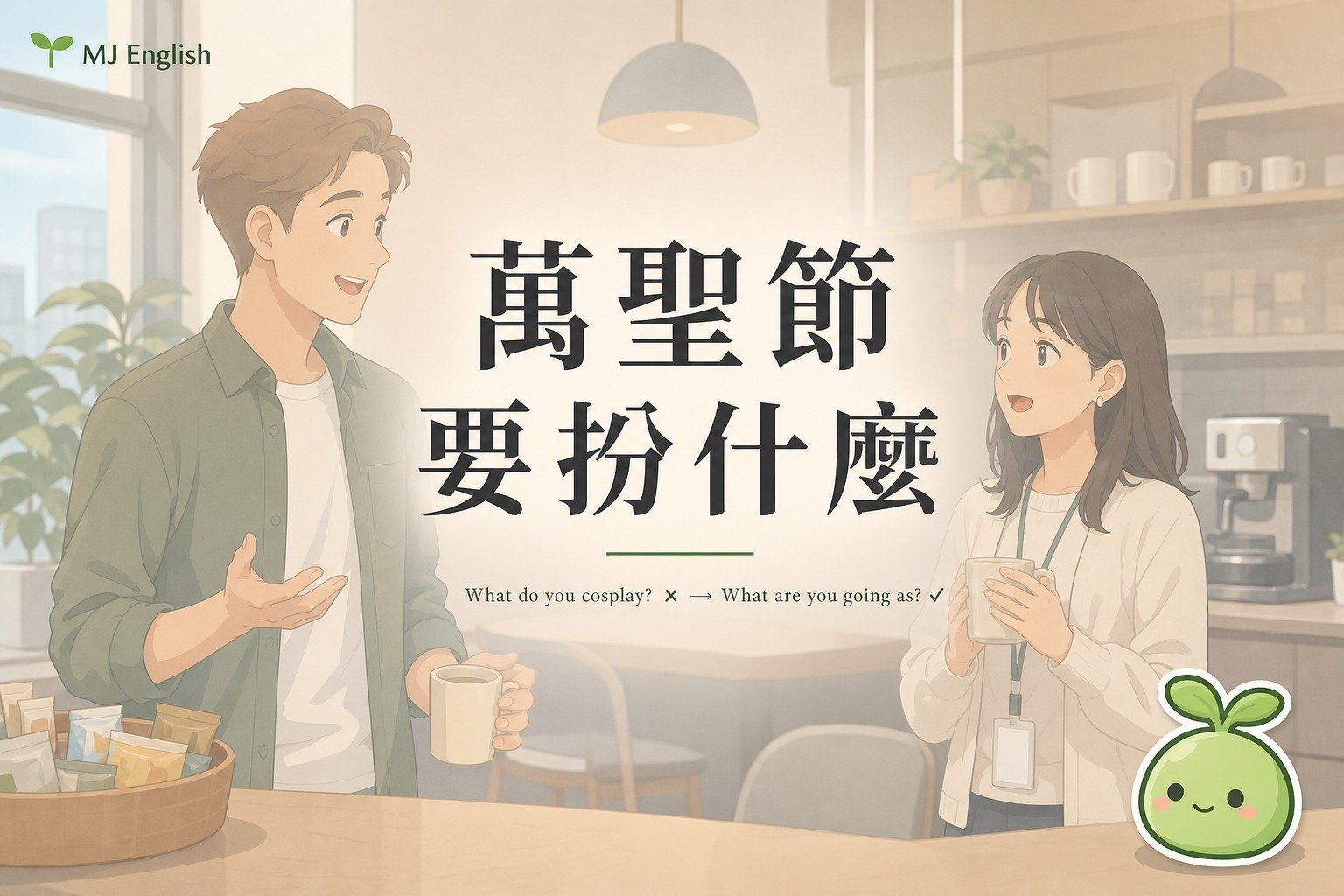
JHere’s the trap. Many people ask, “What do you cosplay?” But in English, cosplay usually means dressing as a specific character from anime, games, or comics, often at fan conventions. Your coworker might think you mean anime.陷阱來了。很多人會問 “What do you cosplay?”。但在英文裡,cosplay 通常是指扮成動漫、遊戲或漫畫裡的特定角色,常出現在動漫展。同事可能會以為你在講動漫。
MAnd saying cosplay isn’t wrong. It’s just not the default. For Halloween, the normal words are costume and dress up. So just ask, “What are you going as?” Done.而且說 cosplay 不算錯,只是不是預設講法。萬聖節的一般用字是 costume(裝扮)和 dress up(打扮)。所以直接問 “What are you going as?” 就對了。
JLet’s follow Brian and Lily. Brian invites Lily to a party at his place on Saturday. Lily says, “I’ve never been to one. So, what do you cosplay?” And Brian smiles, kindly.我們來看 Brian 和 Lily。Brian 邀 Lily 週六去他家的派對。Lily 說:”I’ve never been to one. So, what do you cosplay?”(我沒參加過。那你要 cosplay 什麼?)Brian 親切地笑了笑。
MHe says, “It’s not really a cosplay thing. We’d just say, what are you going as?” Then he answers it himself. “I’m going as a vampire.” Fake teeth, a cape, the whole thing.他說:”It’s not really a cosplay thing. We’d just say, what are you going as?”(這不太算 cosplay。我們會直接說:你要扮成什麼?)然後他自己回答:”I’m going as a vampire.”(我要扮吸血鬼。)假牙、披風,全套。
JPhrase two is answering. “I’m going as a witch.” Or “I’m dressing up as a cat.” Not sure yet? Say, “I’m still deciding.” We use the present tense, because it’s a plan you already have.第二個是回答。”I’m going as a witch.”(我要扮巫婆。)或 “I’m dressing up as a cat.”(我要打扮成貓。)還沒決定?就說 “I’m still deciding.”(我還在想。)這裡用現在進行式,因為是你已經有的計畫。
MNow the second trap. Lily says, “I will wear a witch, I think.” Careful. Wear goes with clothes. “I will wear a witch” sounds like you’re putting an actual witch on your body. Funny picture, but no.第二個陷阱。Lily 說:”I will wear a witch, I think.”(我想我會穿一個巫婆。)小心,wear 後面接的是衣服。”I will wear a witch” 聽起來像把一個真的巫婆穿在身上。畫面很好笑,但不對。
JBrian fixes it gently. “You mean you’re going as a witch?” And if you do mean the outfit itself, wear is fine. “I’m wearing a witch costume.” The costume is the outfit. The witch is the character.Brian 溫和地幫她改。”You mean you’re going as a witch?”(妳是說妳要扮巫婆吧?)如果你真的是在講衣服本身,用 wear 就可以。”I’m wearing a witch costume.”(我穿著巫婆裝。)costume 是衣服,witch 是角色。
MSo, character: “I’m going as a witch.” Outfit: “I’m wearing a witch costume.” Same party, two different jobs. Try saying both out loud on the MRT. Nobody will mind.所以,講角色:”I’m going as a witch.” 講衣服:”I’m wearing a witch costume.” 同一場派對,兩種用法。在捷運上小聲唸唸看,沒人會介意。
JPhrase three is kids and candy. Lily’s nephew wants to go trick-or-treating. See the pattern? Go trick-or-treating, like go shopping or go hiking. It’s an activity, so no “to” in the middle.第三個是小孩和糖果。Lily 的姪子想去 go trick-or-treating(挨家挨戶要糖)。看到規律了嗎?go trick-or-treating 就像 go shopping、go hiking,是一種活動,所以中間不加 to。
MThat’s trap number three. “Let’s go to trick or treat.” That sounds like a place. Say, “Let’s go trick-or-treating.” And at the door, the kids shout, “Trick or treat!”這是第三個陷阱。”Let’s go to trick or treat.” 聽起來像在去某個地點。要說 “Let’s go trick-or-treating.”(我們去要糖吧。)到了門口,小孩就大喊 “Trick or treat!”
JAnd the host? Brian says, “We’ll have candy at the door. He just has to say trick or treat.” Candy is the everyday American word for sweets. Simple and friendly.那主人怎麼說?Brian 說:”We’ll have candy at the door. He just has to say trick or treat.”(我們門口會準備糖果。他只要說 trick or treat 就好。)candy 是美式的糖果說法,簡單又親切。
MSome fun words. A jack-o’-lantern is a pumpkin with a face carved in it. A haunted house is a spooky house, and people pay to get scared inside. Very Halloween.幾個有趣的單字。jack-o’-lantern 是刻了臉的南瓜燈。haunted house 是鬼屋,大家還會付錢進去被嚇。超有萬聖節味。
JAnd creepy. If something gives you the shivers, it’s creepy. A weird mask, a dark hallway, a fake spider. “That mask is so creepy.” In Halloween land, creepy can even be a compliment.還有 creepy(毛毛的)。讓你起雞皮疙瘩的東西就是 creepy。奇怪的面具、暗暗的走廊、假蜘蛛。”That mask is so creepy.”(那個面具好毛。)在萬聖節,creepy 甚至可以是稱讚。
MWhich brings us to compliments. At a party, the easiest opener is, “Love your costume!” Or, “That’s so creepy, I love it.” Both are happy, friendly lines. People will smile right away.說到稱讚。在派對上最好開口的就是 “Love your costume!”(好喜歡你的裝扮!)或 “That’s so creepy, I love it.”(好毛喔,我很喜歡。)兩句都開心又友善,對方馬上就會笑。
JIf you can’t tell what someone is, try, “Wait, who are you supposed to be?” Keep your tone curious and smiling. If you say it flat, it sounds like you’re interrogating them.如果看不出對方扮的是誰,可以說 “Wait, who are you supposed to be?”(等等,你扮的是誰?)語氣要好奇、帶著笑。平平地講,會像在盤問人家。
MLast bit, invitations. A coworker might say, “Halloween party Saturday, you coming?” If you want to join, say, “I’m in!” And when the day comes, “Happy Halloween!”最後是邀約。同事可能會說 “Halloween party Saturday, you coming?”(週六萬聖節派對,你來嗎?)想參加就說 “I’m in!”(我要參加!)當天就說 “Happy Halloween!”(萬聖節快樂!)
JMini practice. I’ll be your coworker. “Halloween party Saturday, you coming?” Your turn, Mary. Remember, no cosplay questions allowed.小練習。我來當你的同事。”Halloween party Saturday, you coming?” 換妳了,Mary。記得,不能問 cosplay 喔。
M“I’m in! I’m going as a cat. What are you going as?” See? Smooth. No freezing at all, and no witch on my body.“I’m in! I’m going as a cat. What are you going as?”(我要參加!我要扮貓。你要扮什麼?)看吧,很順。完全沒有僵住,身上也沒穿著巫婆。
J“I’m still deciding. Maybe a jack-o’-lantern.” Ha. Okay, that works. And look at that, we used all three phrases without a single cosplay.“I’m still deciding. Maybe a jack-o’-lantern.”(我還在想。也許扮南瓜燈。)哈,可以。你看,三個說法我們全用上了,一個 cosplay 都沒說。
MGreat. Now let’s listen to Brian and Lily one more time. This time, catch the three key phrases. Going as, the wear mix-up, and trick-or-treating.很好。現在我們再聽一次 Brian 和 Lily。這次抓三個重點:going as、wear 的口誤,還有 trick-or-treating。
JReady? Here they come, creepy cape and all.準備好了嗎?他們來了,連陰森披風一起。
🔁 [DIALOGUE REPLAY] 重播情境對話
MRemember, ask “What are you going as?”, answer “I’m going as a witch,” and kids go trick-or-treating, with no “to” in the middle.記得,問人用 “What are you going as?”,回答用 “I’m going as a witch,”,小孩去要糖就是 go trick-or-treating,中間不加 to。
JNow your turn. Comment “I’m going as…” in English, and tell us what you’re dressing up as this Saturday. We’ll check it for you.換你了。用英文留言 “I’m going as…”,告訴我們你這個週六要扮成什麼。我們幫你看看。
MHappy Halloween, everyone. Go get that candy.大家萬聖節快樂。去拿糖吧。
JThis was MJ English. Stay spooky!這裡是 MJ English。繼續保持陰森!