JQuick question before we start — if someone told you, “I’ve worked here since three years,” would that sound a little off to you? It’s such a common slip for Mandarin speakers, and today we’re breaking down exactly why it happens, one small word at a time.先問個問題——如果有人跟你說「I’ve worked here since three years」,你會不會覺得哪裡怪怪的?這是講中文的人超常見的一個小失誤,今天我們就一個字一個字拆給你聽,到底為什麼會這樣。
MI’m Mary, and honestly, “since three years” is everywhere. It’s one of the clearest signs that Mandarin and English count time in completely different ways, and it trips up almost everyone the first few times they try it.我是 Mary,老實說「since three years」真的到處都是。這是中文跟英文算時間方式完全不一樣最明顯的例子,幾乎每個人一開始都會被絆倒。
JI’m Jason. Here’s the thing — in Mandarin, one small marker at the end of a sentence covers both ideas: doing something for three years, or doing something since 2020. English splits that single idea into two completely different words.我是 Jason。重點是——中文句尾那個小小的「了」字兩種情況都能用:做了三年,或從2020年就開始做。但英文把這一個概念拆成兩個完全不同的字。
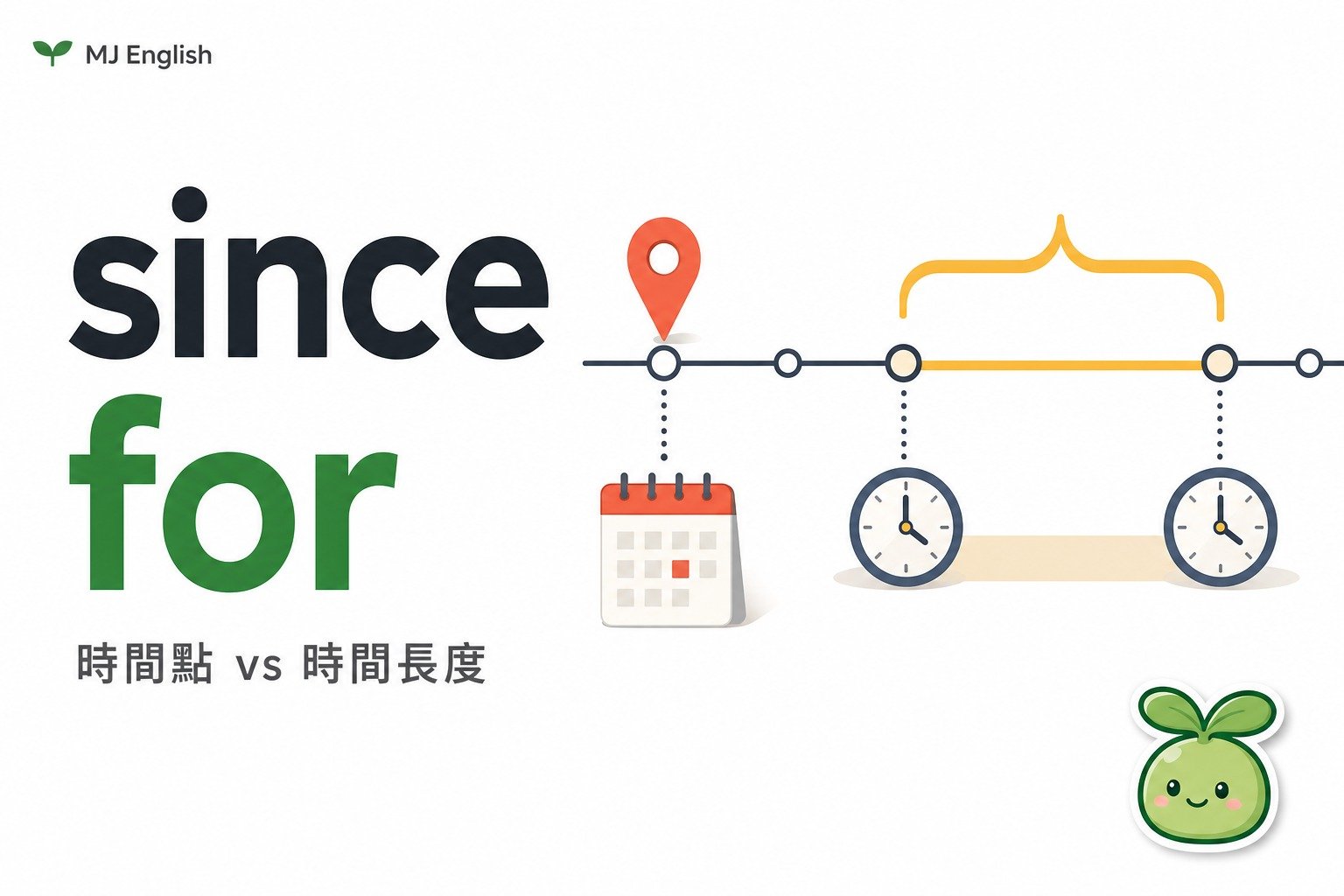
MExactly. “For” goes with a length of time — how long something lasted. “Since” goes with a starting point — the exact moment it began.沒錯。for 接的是時間長度——事情持續了多久。since 接的是起點——事情從哪一刻開始的。
JSo for a length — for two years, for a week, for ten minutes, for a long time. If the question in your head is “how long,” you’re already in for-territory.所以講長度——for two years、for a week、for ten minutes、for a long time。只要你心裡想的是「多久」,那就是 for 的地盤。
MAnd for a point — since 2020, since Monday, since I graduated. If the question is “starting when,” that’s since-territory. Two different questions, two different words.講時間點——since 2020、since Monday、since I graduated。只要問的是「從什麼時候開始」,那就是 since 的地盤。兩種不同問題,兩個不同的字。
JIn today’s dialogue, Grace keeps mixing the two up, and her friend David — very patiently — keeps handing her the right word, one small correction at a time.今天的對話裡,Grace 一直把兩個字搞混,她朋友 David 就很有耐心地,一次糾正一個給她正確的字。
MIt starts right at hello. Grace says, “I haven’t seen you since ages! How’ve you been?” Which sounds warm, but “ages” is a length of time, not a starting point at all.一開場就出包。Grace 說:「I haven’t seen you since ages!」聽起來很熱情,但 ages(好久)是時間長度,根本不是一個起點。
JDavid catches it immediately — “You mean ‘for ages,'” he says. “‘For’ goes with a length of time.” A tiny fix, but it’s exactly the pattern we keep circling back to today.David 馬上抓到——他說「你是說 for ages 啦」,「for 接的是一段時間長度」。小小一個修正,但正好就是今天一直在講的重點。
MRight — “ages” answers “how long,” not “since when.” There’s no starting point hiding anywhere in that word, so “since” just doesn’t have anything to attach to.對——ages 回答的是「多久」,不是「從什麼時候」。這個字裡面根本沒藏著什麼起點,所以 since 完全接不上去。
JThen Grace makes the classic mistake — “I’ve worked at the same company since three years now.” Honestly, that exact sentence shows up constantly among Mandarin speakers learning English.接著 Grace 犯了經典錯誤——「I’ve worked at the same company since three years now.」老實講,這句話在講中文的英文學習者身上超常出現。
MDavid’s fix is short and clean — “For three years. ‘Since’ needs a starting point, like since 2023.” Notice he even hands her a working example to hold onto.David 的修正很簡潔——「要說 for three years。since 要接一個起點,像 since 2023。」注意他還順手給她一個現成的例子。
JThat’s honestly the single biggest trap in this whole topic — hard-coding a number like “three years,” or a phrase like “a long time,” straight onto “since.” It just doesn’t work.老實說,這是整個主題裡最大的雷——把「三年」這種數字、或「很久」這種說法,硬配上 since。這樣就是不通。
MHere’s the simple test: if the phrase answers “how long,” use for. If it answers “since when,” use since. Duration gets for, a starting point gets since — every single time.有個簡單的測試:這個說法回答的是「多久」就用 for;回答的是「從什麼時候」就用 since。時長配 for,起點配 since,每次都一樣。
JGrace actually redeems herself right after — “And I’ve lived in this city since I graduated.” David tells her that one’s perfect, because graduating is a real, specific point in time.Grace 馬上扳回一城——「而且我從畢業後就住在這座城市了」。David 說這句完美,因為畢業是一個真實、具體的時間點。
MThat’s worth noticing too — both sentences can describe the exact same fact from two angles. “I’ve lived here for three years,” or “I’ve lived here since 2021.” Either one is completely correct.這點也值得注意——同一件事可以從兩個角度講。「I’ve lived here for three years」或「I’ve lived here since 2021」,兩句都完全正確。
JBoth usually pair with the present perfect — have or has plus a past participle. “I’ve lived here,” “I’ve known him,” “they’ve been married” — that structure shows up constantly wherever for and since appear.兩個字通常都搭現在完成式——have 或 has 加過去分詞。「I’ve lived here」「I’ve known him」「they’ve been married」——這個結構只要出現 for 或 since 就常常在旁邊。
MSince also works as a connector, closer to “ever since that happened.” “Since I moved here, I’ve made new friends” — there, since introduces a whole event, not just a date on a calendar.since 也可以當連接詞,意思比較接近「自從那件事之後」。「Since I moved here, I’ve made new friends」——這裡 since 帶出的是一整件事,不只是日曆上的一個日期。
JYou’ll also hear “ever since” standing on its own, meaning a feeling or a habit has continued nonstop. “We met in college, and we’ve been close ever since” — no date needed anywhere in that sentence.你也會聽到「ever since」單獨出現,意思是一種感覺或習慣一直持續著。「We met in college, and we’ve been close ever since」——這句完全不需要日期。
MBack in the dialogue, Grace slips one more time — “We haven’t hung out for last month, right?” Same trap, just flipped, borrowing “for” for what’s actually a starting point.回到對話,Grace 又滑了一次——「We haven’t hung out for last month, right?」同樣的陷阱,只是反過來,把 for 用在其實是起點的地方。
JDavid corrects her one more time — “Since last month. Last month is a point you’re counting from.” By the end, Grace basically writes her own rule out loud.David 又糾正了一次——「要說 since last month。上個月是你開始算的那個點。」到最後,Grace 幾乎是自己講出了那條規則。
MThere’s a handy question that tests all of this instantly — “How long have you lived here?” You can answer either way, “for two years,” or “since college.” Both work, you’re just choosing a different angle on the same timeline.有個很好用的問句可以馬上測試這個概念——「How long have you lived here?」你可以兩種都回答,「for two years」或「since college」,兩個都對,只是選了同一條時間線上不同的角度。
JAnd there’s a cheeky little cousin of that question — “Since when?” It’s really asking for a starting point, usually with a hint of surprise. “Since when do you like coffee?” sounds almost like a friendly accusation.還有一個帶點調皮的近親問句——「Since when?」它真正在問的是一個起點,通常還帶點驚訝的口氣。「Since when do you like coffee?」聽起來幾乎像是友善地質問一下。
MLet’s hear their entire conversation from the very beginning, so you can catch every one of these little swaps happening in real, natural context.我們從頭完整聽一次他們的對話,這樣你可以抓到每一個小地方是怎麼換說法的,聽真實情境。
🔁 [DIALOGUE REPLAY] 重播情境對話
JNotice how David never lectures her — he just repeats the same short rule, calmly, over and over, until it finally sticks. That kind of easy, judgment-free repetition is honestly the fastest way to actually learn something.你有沒有發現 David 完全沒有在說教——他只是很平靜地一直重複同一條簡短規則,直到她真的記住為止。這種輕鬆、不帶批判的重複,老實說才是真正學會東西最快的方法。
MQuick recap — for pairs with a length of time, since pairs with a starting point, and both of them love the present perfect. That’s really the whole rule, packed into one sentence.快速複習一下——for 配時間長度,since 配起點,兩個都很愛搭現在完成式。整條規則其實就這一句話。
JAnd remember the biggest trap — numbers like “three years,” or phrases like “a long time,” always go with for, never since. Since always needs an actual starting point to point back to.記得最大的雷——像「three years」這種數字、或「a long time」這種說法,永遠配 for,絕對不是 since。since 永遠需要一個真正的起點可以指回去。
MOne more use worth keeping — since can also introduce a whole event, not just a date, like “since I moved here.” And however you’re asked, “for two years” or “since college” both work as a perfectly natural answer.還有一個用法值得記住——since 也可以表示「自從、因為」,帶出的是一整件事,不只是日期。不管怎麼被問,「for two years」或「since college」兩個都是完全自然的回答。
JThanks so much for hanging out with us today. Hope you catch yourself reaching for the right word next time, without even having to think about it. See you next time on MJ English!謝謝大家今天陪我們聊這集。希望你下次能不假思索就用對正確的字。我們下次見,就在 MJ English!
MBye, everyone! Next time you’re catching up with an old friend, try counting out loud in your head first — for how long, or since when?掰掰,大家!下次跟老朋友聊近況的時候,先在心裡算一下——是講多久,還是講從什麼時候開始?